
Redness Around Your Nose After 45: What's Causing It and What Actually Helps
Quick summary
Redness around the nose after 45 usually comes from one of five things: rosacea, seborrhoeic dermatitis, broken capillaries, perioral dermatitis or everyday irritation from tissues, cold and wind. They look similar but need different care, so the first step is working out which one you have.
Flaky, greasy patches in the nose creases suggest seborrhoeic dermatitis. Flushing and redness across the nose and cheeks suggest rosacea. A sore or pink spot that bleeds or will not heal needs a GP skin check.
At Genova Skincare we make a serum for the look of facial redness, and we mention it where it fits. Results vary from person to person.
Why is the skin around my nose red after 45?
Maybe you first noticed it in the car mirror, or in a photo. A pink patch beside your nostrils that foundation never quite covers, and that seems worse after a hot shower or a glass of wine. At Genova Skincare, this is one of the questions women over 45 ask us most.
The nose is a busy spot. It has more oil glands than most of your face, it catches the sun first, and it gets rubbed every time you blow it. Menopause adds another layer. A review by Kamp and colleagues in Clinical and Experimental Dermatology notes that menopausal flushing can trigger or worsen rosacea, and that flushing affects most women around menopause.
So redness here is common, and usually harmless. But the cause matters, because the thing that calms one type can inflame another.
The five common causes of redness around the nose after 45
| What it might be | What it usually looks like | Common triggers | What tends to help |
|---|---|---|---|
| Rosacea | Flushing and redness across nose and cheeks, sometimes small bumps | Sun, heat, alcohol, spicy food, hot drinks | Gentle routine, SPF, GP-prescribed creams |
| Seborrhoeic dermatitis | Red, flaky or greasy scale in the nose creases and eyebrows | Stress, cold weather, a skin yeast | Pharmacy antifungal cream or wash |
| Broken capillaries | Fine red lines on the nose and nearby cheek | Years of sun, ageing, rosacea | Vascular laser or IPL; makeup to cover |
| Perioral dermatitis | Small red bumps around the nose and mouth | Steroid creams, heavy creams | Stop the trigger; see your GP |
| Irritation | Raw, dry, sore skin on or under the nose | Tissues, colds, hay fever, wind | Barrier balm, soft tissues, time |
You can have more than one at once. Rosacea and seborrhoeic dermatitis often turn up together, which is one reason self-diagnosis is tricky.
Is my red nose rosacea, or menopause flushing?
Flushing comes and goes: a hot wave that fades within minutes. Rosacea tends to leave redness behind that stays between flushes, often with visible vessels or small bumps. If you are not sure which you are dealing with, our guide to menopause flushing vs rosacea walks you through the signs.
A review by Maor and Chong in Australian Family Physician notes that rosacea is more common in women and that the effective prescription creams, such as ivermectin and metronidazole, need a script. If you have bumps or burning, it is worth a GP visit rather than a year of trial and error.
Rarely, rosacea on the nose causes thickened skin (rhinophyma). It is more common in men, and a GP or dermatologist can advise on options.
When should I see a GP about redness on my nose?
In Australia, this part matters most. The nose is one of the most common places for basal cell carcinoma, the most common skin cancer. It can start as a pink, shiny spot that looks like a patch of irritation.
- A spot that bleeds, crusts or does not heal within a few weeks
- A shiny, pearly or raised pink lump
- Redness on only one side that keeps growing
- Burning, swelling or eye irritation with the redness
- Bumps that started after using a steroid cream
If any of these apply, book a skin check before you buy any product.
What helps redness around the nose after 45: a simple routine
Whatever the cause, a gentler routine rarely hurts. These steps suit most women with sensitive, red skin around the nose:
- Cleanse with lukewarm water. Hot water is a common flush trigger. Use a soft, non-foaming cleanser.
- Pat, do not rub. Use a soft cloth, and soft tissues when you have a cold.
- Pause strong actives on the nose. Retinol, acids and scrubs can inflame this area first.
- Apply a calming serum. A light layer, taken gently around the nostrils.
- Moisturise. A simple, fragrance-free moisturiser supports the skin barrier.
- Wear SPF 50+ every day. Sun is the most common rosacea trigger. Our guide to choosing a sunscreen for rosacea in Australia helps you find one that does not sting.
- Keep a trigger diary for two weeks. Note food, drinks, heat and stress, then look for patterns.
For flaky creases, a pharmacist can suggest an antifungal cream for seborrhoeic dermatitis. For perioral dermatitis, stop heavy creams and see your GP.
Where Genova Red Active Serum fits for redness around the nose
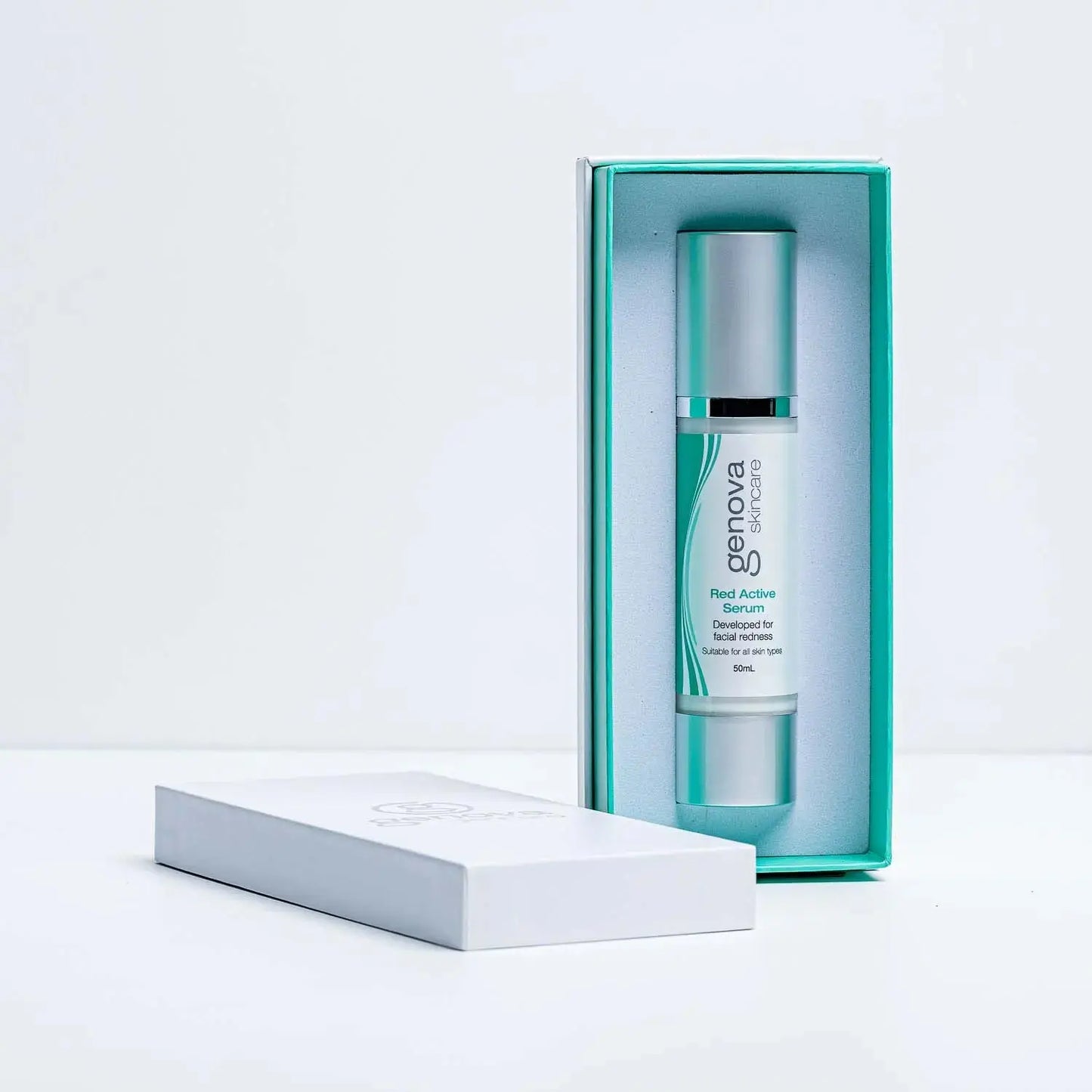
Genova Red Active Serum is designed for one of these five: the background, everyday redness of reactive skin that is prone to flushing. It uses two peptides, Telangyn and Delisens, developed by their supplier for the look of facial redness and skin reactivity, plus allantoin and rice bran oil. We do not quote supplier test figures, because they are not independent studies. You can read more in what Telangyn and Delisens actually do.
We want to be upfront about two things. It contains a light fragrance, so if fragrance has irritated your skin before, it is not the right choice. And it will not help seborrhoeic dermatitis, perioral dermatitis or broken capillaries, which need other care.

50ml, made in Australia. A peptide serum for the look of facial redness and reactive skin. Contains fragrance. Free standard delivery over $50 and a 30 day money back trial.
Realistic expectations
A calming serum works slowly. If it suits you, you may notice skin looking calmer and less reactive after 6–8 weeks of twice-daily use, with daily sunscreen.
It will not remove broken capillaries, stop hot flushes or treat rosacea. Results vary from person to person.
Pros and cons of a calming serum for redness around the nose
Pros:
- Gentle, daily step for background redness
- No acids or retinoids to sting the nose area
- Can be used alongside GP-prescribed creams, with their advice
Cons:
- Slow, subtle results
- Does nothing for flaky seborrhoeic dermatitis or broken capillaries
- Genova Red Active Serum contains fragrance
Who a redness serum is for after 45, and who it is not for
It may suit you if your nose and cheeks look pink most days, flush easily and feel reactive, and a GP has ruled out anything more serious.
It is not for you if you have flaky, greasy patches, small bumps around the mouth, a spot that will not heal, broken skin, or a known fragrance sensitivity.
Red nose myths women over 45 are told
- Myth: a red nose means you drink too much. Reality: rosacea, flushing and dermatitis are common in women who rarely drink. Alcohol is only one possible trigger, and an unfair assumption to live with.
- Myth: scrubbing will clear flaky red patches. Reality: scrubbing inflames the skin further. Flakes in the nose creases usually need an antifungal cream, not exfoliation.
- Myth: it is just ageing, so nothing will help. Reality: most causes improve with the right care, whether that is a gentler routine, a pharmacy cream or a GP-prescribed treatment.
- Myth: covering it up makes it worse. Reality: a gentle, fragrance-free corrector or tinted sunscreen will not cause rosacea. Just remove it softly at night.
Redness around the nose: questions women over 45 ask
How do I get rid of the redness around my nose?
Start by working out the cause. Gentle cleansing, daily SPF 50+ and avoiding triggers help most types, while flaky creases usually need an antifungal cream from the pharmacy.
What does red skin around the nose mean?
It is most often rosacea, seborrhoeic dermatitis, broken capillaries or simple irritation. A spot that bleeds or will not heal needs a GP check.
Why is the side of my nose red and flaky?
Red, flaky skin in the creases beside the nose is a classic sign of seborrhoeic dermatitis. It often flares with stress and cold weather.
Can menopause cause a red nose?
Menopause flushing can make the nose and cheeks go red, and it can trigger or worsen rosacea. Many women notice both at once.
How do I cover redness around my nose?
A green-tinted corrector or a tinted mineral sunscreen can tone down pink patches. Our guide to Dr.Jart+ Cicapair and green correctors explains how.
Red face after 45: calm, protect, cover
A red nose can feel like the first thing people see, but it is common, and in most cases very manageable once you know what you are dealing with. Be gentle with this part of your face, get anything unusual checked, and give any new routine a few months.
Individual results vary. Genova Red Active Serum is a cosmetic designed to help skin look calmer and less red. It does not treat rosacea, dermatitis or any skin condition and is not a substitute for advice from your GP, pharmacist or dermatologist. See a GP about any spot that bleeds, changes or does not heal.
Sources:
- Kamp E, Ashraf M, Musbahi E, DeGiovanni C. Menopause, skin and common dermatoses. Part 2: skin disorders. Clinical and Experimental Dermatology. 2022;47(12):2117-2122.
- Maor D, Chong AH. Rosacea. Australian Family Physician. 2017;46(5).
- Rivero AL, Whitfeld M. An update on the treatment of rosacea. Australian Prescriber. 2018;41(1):20-24.
- DermNet. Telangiectasia; Seborrhoeic dermatitis; Perioral dermatitis; Basal cell carcinoma.
- Cancer Council Australia. Skin cancer and sun protection guidance.