

Do Peptides Help Menopausal Facial Redness? What Telangyn and Delisens Actually Do
Quick answer
Yes, certain peptides can help reduce the look of facial redness and ease the discomfort of sensitive skin. Telangyn is a tetrapeptide studied for calming visible redness, and Delisens is a hexapeptide that helps relieve itch and supports the skin barrier. They are not a cure for rosacea or broken capillaries, and results vary, but for reactive menopausal skin they are a gentle, evidence-informed option. Most people see a change within 6 to 8 weeks.
Peptides are short chains of amino acids, the building blocks of proteins, that act as messengers in the skin. Different peptides do different jobs. Some support collagen, some calm. For facial redness and sensitivity, the two that matter most are Telangyn and Delisens, and yes, they can help reduce how reactive and red the skin looks over time.
Here is what each one does, what the research shows, and how to set realistic expectations.
In this article
- What does Telangyn do for redness?
- What does Delisens do for sensitive skin?
- Why peptides suit reactive menopausal skin
- Peptides versus other redness ingredients
- Realistic expectations and limitations
- Frequently asked questions
What does Telangyn do for redness?
Telangyn is a tetrapeptide (a four amino-acid peptide) developed to reduce the appearance of facial redness linked to an overactive inflammatory response. It works by helping to calm the release of inflammatory signals (interleukins) triggered by a peptide called LL-37, which is associated with redness-prone skin.
In manufacturer clinical testing, a cream containing 2% Telangyn used for four weeks reduced the intensity of redness by about 19% and overall skin redness by about 18%. These are supplier-reported results, so treat them as a guide rather than a guarantee, but they point to a peptide designed specifically for visible redness.

What does Delisens do for sensitive skin?
Delisens is a hexapeptide (a six amino-acid peptide) aimed at the discomfort side of sensitive skin: the itch, stinging and that "everything irritates me" feeling. It works by helping relieve itch and supporting the skin barrier, so the skin can recover its normal tolerance over time.
For menopausal skin, this pairing makes sense. Telangyn targets how red the skin looks, while Delisens targets how uncomfortable it feels. Together they aim at both the appearance and the sensation of reactive skin.
Why peptides suit reactive menopausal skin
During perimenopause and menopause, falling oestrogen weakens the barrier and makes the skin more reactive. That rules out a lot of strong actives, because acids, high-strength retinoids and fragrance can sting and worsen redness on already-sensitive skin.
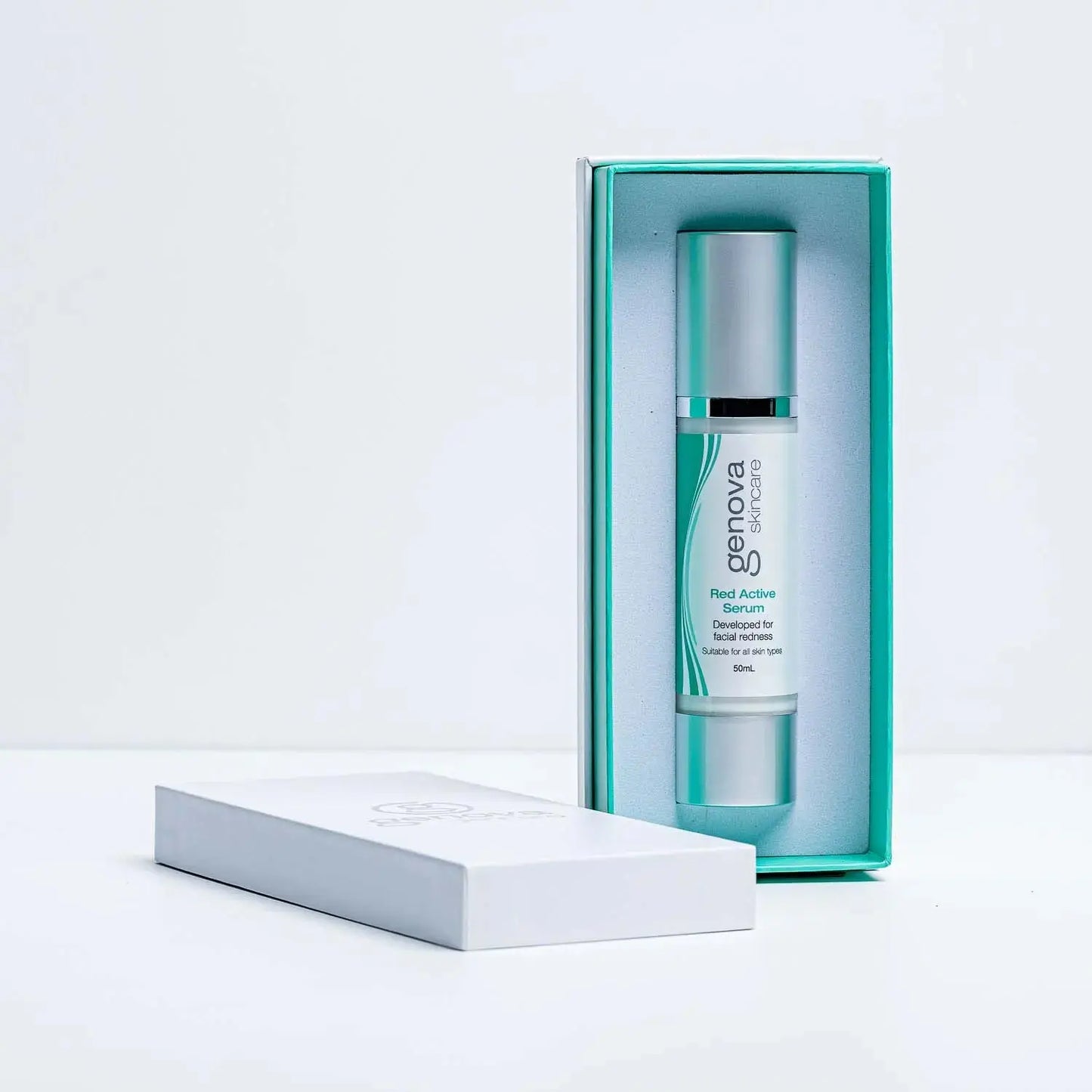
Peptides are generally well tolerated and gentle, which is why they are a sensible choice when your skin reacts to everything else. They support and calm rather than exfoliate or strip. This is the thinking behind the Genova Red Active Serum, which combines both Telangyn and Delisens in one lightweight formula.

Combines Telangyn and Delisens to calm facial redness and soothe reactive skin. Made in Australia. 30-day money-back trial.
Peptides versus other redness ingredients
Peptides are not the only option for redness. Here is how they compare with other common choices, so you can decide what suits your skin.
| Ingredient | What it does | Best to know |
|---|---|---|
| Peptides (Telangyn, Delisens) | Calm visible redness, ease itch, support the barrier | Gentle, suited to reactive skin; gradual results |
| Niacinamide | Supports barrier, reduces look of redness | Well tolerated; a good all-rounder |
| Azelaic acid | Reduces redness and bumps | Effective but can tingle on sensitive skin |
| Centella (cica) | Soothes and supports barrier repair | Gentle, calming, widely used for redness |
| Fragrance and strong acids | Not for redness | Can trigger flares; best avoided when reactive |

Realistic expectations and limitations
Peptides can help, but they are not magic. A few honest points to set expectations:
- They take time. Expect a gradual change over 6 to 8 weeks of daily use, not overnight. Results vary between people.
- They are not a medical treatment. A peptide serum will not cure rosacea, remove broken capillaries or stop hot flushes. Those need a doctor.
- They work best in a gentle routine. Pair with a fragrance-free cleanser, a barrier moisturiser and daily SPF.
- Patch test first. Even gentle actives can occasionally irritate. Try a small amount before full use.
If your redness is persistent, painful or comes with bumps and visible vessels, see a GP or dermatologist. Our guide on flushing versus rosacea can help you work out what you are dealing with.
Frequently asked questions
Do peptides reduce facial redness?
Certain peptides can. Telangyn is studied for reducing the look of visible redness, and Delisens helps ease itch and support the barrier in sensitive skin. They reduce the appearance of redness rather than cure its cause. Results vary.
What is the difference between Telangyn and Delisens?
Telangyn is a tetrapeptide that targets how red the skin looks. Delisens is a hexapeptide that targets how uncomfortable sensitive skin feels, such as itch and stinging. Used together, they address both appearance and sensation.
Are peptide serums safe for sensitive menopausal skin?
Peptides are generally gentle and well tolerated, which makes them suitable for reactive skin that reacts to acids or fragrance. Patch test first, and introduce any new product one at a time.
How long do peptides take to work on redness?
Most people see a gradual difference over 6 to 8 weeks of consistent daily use. Skin repair takes time, so patience and consistency matter more than how much you apply.
Can a peptide serum replace rosacea treatment?
No. A cosmetic peptide serum can calm and reduce the look of redness, but it is not a treatment for rosacea. If you have or suspect rosacea, see a GP or dermatologist for proper care.
Two peptides, made for redness-prone skin
Telangyn and Delisens in one gentle serum, formulated for sensitive menopausal skin.
Genova Red Active Serum
Calms facial redness and soothes reactive skin with two peptide actives. Made in Australia.
30-Day Money-Back Trial. If you are not satisfied, we will give you a full refund.
This article is general information, not medical advice. Clinical figures for Telangyn are supplier-reported and results vary. The Genova Red Active Serum is a cosmetic skincare product, not a treatment for rosacea or any medical condition. See your GP or a dermatologist for persistent redness, pain, broken capillaries or a spreading rash.
This article is part of our guide to facial redness in menopause.


1 comment
Hi i have very sun damaged skin
Im always red
Can u help
Do u have a location in perth