
Menopause Facial Redness: A Complete Guide to Calming Sensitive, Reactive Skin
Quick summary
Menopause facial redness is usually caused by falling oestrogen, which weakens the skin barrier and makes blood vessels more reactive. The result can be flushing, persistent redness, stinging and a feeling of tightness. You cannot stop hormonal change, but you can calm reactive skin by protecting the barrier, avoiding personal triggers, and using gentle, soothing actives. Most calming routines take 6 to 8 weeks to show a difference, and results vary. This guide explains the causes, the triggers, a simple daily approach, and when to see a doctor.
If your face has started flushing, stinging or staying pink for no obvious reason in your 40s or 50s, you are not imagining it. Facial redness and sensitivity are common in perimenopause and menopause. The main reason is falling oestrogen, a hormone that helps keep the skin barrier strong and blood vessels stable. As levels drop, the skin can become thinner, drier and quicker to react.
The good news: reactive skin can be calmed. This guide covers what is really happening, how to tell menopausal redness from rosacea, the triggers worth tracking, a gentle daily routine, and the realistic timeline for improvement.
In this guide
- Why does menopause cause facial redness?
- Is it menopausal redness or rosacea?
- What triggers redness in menopausal skin?
- How do you calm red, sensitive menopausal skin?
- Where a soothing serum fits
- Who this approach is for (and who it is not)
- How long until redness improves?
- Frequently asked questions
Why does menopause cause facial redness?
Oestrogen does a lot of quiet work in the skin. It supports collagen, helps the skin hold water, and helps keep the tiny blood vessels in the face stable. During perimenopause and menopause, oestrogen falls, and the skin feels the change.
Three things tend to happen at once. The skin barrier weakens, so moisture escapes and irritants get in more easily. The skin gets drier and thinner, which makes it more sensitive. And blood vessels become more reactive, so the face flushes faster and stays red longer. Dermatologists widely note that hormonal change in menopause commonly brings dryness, thinning and increased skin sensitivity.
This is why products that felt fine for years can suddenly sting, and why your skin may look pink or blotchy when it never used to.

Is it menopausal redness or rosacea?
They can look similar and they often overlap, but they are not the same. Menopausal flushing tends to come in waves of heat that spread across the face and body, often linked to a hot flush. Rosacea is more persistent. It usually sits in the centre of the face (nose, cheeks and chin) and can bring visible broken capillaries, bumps or spots.
To make it more confusing, some women develop rosacea for the first time during perimenopause, and existing rosacea can worsen as hormones shift. If your redness is persistent, comes with visible blood vessels or spots, or is affecting your confidence, see your GP or a dermatologist for a proper diagnosis. For a side-by-side breakdown, read our guide on menopause flushing versus rosacea.
| Feature | Menopausal flushing | Rosacea |
|---|---|---|
| Pattern | Comes and goes in waves of heat | More persistent, recurring flare-ups |
| Location | Spreads across face and body | Central face: nose, cheeks, chin |
| Extra signs | Sweating, sudden warmth | Visible capillaries, bumps, spots |
| Best first step | Gentle, barrier-supporting skincare | See a GP or dermatologist for diagnosis |
What triggers redness in menopausal skin?
Reactive skin usually has a shortlist of personal triggers. Tracking yours for a couple of weeks is one of the most useful things you can do. Common ones include:
- Heat and sudden temperature changes (hot showers, going from cold to warm rooms)
- Sun exposure without protection
- Spicy food, alcohol and very hot drinks
- Stress and broken sleep
- Harsh or fragranced skincare, foaming cleansers and scrubs
- Over-exfoliating or using too many strong actives at once
You cannot avoid everything, and you should not try to. The aim is to reduce the few triggers that affect you most, while making the skin itself more resilient.
How do you calm red, sensitive menopausal skin?
The principle is simple: do less, but do it gently and consistently. A pared-back routine that protects the barrier beats a cupboard full of strong products. Here is a sensible daily approach.
- Cleanse gently. Use a cream or gel cleanser without fragrance, and lukewarm (not hot) water. Skip foaming cleansers and scrubs.
- Soothe and support. Apply a calming serum aimed at redness and sensitivity while the skin is still slightly damp.
- Moisturise to seal. Use a barrier-supporting moisturiser with ingredients like ceramides, glycerin or hyaluronic acid.
- Protect every morning. Finish with a broad-spectrum SPF. Sun is one of the biggest redness triggers, so this step is not optional.
Introduce any new product one at a time, and pause strong actives like high-strength retinoids or acids if your skin is flaring. Our post on managing perimenopausal and menopausal skin goes deeper on building a routine.

Where a soothing serum fits
A targeted serum is the step that does the calming work. Look for ingredients designed to reduce visible redness and ease the discomfort of sensitive skin, rather than fragrance or strong exfoliants.
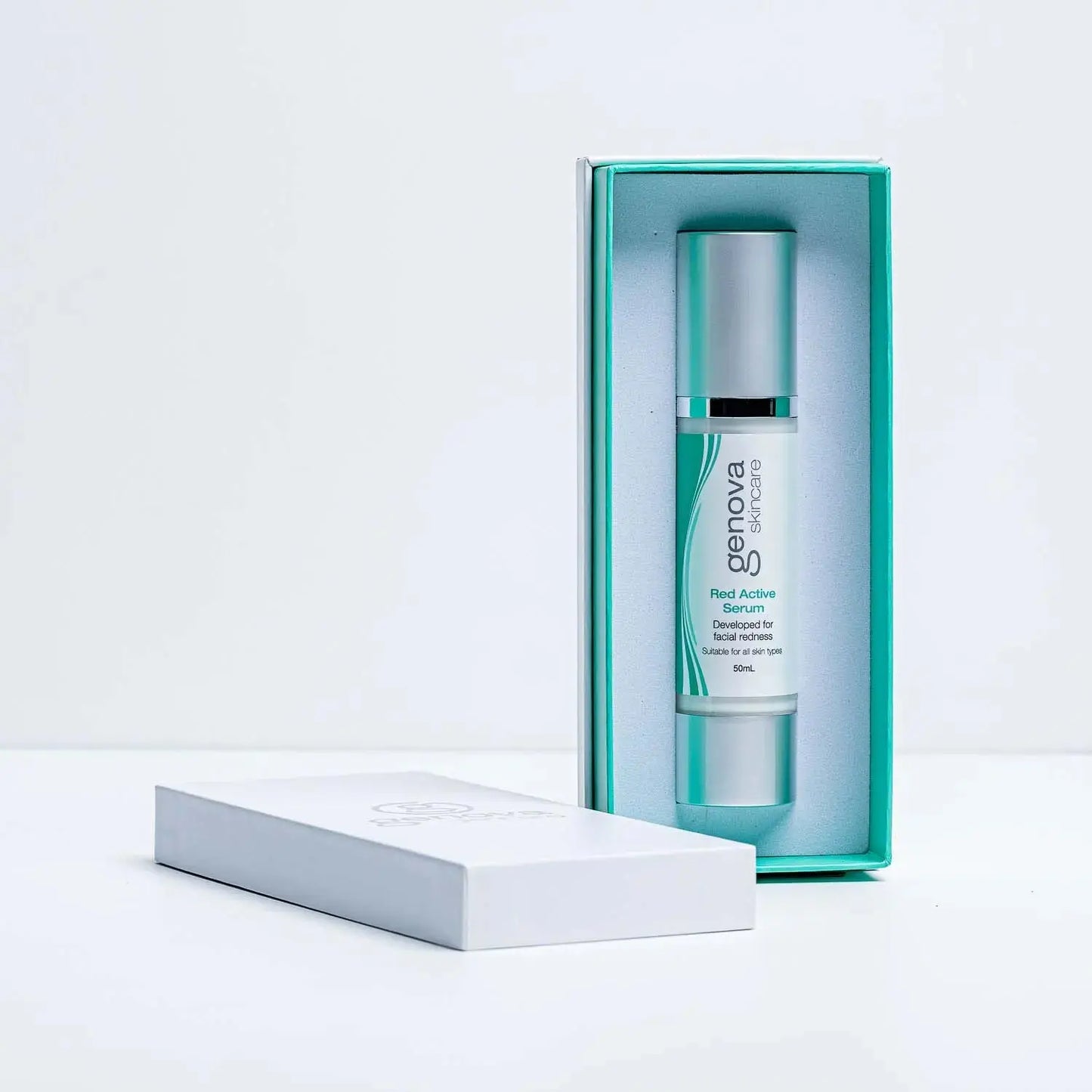
This is the role of the Genova Red Active Serum. It is built around two peptide actives. Telangyn is a tetrapeptide studied for reducing the look of facial redness, and Delisens is a hexapeptide that helps ease the itch and discomfort of sensitive skin while supporting the barrier. With daily use, skin may gradually appear less reactive and more even in tone. Results vary, and most people see an initial change within 6 to 8 weeks.

A gentle, peptide-based serum designed to calm facial redness and soothe reactive skin. Made in Australia. 30-day money-back trial.
A serum is one evidence-based option, not a cure. It works best as part of the gentle routine above, alongside trigger awareness and sun protection. It will not treat rosacea, broken capillaries or a medical skin condition, which need professional care.
Pros and cons of a calming serum for menopausal redness
Pros:
- Targets visible redness and the sting of reactive skin, rather than masking it
- Gentle enough for daily use on a weakened barrier
- Layers under moisturiser and SPF without changing your routine
- Peptide actives with published research behind them
Cons:
- Gradual: 6 to 8 weeks before a fair judgement, and results vary
- Cannot treat rosacea, broken capillaries or medical skin conditions
- Works best alongside trigger management, not instead of it
- Redness linked to hot flushes will still come and go with the flush
Who this approach is for (and who it is not)
It is a good fit if you:
- Are in perimenopause or menopause and your skin has become redder, drier or more reactive
- Want a gentle, simple routine rather than strong treatments
- Are happy to give a calming routine 6 to 8 weeks of consistent use
It may not be enough if you:
- Have diagnosed rosacea with bumps, pustules or visible broken vessels (see a doctor)
- Have sudden, severe or painful redness, or a rash that is spreading
- Want an instant fix. Skincare supports the skin over weeks, not overnight
How long until redness improves?
Be patient and consistent. Skin cell turnover and barrier repair take time, so most people notice a gradual change over 6 to 8 weeks of daily use, not days. Lifestyle matters too: sun protection, managing triggers, sleep and stress all influence how calm your skin stays. If there is no improvement after a couple of months, or things are getting worse, check in with a GP or dermatologist.
Frequently asked questions
Does menopause cause facial redness?
Yes. Falling oestrogen weakens the skin barrier and makes facial blood vessels more reactive, which can cause flushing, persistent redness and sensitivity. It is a common change in perimenopause and menopause.
How can I reduce facial redness during menopause?
Use a gentle, fragrance-free routine that protects the barrier, avoid your personal triggers, wear SPF daily, and use a soothing serum aimed at redness. Give it 6 to 8 weeks. Results vary from person to person.
Is menopausal redness the same as rosacea?
No, although they can overlap. Menopausal flushing comes in waves of heat across the face and body, while rosacea is more persistent and central, often with visible capillaries or spots. A doctor can confirm which you have.
Can skincare get rid of redness completely?
Skincare can calm and reduce the look of redness over time, but it cannot cure a medical condition like rosacea or remove broken capillaries. For those, see a dermatologist. Manage expectations and focus on gentler, calmer skin.
Ready for calmer, more comfortable skin?
A gentle, peptide-based serum designed for facial redness and sensitive menopausal skin.
Genova Red Active Serum
Calms facial redness and soothes reactive skin, with two peptide actives. Made in Australia.
30-Day Money-Back Trial. If you are not satisfied, we will give you a full refund.
This article is for general information and is not medical advice. The Genova Red Active Serum is a cosmetic skincare product, not a treatment for rosacea or any medical condition. Individual results vary. If you have persistent redness, broken capillaries, pain or a spreading rash, please see your GP or a dermatologist.
Keep Reading: Redness and Sensitive Skin in Menopause
- A Simple 5-Step Routine to Calm Red, Sensitive Skin
- Rosacea in Menopause: Why It Happens
- Menopause Flushing vs Rosacea: How to Tell the Difference
- Do Peptides Help Menopausal Facial Redness?
- A Daily Routine for Rosacea-Prone Menopausal Skin
- Can You Buy Rosacea Cream Over the Counter in Australia?
- Broken Capillaries on the Face After 50: Serum or Laser?
- Does HRT Help Rosacea? Why It Can Go Either Way After 45
Related product: Genova Red Active Serum.