
How to Calm Red, Sensitive Skin in Menopause: A Simple 5-Step Routine
Quick summary
To calm red, sensitive skin in menopause, simplify your routine to five gentle steps: a fragrance-free cleanser, a soothing serum, a barrier-repair moisturiser, daily SPF, and trigger awareness. Use lukewarm water, introduce one product at a time, and pause strong actives while skin is flaring. Give it 6 to 8 weeks of daily use. Results vary, but most people see skin gradually become calmer and more comfortable.
If your skin has turned red, reactive and easily irritated since perimenopause began, the fix is usually to do less, not more. Falling oestrogen weakens the skin barrier and makes blood vessels more reactive, so stripping cleansers and strong actives tend to make things worse. A short, gentle routine gives reactive skin the best chance to settle.
Here is a simple five-step daily routine you can start today. It takes about five minutes, morning and night.
In this article
- Step 1: Cleanse gently
- Step 2: Calm with a soothing serum
- Step 3: Repair the barrier with moisturiser
- Step 4: Protect with SPF every morning
- Step 5: Track and reduce your triggers
- Common mistakes to avoid
- Frequently asked questions
Step 1: Cleanse gently
Start and end the day with a gentle, fragrance-free cleanser. Choose a cream, milk or low-foaming gel formula, and use lukewarm water. Hot water and harsh foaming cleansers strip the natural oils your barrier needs, which leaves skin tighter and redder.
Skip physical scrubs and cleansing brushes while your skin is reactive. Pat dry with a soft towel rather than rubbing.
Step 2: Calm with a soothing serum
While the skin is still slightly damp, apply a serum aimed at redness and sensitivity. This is the step that does the calming work, so choose one with soothing, barrier-friendly actives rather than fragrance or exfoliating acids.
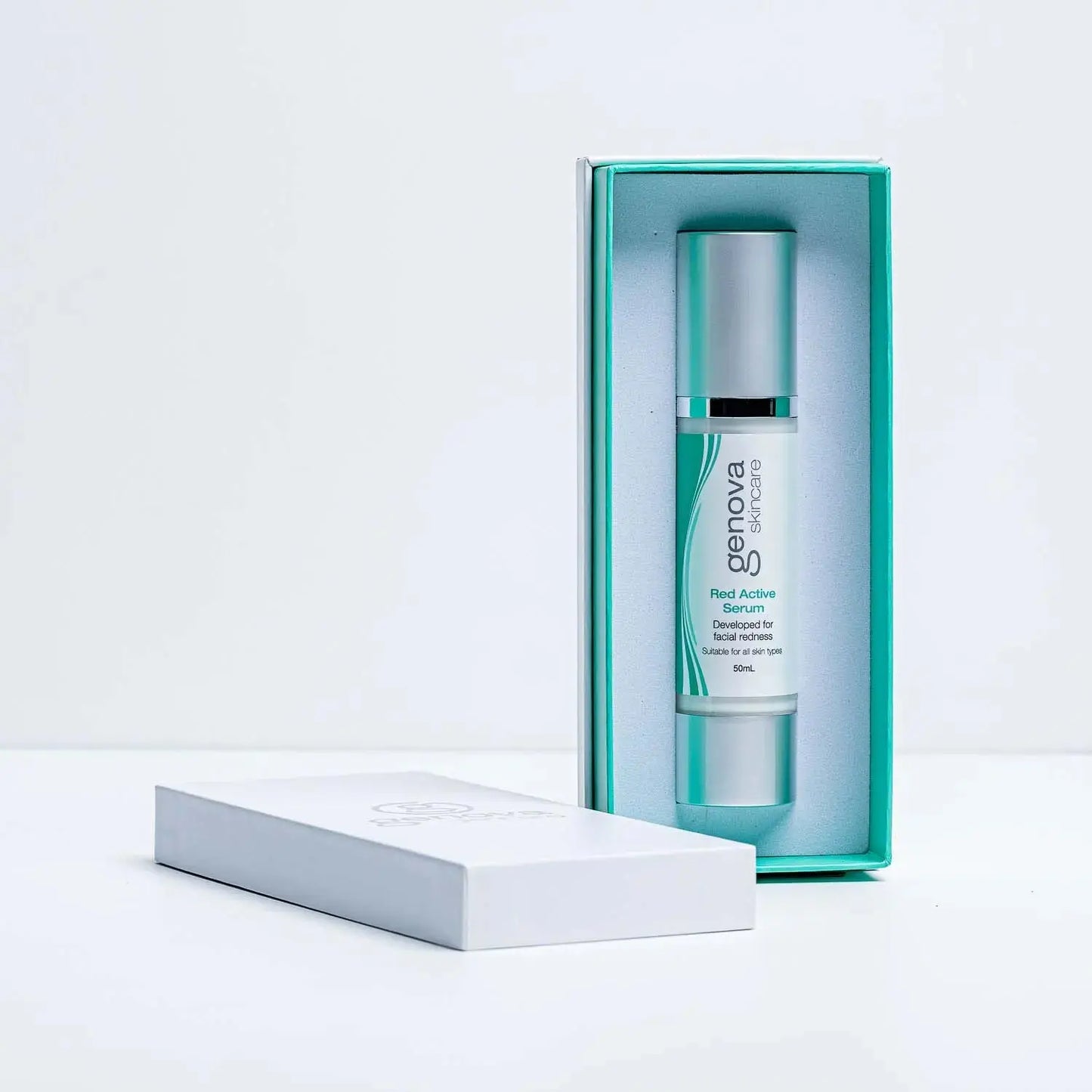
The Genova Red Active Serum is designed for exactly this. It uses two peptides: Telangyn, a tetrapeptide studied for reducing the look of facial redness, and Delisens, a hexapeptide that helps ease the itch and discomfort of sensitive skin. Press a few drops gently over the face and let it absorb before the next step.

Designed to calm facial redness and soothe reactive skin with two peptide actives. Made in Australia. 30-day money-back trial.

Step 3: Repair the barrier with moisturiser
A strong barrier is what keeps redness and sensitivity down, so moisturise twice a day to lock in hydration. Look for barrier-supporting ingredients such as ceramides, glycerin, hyaluronic acid or squalane. Apply over the serum while skin is still a little damp.
If your skin feels tight or stings during the day, a small extra layer of moisturiser is a simple way to settle it.
Step 4: Protect with SPF every morning
Sun is one of the biggest triggers for facial redness, so daily broad-spectrum SPF is the most important morning step. A mineral sunscreen with zinc oxide is often gentler on reactive skin. Use it every day, even in winter and on cloudy days, because UV still reaches your skin.
Step 5: Track and reduce your triggers
Skincare works better when you also calm the things that set your skin off. For two weeks, note when your face flushes and what came before it. Patterns usually appear quickly.
Common menopausal redness triggers include heat and hot showers, spicy food, alcohol, hot drinks, stress and broken sleep. You do not need to give up everything. Just ease back on the few triggers that affect you most. Our facial redness management guide has more detail.

Common mistakes to avoid
| Mistake | Do this instead |
|---|---|
| Using hot water and foaming cleansers | Lukewarm water and a gentle, fragrance-free cleanser |
| Layering several strong actives at once | Introduce one product at a time, pause actives during flares |
| Skipping sunscreen on cloudy days | Daily broad-spectrum SPF, all year round |
| Expecting overnight results | Give a calming routine 6 to 8 weeks of consistent use |
| Scrubbing or over-exfoliating | Let the barrier rebuild; gentle is stronger here |
Realistic expectations
A gentle routine calms and supports the skin, but it is not an instant or permanent cure. Most people see a gradual improvement in comfort and redness over 6 to 8 weeks, and results vary. A serum like the Red Active Serum will not treat rosacea, remove broken capillaries or stop hot flushes. If your redness is persistent, painful or comes with bumps and visible vessels, see your GP or a dermatologist. For help telling the two apart, read menopause flushing versus rosacea.
Frequently asked questions
How do I calm red, sensitive skin in menopause?
Simplify to a gentle five-step routine: fragrance-free cleanser, soothing serum, barrier-repair moisturiser, daily SPF, and trigger awareness. Use lukewarm water and give it 6 to 8 weeks. Results vary.
What ingredients should I avoid for reactive menopausal skin?
While skin is flaring, ease off fragrance, high-strength retinoids, strong acids and physical scrubs. Reintroduce gently once skin has settled, one product at a time.
How long does it take to reduce facial redness?
Most calming routines take 6 to 8 weeks of daily use to show a clear difference, because barrier repair takes time. Some people respond faster, others slower.
Can I still use retinol or vitamin C if my skin is red?
You can, but introduce them slowly and not during a flare. If a product stings or worsens redness, stop and let your barrier recover first. A doctor can advise if you are unsure.
Make step 2 the easy one
A gentle, peptide-based serum built to calm facial redness and sensitive menopausal skin.
Genova Red Active Serum
Calms facial redness and soothes reactive skin, with two peptide actives. Made in Australia.
30-Day Money-Back Trial. If you are not satisfied, we will give you a full refund.
This article is general information, not medical advice. The Genova Red Active Serum is a cosmetic skincare product, not a treatment for rosacea or any medical condition. Individual results vary. See your GP or a dermatologist for persistent redness, pain, broken capillaries or a spreading rash.
This article is part of our guide to facial redness in menopause.