
Skincare Routine for Menopausal Rosacea-Prone Skin After 45
By Simon MitchellQuick Summary:
Menopausal rosacea-prone skin is one of the most distressing visible changes of midlife. Falling estrogen, more reactive blood vessels, a weaker barrier and stronger flushing combine to leave the cheeks looking persistently red. A gentle daily routine of a non-stripping cleanser, a calming barrier-supportive serum, a barrier moisturiser and broad-spectrum SPF 50+ may help reduce the visible redness over 8 to 12 weeks.
You have walked back from the school pickup or the supermarket, and your cheeks are burning. They make it look like you have been embarrassed for a reason, but you have not. By dinner some of it has settled, but the patches across your nose and cheeks have not gone all the way back. In photos lately, you have started turning your face slightly.
This is one of the most under-discussed visible changes of menopause. Sleep is broken, hot flushes come and go, and your face seems to mirror the chaos in real time. The good news is that menopausal rosacea-prone skin responds well to a calm, simple routine.
If you are still working out whether what you are seeing is hormonal flushing or actual rosacea, our guide to menopause flushing versus rosacea is the place to start. This piece is the next step.
What Menopausal Rosacea-Prone Skin Actually Looks Like After 45
Most women describe it the same way. The cheeks, nose and chin look pinker than they used to, even on a calm day. After exercise, a glass of wine, or a stressful afternoon, the redness intensifies and takes longer to settle. Tiny visible blood vessels, sometimes called thread veins, may appear across the cheeks and around the nose.
For some women, small bumps or pustules appear that look a bit like acne but behave differently. The skin can feel hot to the touch even when it does not look red. Familiar products start to sting more. Foundation slides off the warm patches by midmorning.
This pattern is not the same as a one-off blush. It is a more persistent reactive state in skin that has lost some of its usual buffering and is more sensitive to everyday triggers.
Why Rosacea-Prone Skin Flares Up in Perimenopause and Menopause
A systematic review in the British Journal of Dermatology (Gether 2018) found that the prevalence of rosacea peaks in women between roughly 45 and 60. The overlap with perimenopause and menopause is not a coincidence.
Estrogen helps maintain blood vessel stability and the skin barrier. A review in Maturitas (Lephart 2018) describes how falling estrogen reduces oil production, weakens the barrier and changes how the skin responds to inflammation. Add hot flushes, which dilate the facial blood vessels many times a day, and the result is skin that flushes more easily and stays flushed for longer.
Common triggers include alcohol, spicy food, hot drinks, hot showers, sun, intense exercise, fragranced cleansers and strong actives used too often. None need to be removed entirely. Recognising them is the first step in calming the cycle.
How Different Approaches Compare for Menopausal Rosacea-Prone Skin
There is no single fix. Most women find the best result from layering trigger awareness, a gentle daily routine and, where appropriate, a doctor-led conversation.
Click to expand
Trigger awareness and lifestyle adjustments
Reducing alcohol, spicy food, hot drinks, very hot showers and intense midday sun may reduce the frequency and severity of flares. Free, slow, and the most reliable lever. Best built over 8 to 12 weeks rather than overnight.
Gentle barrier-focused skincare routine
A non-stripping cleanser, a calming barrier-supportive serum and a barrier-rich moisturiser may help reduce visible redness and skin reactivity. Daily SPF 50+ is non-negotiable. Visible improvement usually appears at 8 to 12 weeks of consistent use.
Doctor-led options
If redness is persistent or includes bumps, pustules or eye involvement, your GP or a skin doctor can help. Some women benefit from topical or oral options that sit outside skincare. A skincare routine works alongside this, not instead of it.
Light-based options (IPL or vascular laser)
For visible thread veins and persistent diffuse redness, IPL or vascular laser by a trained therapist may reduce the appearance of dilated blood vessels. Cost and access vary widely across Australia. These are an addition to a daily routine, not a substitute for it.
How Genova Skincare May Help Menopausal Rosacea-Prone Skin
Genova is an Australian-made skincare range formulated for women in perimenopause and menopause. The Genova approach to rosacea-prone skin is calm and consistent rather than active and aggressive.
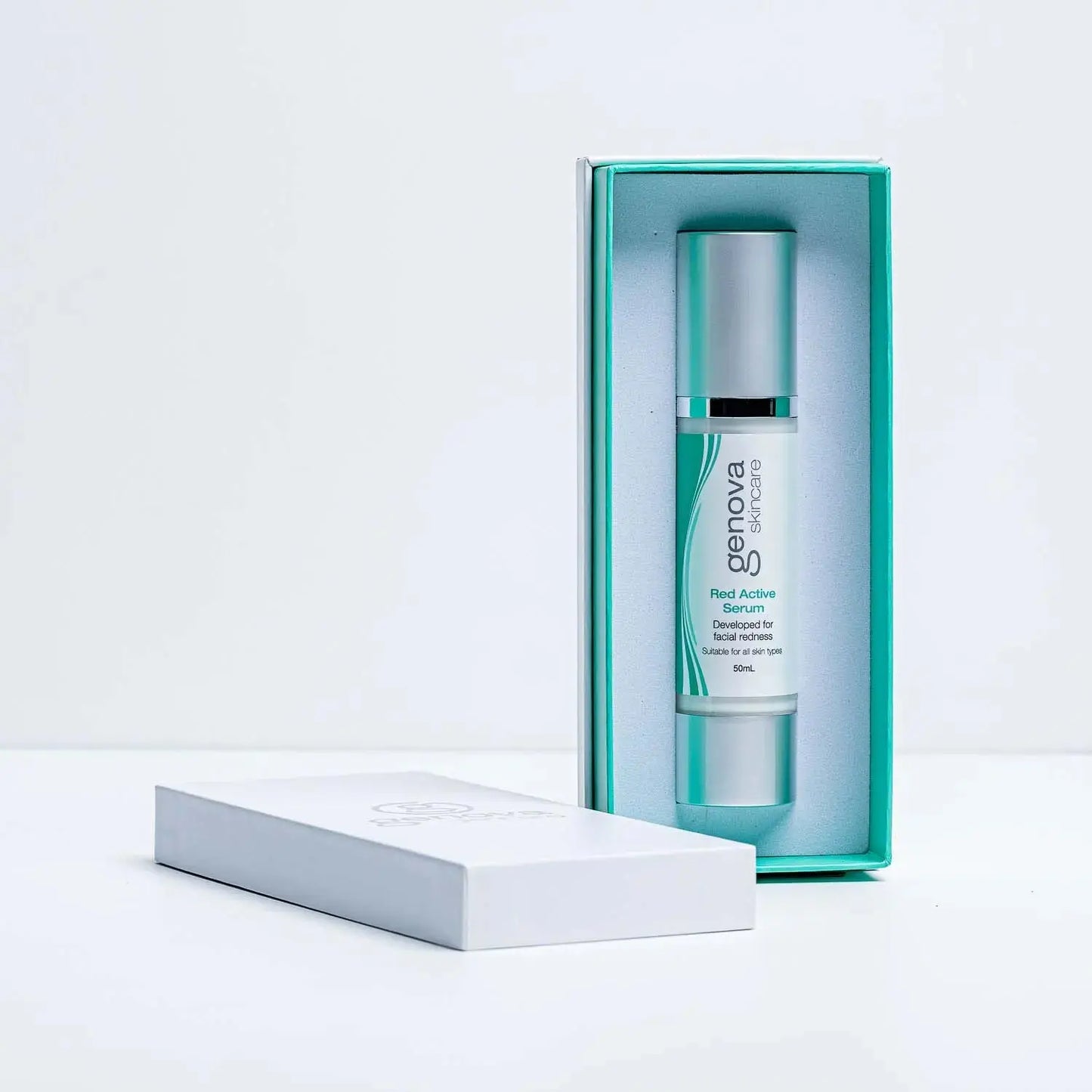
The Red Active Serum is formulated specifically for sensitive menopausal skin and visible redness, and may help calm the appearance of flushed, reactive cheeks while supporting barrier strength.
The Active Foaming Cleanser is designed to remove daily oil and product residue without stripping the skin barrier, which is critical for rosacea-prone skin that no longer tolerates harsher options. For broader context, see our guide to the menopausal skin barrier and how to repair it.
A barrier-rich moisturiser with ceramides, glycerin, or squalane sits on top, followed by a daily broad-spectrum SPF 50+ every morning. That is the entire daily routine. Less is more for rosacea-prone skin.
Realistic Expectations: A skincare routine cannot reverse dilated blood vessels under the skin and cannot stop hot flushes from happening. What it may help with is the visible redness, the skin's reactivity to daily triggers, and the sense that the barrier has been pushed too far. Most women notice calmer cheeks within 4 weeks and a steadier visible improvement at 8 to 12 weeks. Results vary with sleep, stress, alcohol intake and sun exposure.
Strengths and Limitations for Menopausal Rosacea-Prone Skin
Click to expand
Strengths
- Gentle enough for skin that flushes and stings easily
- Skin-compatibility tested for sensitive mature skin
- Australian made and formulated for the Australian climate
- Pairs cleanly with doctor-led approaches if your GP has suggested any
- No harsh foaming or fragranced cleansers, no exfoliating acids in the daily routine
Limitations
- Cannot reverse existing dilated blood vessels or thread veins
- Will not stop the hot flushes that drive flares
- Visible improvement takes 8 to 12 weeks of daily use
- Results vary with alcohol, sun exposure, sleep and stress
- Not a substitute for review by a GP if redness includes bumps, pustules, eye irritation or rapid worsening
How to Build a Daily Routine for Rosacea-Prone Skin in Menopause
- Morning: Splash cool water on the face. Cleanse gently with the Active Foaming Cleanser. Pat dry. Apply Red Active Serum to damp skin. Follow with a barrier moisturiser and broad-spectrum SPF 50+.
- Throughout the day, reapply SPF every 2 hours if outdoors. After a hot shower, exercise or wine, splash cool water on the face for 30 seconds and let the skin settle before applying anything.
- Evening: Cleanse if needed (some rosacea-prone skin prefers a cool water rinse only at night). Apply Red Active Serum. Follow with a barrier moisturiser.
- Two to three nights a week, only if your skin is calm: Add a peptide serum. Skip retinol or exfoliating acids during reactive phases.
Who Does This Routine Suit in Menopause
It may suit you if:
- You are 45 to 65, and your cheeks stay pink or red for hours after triggers
- Your familiar products have started to sting more
- You want a gentle daily routine you can stay on indefinitely
- You are working alongside your GP on a wider rosacea plan
It may not suit you if:
- You have bumps, pustules, eye irritation or rapid worsening, in which case see your GP or a skin doctor
- You are pregnant or breastfeeding and need to confirm any active ingredient with your doctor
- You are sensitive to any of the listed ingredients
- You expect an overnight resolution of long-standing facial redness
FAQ About Rosacea-Prone Skin in Menopause
Why are my cheeks red all the time in menopause?
Falling estrogen makes facial blood vessels more reactive and weakens the skin barrier, while hot flushes dilate the same vessels many times a day. The combined effect is skin that flushes more easily and stays flushed for longer, often without an obvious trigger.
Is menopausal rosacea-prone skin permanent?
The underlying tendency is often long-term, but the visible redness usually settles with a calm daily routine, trigger awareness and, where needed, doctor-led options. Many women find their skin is much less reactive after 8 to 12 weeks of consistent care.
Can skincare really help menopausal rosacea-prone skin?
A gentle barrier-focused routine may reduce the appearance of redness and the frequency of flares. It cannot reverse dilated blood vessels under the skin or stop hot flushes. For confirmed rosacea, skincare works alongside doctor-led options, not instead of them.
What ingredients should I avoid for rosacea-prone skin in menopause?
Common irritants include high-percentage exfoliating acids, strong retinoids used too often, foaming sulphate cleansers, fragrance and very hot water on the face. Reintroduce gentler versions slowly once the skin has calmed down.
Should I see a doctor about menopausal facial redness?
Yes, if the redness is persistent, includes bumps or pustules, affects the eyes or is getting worse despite a simplified routine. Your GP can confirm a diagnosis of rosacea and discuss options beyond skincare. A skincare routine is not a substitute for a doctor's input on a confirmed condition.
References
- Gether L, et al. Incidence and prevalence of rosacea: a systematic review and meta-analysis. British Journal of Dermatology, 2018.
- Lephart ED. A review of the role of estrogen in dermal aging and skin function. Maturitas, 2018.
- Skin Health Institute. Rosacea. Skin Health Institute. Available at: https://skinhealthinstitute.org.au/skin-conditions/rosacea/
If your cheeks have been quietly louder than the rest of you, a calm daily routine is a fair place to start. The skin you wake up with in 12 weeks may still be the same skin you have today, but it can feel steadier, less reactive, and less easily pushed into flare. On top of everything else menopause is throwing at you, you have earned a face that does not flare every time you walk to the car.
This article is for general information only and does not constitute personal advice. Genova products are cosmetics, not medicines. Results vary between individuals. If you have persistent facial redness, bumps, pustules or eye irritation, please consult your GP or a skin doctor.
This article is part of our guide to facial redness in menopause.