
Australian Made vs Imported Menopause Skincare After 45
Australian-made menopause skincare is formulated for the climate, water and UV load Australian skin actually lives with. Imported products written for European or US conditions often underperform here, especially in summer. Local manufacture may make traceability easier for the brand, but imported and Australian-made cosmetics sold here still need to meet Australian requirements. None of this matters if the formulation is weak, so provenance is one filter, not the only one.
You are at the bathroom shelf in February, holding a serum you brought back from a Paris trip three years ago. The texture is heavier than you remember. Your skin felt fine on it through winter, but the last two summers it has sat on top and your cheeks have been quietly tight by mid-afternoon. The bottle is European, the marketing was beautiful, and you are starting to wonder if the formula was ever written for Australian summer at all.
That moment is small but it adds up. You are managing more than skin: the broken sleep, the joint stiffness, the body that does not feel like yours. The least the cream can do is be written for the country you live in.
Where a product is made matters more than the marketing suggests, especially for menopausal skin and especially in Australia. The reasons are practical, not patriotic.
Why Where Skincare Is Made Matters For Menopausal Skin After 45
Australian skin lives a different daily life to European or US skin. The UV index runs higher for more of the year, the water is harder in many cities, and the humidity swings between dry inland conditions and coastal moisture. Research in Maturitas by Lephart describes how estrogen receptors in skin cells help drive collagen production and barrier maintenance, and how cellular activity slows when estrogen declines. A barrier that is already working harder in menopause has even less capacity to compensate for a formula written for a different climate.
A skincare product is a chemistry. The same molecules behave differently in a 35-degree Brisbane afternoon than a 12-degree Paris one. Local formulations are built around the conditions the product will actually meet, which is most of the reason "made in" matters at all.
What Changes When Menopause Skincare Is Made In Australia
Six things tend to shift when a menopause skincare brand manufactures locally rather than importing or relabelling.
1. Climate-appropriate textures. Heavier European emollients sit on top of menopausal skin in summer. Lighter, faster-absorbing textures suit Australian conditions, especially for daytime wear under SPF.
2. UV-aware formulation logic. Australian UV breaks down collagen and aggravates pigmentation faster than European UV. A product written here tends to assume daily SPF use and pair its peptide and antioxidant choices around it.
3. Water-compatibility. Water hardness varies across Australia, so a cleanser that rinses cleanly and does not leave a film is especially important.
4. Strict quality-control standards. Local manufacture means the formulation, batching and stability testing are happening close to where the product is sold, with shorter audit trails. Easier for the brand, more transparent for the buyer.
5. Shorter supply chain. Imported skincare can sit in transit and warehouses for months. Locally made products tend to reach the shelf with more time on the actives. Peptides, vitamin C and retinoids all lose potency over time.
6. Direct customer feedback. An Australian brand hears Australian women in menopause directly, in their own English, in real time. Formulation tweaks happen on that feedback rather than translated international research. The red flags post covers what marketing-translated formulations tend to look like.
Comparing Australian Made And Imported Menopause Skincare For Women Over 45
| Where it is made | What to know for menopausal skin |
|---|---|
| Australian made and formulated locally | Written for Australian climate, water and UV. Manufactured locally to strict quality-control standards. Shorter supply chain, fresher actives. The closest fit for Australian menopausal skin when the formulation is also evidence-based. |
| European prestige imports | Long heritage, often beautiful texture, written for moderate northern hemisphere climate. Can suit Australian winter, often underperforms in summer. Higher price point usually reflects packaging and marketing rather than active concentration. |
| US imports | Strong on signal-led actives (peptides, retinoids, antioxidants). Often written for indoor-temperate climate and shorter sun exposure. Air freight can be quick, but warehouse storage in transit shortens the shelf life of actives. |
| K-beauty and Asian imports | Strong on hydration, layering and barrier care. Texture and pace suit drier Australian climates well in some cases. Often written for younger skin profiles, so suitability for menopausal skin varies product by product. |
How Genova Is Made Locally For Australian Menopausal Skin Over 45
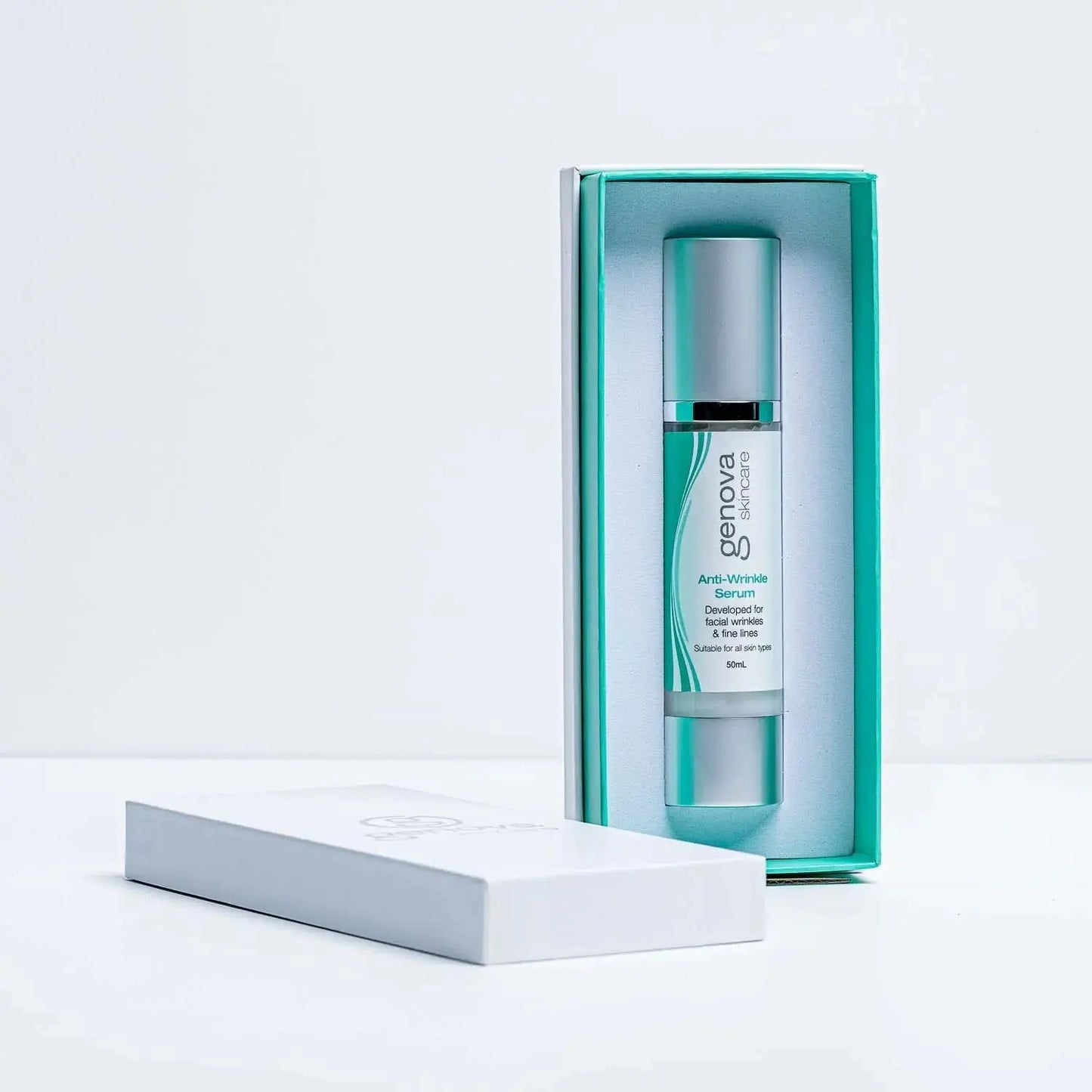
Genova products are formulated for Australian menopausal skin and made locally to strict quality-control standards. The peptide actives include Serilesine and Nocturshape in the Genova Firming Cream, Matrixyl-family peptides in the Genova Anti-Wrinkle Serum, and Eyeseryl, Eyedeline and Snap-8 in the Perfecting Eye Serum. The Active Foaming Cleanser rinses cleanly in the harder water found across many Australian cities. Research in Frontiers in Pharmacology by Errante describes how peptide signalling works in mature skin, and the formulations are built around that science.
The textures are written for Australian conditions. Lighter under SPF in summer, easy to layer in winter. The how to choose menopause skincare hub covers the wider buying framework, and the ingredients that matter post covers what to look for inside any bottle, local or imported.


Australian-made skincare improves the odds of climate-appropriate performance. It does not on its own promise a result. A well-formulated local product may improve hydration in 2 to 4 weeks, texture by week 6 to 8, and firmness by week 12. It cannot replace lost facial fat, lift loose hanging skin, or undo years of UV damage. Provenance is one filter, the formulation still has to do the work.
Strengths And Limitations Of Choosing Australian Made Menopause Skincare After 45
- Climate-appropriate textures for Australian summer and winter
- UV-aware formulation logic built around higher local sun exposure
- Rinses cleanly in harder Australian water
- Shorter supply chain, fresher actives on the shelf
- Local feedback loop between brand and Australian women in menopause
- Cannot promise the formulation is well-designed
- Cannot substitute for an ingredient check on the back of the box
- Cannot speed up the underlying timeline of mature skin
- Cannot replace professional input on a skin condition
- Cannot promise a product will suit your specific skin
How To Tell If A Menopause Skincare Product Is Actually Australian Made After 45
- Look for "Made in Australia." The clearest label. "Australian owned" or "Australian brand" can still mean manufactured overseas, often in Korea or China, then relabelled here.
- Check the manufacturer address. An Australian street address for the manufacturer (not just a PO box for the brand) is a strong sign of local production.
- Look for batch information. Local brands tend to print batch and expiry information clearly. Relabelled imports often have stickers over the original.
- Check the brand's "about" page. Brands that manufacture locally usually describe the facility and process. Brands that do not, do not.
- Cross-check the ingredient list. Look for clear ingredient labelling, batch codes, expiry details and a local manufacturing statement.
- Apply the wider buying framework. Provenance is one filter on the back of the box. Use it alongside the ingredient and timeline checks.
Who Should Prioritise Australian Made Menopause Skincare After 45
- You live in a hot, humid or high-UV part of Australia and feel imported products sit heavily in summer
- You want fresher actives and shorter time between manufacture and use
- You value being able to give the brand direct feedback as a customer
- You prefer to support local manufacturing alongside the result on your skin
- You are in perimenopause or post-menopause and noticing imported routines no longer fit
- You already use an imported routine that works for your climate and skin
- You are on a doctor-led plan that includes a specific imported product
- You prefer prestige imports for the experience as much as the result
- You shop only on price and ignore provenance entirely
Start with the Australian-made menopause routine
If your skin feels drier, thinner or less tolerant after 45, begin with the Genova Firming Cream and Anti-Wrinkle Serum as your core AM/PM pairing. Add the Active Foaming Cleanser if your current cleanser leaves your skin tight or coated.
Frequently Asked Questions About Australian Made Menopause Skincare After 45
Does "Australian owned" mean the same as "Made in Australia"?
No. "Australian owned" means the company is based here. The product may still be manufactured overseas and shipped in. "Made in Australia" is the wording that confirms local production.
Are Australian-made products always better for Australian skin?
Not automatically. A weak local formulation will underperform a strong imported one. Provenance is one filter, not a promise of result. Pair it with the ingredient check.
Why does climate matter for menopause skincare?
Heavier textures and richer emollients written for cooler climates can sit on top of menopausal skin in Australian summer, blocking SPF uptake and feeling uncomfortable. Lighter, climate-appropriate textures absorb cleanly and layer under SPF.
Are imported peptide serums less effective in Australia?
Not inherently. The active still works the same way. The shelf life concern is real for products that have spent months in international transit, and the texture concern matters in summer. Both are about fit, not chemistry.
Is Australian-made skincare more expensive?
Not reliably. Some Australian-made products are mid-priced and well-formulated. Some imported prestige products are expensive because of packaging and marketing. The label price does not predict the quality.
How can I be sure the brand actually manufactures here?
Look for "Made in Australia" on the box, an Australian manufacturer address, and a description of the local facility on the brand's website. Brands that produce locally tend to be open about it.
The Australian-made pairing to start with
Firming Cream twice daily with the Anti-Wrinkle Serum underneath is the standard local pairing for menopausal skin after 45.


Australian made and owned. Free Australian shipping on orders $50 or more.
References
Lephart, E. D. (2018). A review of the role of estrogen in dermal aging and facial attractiveness in women. Maturitas, 117, 1-10.
Errante, F., Ledwoń, P., Latajka, R., Rovero, P., & Papini, A. M. (2020). Cosmeceutical peptides in the framework of sustainable wellness economy. Frontiers in Pharmacology, 11, 572923.
"Made in Australia" is a useful line on a box, but only when the formulation behind it is also doing the work. A locally made, evidence-based, peptide-led routine is the closest fit for Australian menopausal skin, and that is the version worth looking for. If you are starting fresh, the Firming Cream twice daily with the Anti-Wrinkle Serum underneath is the standard pairing.
Disclaimer: This article is for general information only and is not a substitute for personal professional advice. Results vary between individuals and depend on age, skin condition and consistency of use. If you have specific skin concerns or conditions, please consult a qualified skin specialist or your doctor.