
Skincare Ingredients That Matter In Menopause After 45
By Simon Mitchell
Quick Summary:
Most ingredients on a menopause skincare label are filler. Six do the real work on mature skin: peptides for collagen signalling, ceramides for the barrier, niacinamide for tone, hyaluronic acid for hydration, low-dose retinoids for turnover, and antioxidants like vitamin C for UV defence. Everything else is texture, fragrance, or marketing. Knowing the six lets you read any label in under a minute.
You are at the kitchen bench with a serum in one hand and your reading glasses on. The label has 38 ingredients. Three you recognise, the rest could be anything: solvents, preservatives, plant extracts that sound like they should matter. You wonder how much of what you just paid for is actually doing something.
That feeling is the quiet tax of menopausal skincare. You are managing more than the bottle in your hand: the broken sleep, the joint stiffness, the steady recalibration of a body that does not feel like yours. You should not also need a chemistry degree to read a cream.
The list of ingredients that actually matter for menopausal skin is short. Six of them do most of the heavy lifting, and once you know the six, the other thirty-two on a typical label become background.
Why Skincare Ingredients Matter More After Menopause
Mature skin is biologically different, not just older. Research in Maturitas by Lephart describes how estrogen receptors in skin cells help drive collagen production, ceramide synthesis and barrier maintenance, and how each of these slows when estrogen declines. The skin makes less of what it needs to repair itself.
That changes what good skincare has to do. At 30, the skin can compensate for almost any product. At 55, the formulation has to actively support the things the skin used to do for itself. This is why "anti-aging" lines written for women in their 30s often underperform on menopausal skin: the actives match a different problem.
The Skincare Ingredients That Actually Work On Menopausal Skin After 45
| Ingredient | What it helps with | Best for | Watch out for |
|---|---|---|---|
| Peptides | Firmness, wrinkles, barrier support | Loss of bounce | Results take time |
| Ceramides | Dryness, sensitivity, barrier | Reactive menopausal skin | Works best with fatty acids/cholesterol |
| Niacinamide | Redness, tone, barrier | Uneven skin, visible pores | Higher % may irritate some |
| Hyaluronic acid | Surface hydration | Dehydrated feel | Needs cream over it |
| Retinoids | Texture, turnover | Photoageing, roughness | Can irritate |
| Antioxidants | UV defence support, dullness | Morning routine | Not a sunscreen substitute |
Six ingredients have decades of research behind them and pull their weight on mature skin. The rest can be useful, but these change outcomes.
1. Peptides. Short chains of amino acids that signal skin cells to do specific things, including building collagen and strengthening the barrier. Research in Frontiers in Chemistry by Errante describes how peptide signalling works in mature skin. Look for Matrixyl, Serilesine, Nocturshape, Argireline, Eyeseryl, Snap-8. The science of peptides on menopausal skin covers the categories in depth.
2. Ceramides. The lipid "mortar" between skin cells. A study in Scientific Reports by Kendall and colleagues found measurable shifts in barrier ceramides after menopause. Replacing them helps the skin hold water and resist irritants. Look for ceramide NP, ceramide AP, ceramide EOP.
3. Niacinamide. Vitamin B3. A useful multi-tasking active that supports the barrier, calms redness, and gently evens tone. Concentrations of 2 to 5 percent suit menopausal skin without irritation. The niacinamide guide covers the use case.
4. Hyaluronic acid. A humectant that draws water into the skin. Useful for surface hydration but only when paired with a barrier cream to seal that water in. Look for sodium hyaluronate and low-molecular-weight HA. The hyaluronic acid post explains why it underperforms when used alone after 45.
5. Retinoids (used carefully). Vitamin A derivatives that speed cell turnover. Effective but often irritating on menopausal skin, so lower-strength bakuchiol or encapsulated retinaldehyde tends to suit better than strong over-the-counter retinol. Two to three nights a week, not every night.
6. Antioxidants for UV defence. Vitamin C, vitamin E, ferulic acid. They reduce the daily oxidative load that breaks down collagen. Worn under SPF in the morning, not instead of it.
Comparing The Most Useful Ingredient Categories For Menopausal Skin
Signal-led actives (peptides, retinoids)
Tell the cell what to do. Peptides build collagen, retinoids speed turnover. These are the structural actives, and the ones with the longest evidence base on mature skin.
Barrier-supporting lipids (ceramides, cholesterol, fatty acids)
Replace what menopausal skin loses. The barrier holds water, keeps irritants out, and is the foundation everything else depends on. Replacing lost lipids is often the highest-impact change a routine can make.
Hydrators (hyaluronic acid, glycerin, polyglutamic acid)
Pull water into the surface. Useful in combination with a barrier cream, less useful alone because they cannot hold water if the barrier is leaky.
Antioxidants and brighteners (vitamin C, niacinamide, alpha-arbutin)
Reduce the daily oxidative damage that ages skin from the outside in, and slowly even pigmentation. Daily SPF 50+ does the heavier lifting on UV, but topical antioxidants close the gap.
How Genova Combines These Ingredients For Menopausal Skin Over 45
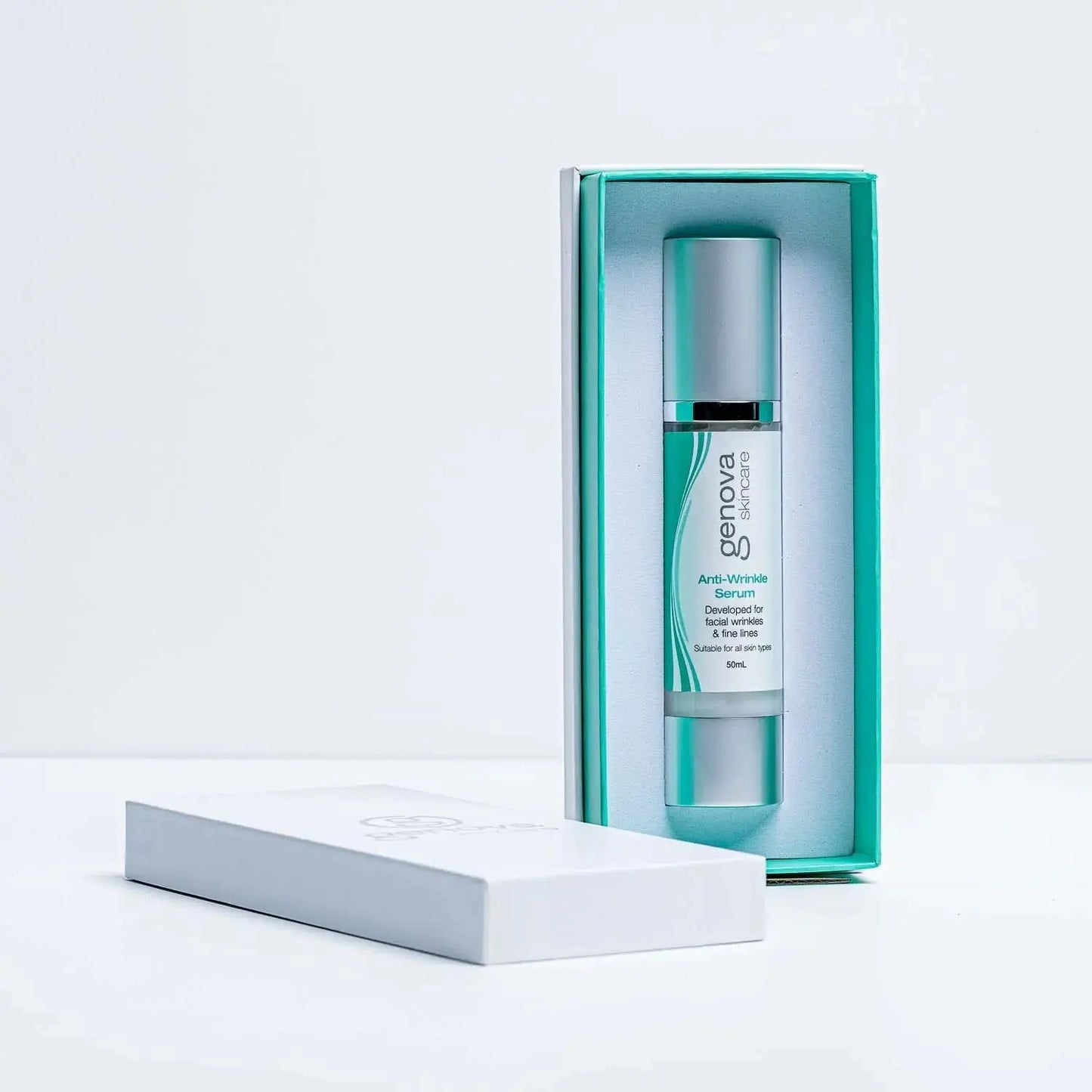
Genova products are formulated for Australian menopausal skin and made locally to strict quality-control standards. The formulations are built around the six ingredients above rather than a single hero. The Firming Cream uses Serilesine and Nocturshape peptides in a ceramide-supporting base. The Anti-Wrinkle Serum uses Matrixyl-family peptides. The Perfecting Eye Serum uses Eyeseryl, Eyedeline and Snap-8. The Active Foaming Cleanser sits at the start of the routine without stripping the lipids the rest of the routine is trying to support.
The structure is simple by design: cleanser, peptide serum, peptide cream, SPF. It is the routine the six-ingredient framework tends to land women on.
Realistic Expectations: A routine built on these six ingredients may improve hydration in 2 to 4 weeks, texture by week 6 to 8, and firmness by week 12. It cannot replace lost facial fat, lift loose hanging skin, or undo years of UV damage. The right ingredient list raises the odds of result, not the certainty. Individual results vary based on age, baseline condition and consistency of use.
Strengths And Limitations Of An Ingredient-First Approach For Women Over 45
Strengths of choosing menopausal skincare by ingredient
- Filters most marketing in under a minute per label
- Travels with you across brands and price points
- Aligns spending with formulations that match the biology of mature skin
- Builds your own confidence in what to buy next
- Reduces the cost of trial-and-error over time
Limitations of an ingredient-first approach for menopausal skin
- Cannot tell you the concentration unless the brand publishes it
- Cannot predict how your specific skin will respond to a finished formula
- Cannot replace a patch test for sensitive or reactive skin
- Cannot account for fragrance, preservative or oil sensitivities
- Cannot speed up the underlying biological timeline of mature skin
How To Read A Skincare Label For Menopausal Skin After 45
- Turn the bottle over. The ingredient list (INCI) is the only honest source. The front of the box is marketing.
- Scan for the six. Peptides, ceramides, niacinamide, hyaluronic acid, retinoids, antioxidants. Two or three of the six in one product is a strong sign.
- Note where they sit. Ingredients are listed by concentration. Anything after the preservative is present in trace amounts and likely included for the label, not the result.
- Watch the first five. Water, glycerin, emollients and one or two actives is a clean start. A heavy fragrance or alcohol in the first five suits younger skin better than menopausal skin.
- Check for the missing. If a "peptide" serum lists no specific peptide by name, the brand is leaning on the word, not the molecule.
- Apply the buying framework. The how to choose menopause skincare hub covers the wider decision around the ingredient list.
Who Should Use An Ingredient-First Approach To Menopausal Skincare After 45
It may suit you if:
- You want a repeatable way to evaluate any new product
- You have spent on products that did not deliver and want a clearer filter
- You enjoy understanding what your skincare actually does
- You are starting fresh and want to invest well
- You are in perimenopause or post-menopause and the old products are not delivering
It may not suit you if:
- You prefer to choose on packaging, fragrance or recommendation alone
- You have a skin condition that needs a doctor-led plan
- You are looking for a single hero product rather than a small considered routine
- You are unwilling to spend a minute on the back of the box
Frequently Asked Questions About Menopause Skincare Ingredients After 45
How many of the six ingredients should one product contain?
Two or three is typical for a serum or cream. Five or six in one product usually means each is at trace concentration. A small routine of two or three products covering the six together works better than one product claiming everything.
Are plant extracts and botanicals useful for menopausal skin?
Some are, most are not. Bakuchiol and centella have evidence behind them. Many botanicals are present at fractions of a percent and are there for the label, not the result. Apply the same test as for any other ingredient.
Is collagen in a cream useful for mature skin?
Topical collagen molecules are too large to penetrate the skin. Peptides signal the skin to make its own collagen, which is why the collagen cream vs peptide cream post puts peptides ahead for menopausal skin.
How important is fragrance in a menopause skincare product?
Fragrance is one of the most common irritants for menopausal skin. A fragrance-free or low-fragrance product is usually the safer choice if the skin runs reactive.
Should I use a different ingredient list at night?
The same six ingredients still apply. Retinoids and acids fit at night because they degrade in UV. Antioxidants and SPF actives belong in the morning. Peptides, ceramides and niacinamide work either time.
Can I trust "pharmacy strength" or "advanced formula" claims?
These claims are unregulated in Australian skincare. What matters is what is in the bottle and at what concentration, not the words on the front of the box.
References
Lephart, E. D. (2018). A review of the role of estrogen in dermal aging and facial attractiveness in women. Maturitas, 117, 1-10.
Errante, F., Ledwoń, P., Latajka, R., Rovero, P., & Papini, A. M. (2020). Cosmeceutical peptides in the framework of sustainable wellness economy. Frontiers in Chemistry, 11, 572923.
Kendall, A. C., Pilkington, S. M., Sassano, G., Rhodes, L. E., & Nicolaou, A. (2022). Menopause induces changes to the stratum corneum ceramide profile. Scientific Reports, 12, 21715.
The shortest route through the skincare aisle is the back of the box. Six ingredients carry most of the work on menopausal skin, the rest is texture, fragrance, or marketing. If you are starting fresh, the Firming Cream twice daily with the Anti-Wrinkle Serum underneath is the standard pairing.
Disclaimer: This article is for general information only and is not a substitute for personal professional advice. Results vary between individuals and depend on age, skin condition and consistency of use. If you have specific skin concerns or conditions, please consult a qualified skin specialist or your doctor.