
Skincare and Clinic Care After Menopause Over 45
By Simon MitchellQuick Summary:
Daily skincare and in-clinic care work on different layers of menopausal skin. Daily skincare supports the surface, barrier and cells that respond to peptide signalling. In-clinic care reaches deeper layers daily creams cannot reach. For women over 45, the two are usually complementary, not competing. Results vary.
You sat in your car after the school run, scrolling photos of women your age who suddenly looked smoother than you remembered, and felt a quiet question land. Were they doing something at a cosmetic doctor that you were not? You looked at the eight bottles on your bathroom shelf, then at the consultation link you saved in March, and did not know which one was actually the answer.
You are weighing this up alongside broken sleep, a body that has shifted shape without permission and patience that runs short by lunch. The choice is rarely actually skincare versus a clinic. It is which layer of the picture you are trying to support, and how the two slot together.
Start here
- If your concern is daily dryness and sensitivity, read our menopausal skincare routine.
- If your concern is upper-face lines, read anti-wrinkle injections vs peptide skincare.
- If your concern is lower-face sagging, read the jawline definition after menopause.
- If your concern is pigmentation, read melasma vs age spots after menopause.
- If you want a routine, start with the Menopause Skin Reset.
Why More Women Over 45 Are Weighing This Question Now
Research published in Maturitas by Lephart describes how the first five years after estrogen declines bring around a 30 percent drop in collagen, a fall in barrier lipids, and slower turnover at the surface. At the same time, in-clinic options for Australian women have widened. Anti-wrinkle injections, dermal fillers, energy-based devices and skin needling are all more visible than ten years ago. The question lands at the same moment for many women. Is daily care still enough? Most cosmetic doctors will tell you it is both, in that order. Our best skincare routine for menopausal skin in Australia piece covers the daily-care floor.
What Daily Skincare Can and Cannot Do for Menopausal Skin
Daily skincare works on the layers it can reach. It supports the barrier, settles reactivity, softens surface texture, eases pigmentation, signals collagen and elastin through peptides, and protects what you have from UV damage. Research in Frontiers in Pharmacology by Errante and colleagues describes how cosmetic peptides act as signalling molecules in the upper dermis, supporting normal collagen, elastin and hyaluronic acid maintenance.
What daily skincare cannot do is reach the deeper layers where bone, fat pad volume and muscle tone sit. It cannot remove a dynamic line caused by years of muscle movement, replace facial fat lost to time, or lift loose tissue. These are not failures. They are the boundary at which daily care passes the baton to a cosmetic doctor. Our pieces on jowls and marionette lines after menopause and loss of jawline definition walk through this boundary.
What In-Clinic Care Reaches That Skincare Cannot for Mature Skin
In-clinic care covers anything performed by a qualified cosmetic doctor or skin specialist. Anti-wrinkle injections soften muscle action behind dynamic lines. Dermal fillers replace lost volume. Skin boosters and polynucleotide injectables work on dermal quality. Radiofrequency, HIFU, Ultherapy and laser target collagen and laxity at depths skincare cannot reach. IPL addresses vascular and pigmented concerns. In-clinic skin needling reaches dermal collagen beyond at-home rolling. None of these replaces daily care. A woman having anti-wrinkle injections still needs barrier support, daily SPF and peptide signalling to keep the rest of her face moving the same direction. Our sister post Botox vs Peptide Skincare works through one pairing in detail, and our forehead and frown lines after menopause post covers the upper-face picture.
In Australia, cosmetic injectables and higher-risk non-surgical cosmetic procedures should be discussed with a qualified, registered health practitioner who can assess your medical history, explain risks, outline aftercare and confirm whether the treatment is suitable for you.
Comparing Skincare and Clinic Approaches for Women Over 45
Most options for menopausal skin sit in one of four layered groups. Daily skincare is the foundation; the other three sit above it.
| Layer | Best for | Timeframe | Main limitation |
|---|---|---|---|
| Daily skincare | Barrier, texture, fine lines, redness, pigmentation | 4–12 weeks | Cannot reach deeper structural layers |
| Anti-wrinkle injections/fillers | Dynamic lines and volume loss | Days to months | Higher cost, doctor-led, repeat visits |
| Energy/light-based care | Laxity, pigment, vascular concerns | 1–6 months | Cost, downtime, suitability varies |
| Skin boosters | Hydration and skin quality | 4–12 weeks | Does not lift laxity or muscle lines |
Daily skincare for menopausal skin
Best for: barrier, surface texture, fine lines, pigmentation, redness and peptide signalling. Timeframe: surface change 4 to 6 weeks, structural softening 8 to 12 weeks. Cost: low to mid, ongoing. Limitation: cannot reach deeper structural layers or muscle-driven lines.
Anti-wrinkle injections and dermal fillers
Best for: dynamic forehead, frown and crow's feet lines (injections); lost volume in cheeks, lips and around the mouth (fillers). Doctor-administered. Timeframe: 7 to 14 days for injections, immediate for fillers. Cost: significantly higher per session, repeating every 3 to 12 months.
Energy-based and light-based in-clinic options
Best for: laxity and collagen depth (radiofrequency, HIFU, Ultherapy); pigmentation and vascular concerns (IPL, laser); dermal collagen (in-clinic skin needling). Timeframe: 1 to 6 months across multiple sessions. Cost: significantly higher. Still requires daily skincare to maintain results.
Skin boosters and polynucleotide injectables
Best for: dermal hydration, skin quality, fine surface lines, overall density. Doctor-administered as a series. Timeframe: visible change over 4 to 12 weeks. Cost: significantly higher per series. Works on quality, not laxity or muscle-driven lines.
Where Genova Sits as the Daily Foundation Layer for Menopausal Skin
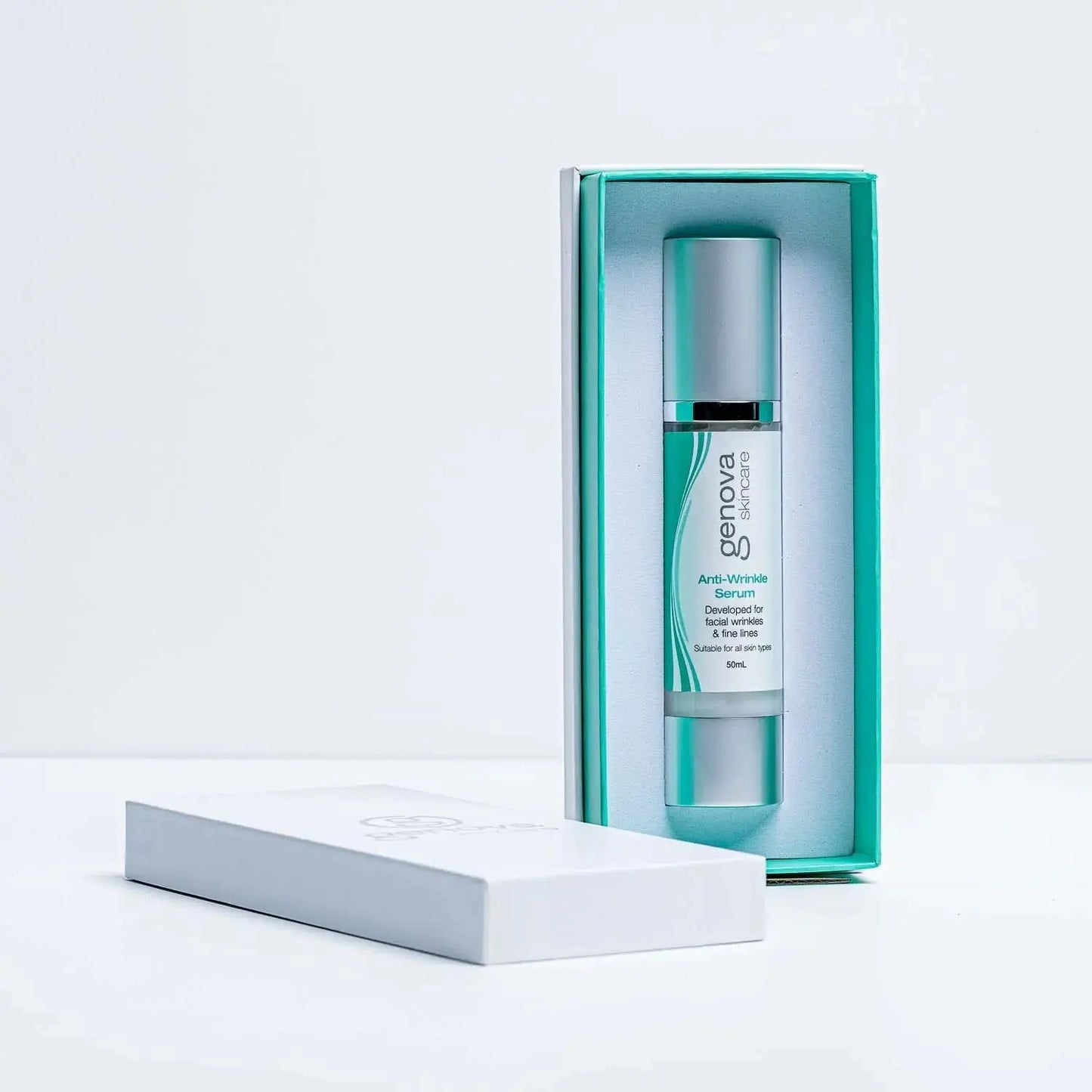
Genova is built for the daily layer, formulated in Australia for women over 45 whose skin is no longer responding the way it did. The Genova Firming Cream uses Serilesine and Nocturshape to support collagen signalling and barrier integrity. The Genova Anti-Wrinkle Serum uses peptide actives for menopausal collagen support. The Genova Red Active Serum settles reactivity, and the Genova Active Foaming Cleanser keeps the surface clear without stripping the barrier. Australian-made under strict quality-control standards. It does not pretend to lift laxity or remove muscle-driven lines. For the structured version, see The Menopause Skin Reset, our 12-week barrier-first plan.
Realistic Expectations: Daily skincare supports surface change over 4 to 12 weeks of consistency. It will not replace estrogen, lift loose tissue, or remove muscle-driven dynamic lines. In-clinic care addresses layers daily creams cannot reach but does not replace daily care. Many women feel their skin sits in a better place when both layers work together. Results vary.
Strengths of pairing daily skincare with in-clinic care for mature skin
- Each layer works on a different part of the picture
- Daily skincare protects clinic gains between visits
- Peptide routines support surface signalling while clinic care addresses deeper layers
- Layering removes the pressure to find one product that does everything
Limitations of pairing daily skincare with in-clinic care for menopausal skin
- Will not replace estrogen or reverse the structural changes of menopause
- Will not produce overnight visible change
- Missed daily care undermines clinic gains
- In-clinic care is an ongoing investment, not a one-off fix
Who Daily Skincare Alone Suits and Who Should Consider Clinic Care After Menopause
It may suit you if daily skincare is your right starting point:
- Your main concerns are surface texture, fine lines, mild redness, dryness or pigmentation
- You are committed to a twice-daily routine with daily SPF
- You prefer a slow, layered approach over visible structural change
It may not suit you on its own, and a cosmetic doctor visit is worth considering, if:
- You have deep dynamic lines on the forehead, between the brows or around the eyes
- You have noticeable volume loss in the cheeks, around the mouth or in the lips
- You have laxity along the jawline or lower face that skincare is no longer holding
- You have stubborn pigmentation that has not shifted after 12 weeks, especially possible melasma (see melasma vs age spots after menopause)
How to Use Daily Skincare and Clinic Care Together After 45
- Start with daily care for at least 12 weeks before judging whether in-clinic care is needed. The layering order for menopausal skin covers how to build it.
- Book a cosmetic doctor consultation for specific concerns daily care has not shifted, not a general fix-my-face appointment.
- Continue daily skincare through and after clinic care. Maintaining the surface protects the gains between visits.
- Apply daily SPF 30 or higher without exception. UV is the fastest way to lose both skincare and clinic gains.
- Reassess every 12 weeks. If daily care has the surface settled, you may not need clinic care this season.
Common Questions About Skincare and Clinic Care for Mature Skin
Is daily skincare worth it if I am already having anti-wrinkle injections?
Yes. Anti-wrinkle injections work on muscle action behind dynamic lines, not on the surface, barrier or collagen layer. Daily peptide skincare supports everything the injection does not reach, and most women find their skin looks better between sessions when the two are paired.
Can good skincare delay the need for clinic care after menopause?
For some women, yes. A consistent peptide-led routine with daily SPF often pushes the timeline at which clinic care feels necessary out by months or years. It will not delay it forever, and that is the nature of structural change.
What is the best order to start skincare and clinic care after 45?
Daily skincare comes first. Establish a settled twice-daily routine with daily SPF for at least 12 weeks before adding clinic care. That way your cosmetic doctor has a clearer baseline.
Will my skincare interfere with anti-wrinkle injections or fillers?
Usually not. Most cosmetic doctors ask you to skip retinoids and acids for a few days either side of an appointment, and to leave injection sites alone for 24 hours. Otherwise daily skincare continues as normal.
Is in-clinic care safe for menopausal skin?
Most options are well tolerated when performed by a qualified cosmetic doctor or skin specialist with experience in mature skin. A thorough consultation matters more than the device. Bring your health history and current routine openly.
How much should I expect to spend on in-clinic care after 45?
It varies widely. Anti-wrinkle injections typically run a few hundred dollars per session every 3 to 4 months. Dermal fillers, energy-based options and skin booster series run several hundred to several thousand dollars per series. A cosmetic doctor will give you a figure at consultation.
References
Lephart, ED. 2018. A review of menopause-related skin changes and supporting skin biology after estrogen decline. Maturitas.
Errante, F. et al. 2020. Cosmeceutical peptides in the framework of sustainable wellness. Frontiers in Pharmacology.
Coleman, KR. and Carruthers, J. 2006. Combination therapy with botulinum toxin and fillers for facial rejuvenation. Plastic and Reconstructive Surgery.
If you are weighing all of this up after a long day, none of it has to be decided this week. The most useful first step is usually the calmest one. Build a daily routine that holds the surface, give it 12 weeks, and see what your skin looks like underneath the noise. From there, the question of whether clinic care fits becomes clearer. The Genova Firming Cream is built to do that holding work at the daily layer.
This article is for general information only. Results from cosmetic skincare and in-clinic care vary with individual skin, age, and consistency. Genova Skincare is not a substitute for advice from your GP, cosmetic doctor or skin specialist. If you have a confirmed skin condition or are considering in-clinic care, please consult a qualified specialist.