
Why Menopause Skincare Isn't Working: 5 Common Mistakes
By Simon MitchellQuick Summary:
If your menopause skincare seems to be doing nothing at week 4, the product is usually not the problem. Five common mistakes slow peptide results on mature skin: stopping too early, applying once a day instead of twice, layering in the wrong order, skipping SPF, and stacking too many strong actives. Each fix is quick and free, and most women make at least two of them.
| Mistake | What it looks like | Quick fix |
|---|---|---|
| Stopping too early | You quit at week 3–4 | Commit to 12 weeks |
| Once daily use | You only apply at night | Use morning and night |
| Wrong order | Cream before serum | Cleanser, serum, cream, SPF |
| No SPF | Good routine, no protection | SPF 50+ every morning |
| Too many actives | Redness, dryness, stinging | Simplify for 7 days |
It is week four. You are standing in the bathroom with the bottle in your hand, and you have used it morning and night since the day you brought it home. Your skin looks the same. The line beside your mouth has not softened. You are quietly thinking this might be another bottle for the drawer.
That moment is one of the hardest in menopausal skincare. You are managing broken sleep, mood swings, a body that does not feel familiar. The last thing you need is another product that fails to do what it promised.
Most of the time, the product is not the problem. Five common mistakes slow peptide skincare results on menopausal skin, and most women make at least two of them. Each one has a quick fix.
Why Your Menopause Skincare May Look Like It Isn't Working After 45
Peptide skincare does not work on a two-week timeline on mature skin. Cell turnover after menopause stretches from around 28 days to 50 or 60 days, so the skin you see today was made roughly two months ago. Research in Maturitas by Lephart describes how estrogen receptors in skin cells help drive collagen production and barrier maintenance, and how the cellular response slows when estrogen declines.
The signal is still being received. The cells responding to it are working at a slower pace, so visible change appears later than it would have at 30. Most women see firmness changes between weeks 8 and 12, not at week 4. The full timeline is mapped in the pillar post on how long menopausal skincare takes to work.
The other reasons skincare may look like it is not working are usually about how the products are being used, not the products themselves.
The Five Most Common Mistakes That Slow Skincare Results In Menopausal Women
1. Stopping too early. Peptide skincare needs 6 to 12 weeks before firmness becomes visible. Stopping at week 3 or 4 means stopping before visible change is biologically due. The fix: commit to 12 weeks. Take photos at day 1, week 6 and week 12.
2. Once a day instead of twice. Peptides are signalling molecules. Twice-daily use sends thousands of signals to the cell over weeks. Once daily halves the signal and pushes the timeline out. The fix: morning and night, every day. Keep the bottle next to your toothbrush.
3. Wrong layering order. Serum goes first because it is the smallest molecule. Cream seals it in. SPF goes last in the morning. If cream sits under serum, the serum never reaches the skin. The fix: cleanser, serum, cream, SPF in the morning. The layering order guide covers each step.
4. Skipping SPF. UV breaks down collagen as fast as peptides build it. A peptide routine without daily SPF 50+ is a treadmill that never moves. This is the single most important habit, often skipped on overcast Australian days when UV is still high enough to do damage. The fix: SPF 50+ every morning, reapplied every two hours outdoors.
5. Stacking too many strong actives. Peptides work best in a calm skin environment. Strong retinol, multiple acids and vitamin C all at once disrupts the barrier peptides need. Menopausal skin reacts faster to stacked actives. The fix: simplify to peptide serum, barrier cream, SPF. Add one stronger active only if skin tolerates everything else.
Comparing How To Respond When Menopausal Skincare Seems To Stop Working
Stop using it (the give-up approach)
Returning to whatever was used before resets the timeline to zero. The mistakes above repeat with the next product. Most women cycle through several brands this way without giving any long enough to work.
Fix one or two mistakes at a time
Correcting the most obvious mistake (usually timing or SPF) often shifts results within 2 to 4 weeks. Lower effort, slower progress, suits women who are mostly consistent already.
Full 7-day routine reset
Audit the shelf, simplify to three steps, restart twice-daily use with the correct layering order. Combined with patience to week 12, this gives the routine the best chance of producing the visible firmness change the peptides are designed to support.
Doctor-led or in-clinic input
If the routine has been consistent for 12 weeks and there is still no change, or if there is a skin condition complicating things, professional input is the next step. When skincare isn't enough covers the signals that suggest it is time to escalate.
How Genova Skincare Is Designed To Work For Menopausal Skin Over 45
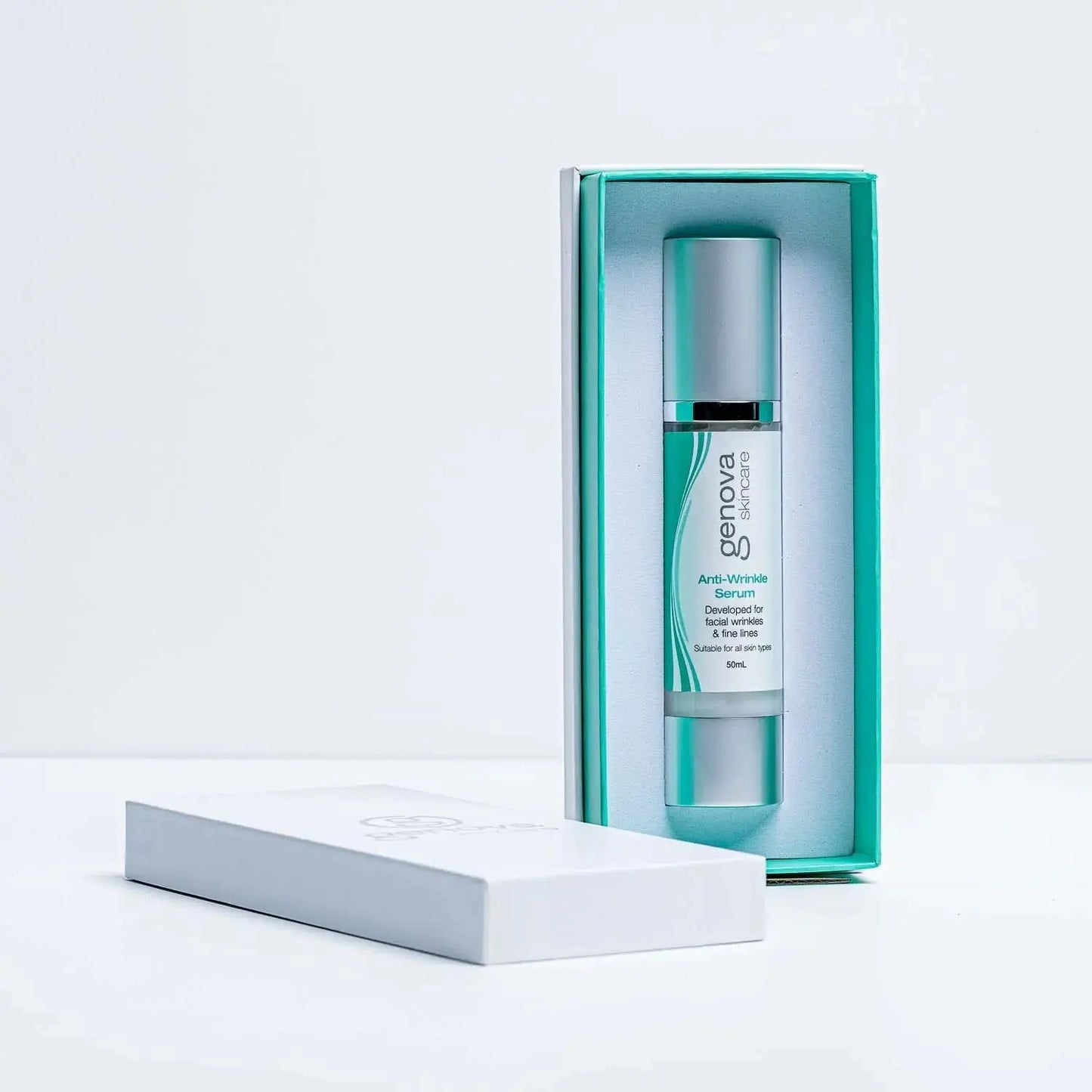
Genova products are formulated for Australian menopausal skin and made locally to strict quality-control standards. The peptide actives include Serilesine and Nocturshape in the Genova Firming Cream, and Matrixyl-family peptides in the Genova Anti-Wrinkle Serum. Research in Frontiers in Pharmacology by Errante describes how peptide signalling works in mature skin: the cell receives the message, and the response begins.
The routine is simple by design. Cleanser, peptide serum, firming cream, SPF in the morning. The same three steps without SPF at night. That structure suits the slower cell-turnover cycle of skin after 45 and avoids the over-stacking that disrupts the barrier.
Realistic Expectations: Fixing one or more of these mistakes can shift the timeline by weeks but does not work overnight. Most women who correct the routine start to see hydration and texture changes within 2 to 4 weeks, with firmness landing closer to 12 weeks. Peptide skincare cannot replace lost facial fat, lift loose hanging skin, or undo years of sun damage. Individual results vary based on age, baseline skin condition and consistency of use.
Strengths And Limitations Of Fixing Common Mistakes In Menopausal Skincare
Strengths of correcting common menopausal skincare mistakes
- Most fixes are quick and cost nothing
- Each fix compounds with the others
- Restores the timeline rather than starting over
- Builds long-term habits
- Often turns "this isn't working" into "I think it's actually doing something"
Limitations of routine fixes for menopausal skin
- Cannot speed biology beyond the 6 to 12 week timeline
- Cannot undo barrier damage from years of stripping or over-stacking
- Cannot replace estrogen or reverse structural collagen loss
- Cannot lift hanging skin or restore facial fat volume
- Results vary individual to individual
How To Reset Your Menopausal Skincare Routine In 7 Days
- Day 1: Take a photo. Same light, same angle. This is your baseline.
- Day 2: Audit the shelf. Set aside anything with retinol, strong acids or stacked actives unless you know your skin tolerates them.
- Days 3 to 7: Simplify to three steps morning and night. Cleanser, peptide serum, firming cream. Add SPF 50+ in the morning.
- From Day 7: Apply twice a day, in the right order. Press serum in, wait a minute, apply cream. SPF last in the morning.
- Weeks 6 and 12: Take another photo. Compare to day one. Decide then.
For more structure, the 12-week Menopause Skin Reset pathway walks through the routine in phases.
If you want the simplest Genova routine to follow for the next 12 weeks, use Foaming Cleanser, Anti-Wrinkle Serum, Firming Cream and SPF each morning, then Cleanser, Anti-Wrinkle Serum and Firming Cream at night.
Who Should Reset Their Menopausal Skincare Routine After 45
It may suit you if:
- You have used a peptide routine for 4 weeks or less and see no change
- You are using products once a day rather than twice
- You are unsure of the right layering order
- You are skipping SPF most days
- You have multiple strong actives stacked in the routine
It may not suit you if:
- You have already used a peptide routine consistently for 12 weeks and seen no change
- You want structural lifting that only in-clinic options can deliver
- You have a skin condition that needs a doctor-led plan
- You are unwilling to commit to twice-daily use for several months
Frequently Asked Questions About Menopausal Skincare That Isn't Working
How long should I give a peptide serum before deciding it isn't working?
At least 12 weeks of consistent twice-daily use. Most women see hydration changes in the first 2 weeks, texture between 6 and 8 weeks, and firmness around week 12. Stopping at week 4 means stopping before visible change is biologically due.
Why does my serum feel like it sits on my skin instead of absorbing?
This usually means you are applying too much, or applying it after a heavier cream rather than before. Use a small amount, press it in, then layer cream on top. The barrier cream seals the serum in.
Can I skip SPF if I am inside all day?
UV passes through windows and contributes to collagen breakdown over time. SPF 50+ every morning protects the work your skincare is doing.
Is it normal for my skin to feel worse before it feels better?
A short adjustment period of one to two weeks is common, especially after removing stripping products or starting a peptide serum. If irritation lasts beyond two weeks, simplify further or see a skin specialist.
I forgot to use my serum for two weeks. Do I have to start over?
No. The signals you sent in earlier weeks contributed to the response. Restart twice-daily use and keep going from where you are.
Should I add more products to speed things up?
Adding products tends to slow results because more actives stress the barrier. The fastest route is consistency with a simple routine. Cleanser, peptide serum, barrier cream, SPF. Twice a day, every day.
References
Lephart, E. D. (2018). A review of the role of estrogen in dermal aging and facial attractiveness in women. Maturitas, 117, 1-10.
Errante, F., Ledwoń, P., Latajka, R., Rovero, P., & Papini, A. M. (2020). Cosmeceutical peptides in the framework of sustainable wellness economy. Frontiers in Pharmacology, 11, 572923.
Most of the time, your skincare is not failing you. It is being asked to work on a timeline that does not match how menopausal skin responds, or with habits that are quietly slowing it down. Fixing one or two of these mistakes can shift the experience from disappointment to "I think it's actually doing something" within weeks. If you are starting fresh, the Firming Cream twice daily with the Anti-Wrinkle Serum underneath is the standard pairing. Let the small habits do the work.
Disclaimer: This article is for general information only and is not a substitute for personal professional advice. Results vary between individuals and depend on age, skin condition and consistency of use. If you have specific skin concerns or conditions, please consult a qualified skin specialist or your doctor.