
Blemishes on Face: What They Are, Why They Appear After 45 and What Helps
Quick summary
A blemish is any spot, bump or mark on the skin. On the face, that covers blackheads, pimples, deep cysts, dark marks, rosacea bumps and tiny white milia. Each has a different cause and needs different care.
After 45, hormonal changes can bring breakouts back, often around the jaw and chin, while skin is also drier and slower to recover. Gentle care, salicylic acid and daily SPF 50+ help most everyday blemishes. In Australia, any new or changing spot should be checked by a doctor.
At Genova Skincare we make blemish products, so our own range is mentioned in this guide. Results vary from person to person.
You thought breakouts were behind you, and now there are spots on your chin again, or small bumps that never quite clear. It can be frustrating, especially when the products you used as a teenager now leave your skin dry and stinging.
At Genova Skincare, we hear this often from women in perimenopause and menopause. This guide explains what blemishes on the face actually are, why they show up after 45, which types a cream can help with, and which ones need a doctor.
What are blemishes on the face? A guide for women over 45
At Genova Skincare, we use "blemish" the way most people do: as a catch-all word for any mark or bump that interrupts smooth skin. It is not a medical diagnosis. That is why the first step is working out which kind you have.
Most facial blemishes fall into one of two groups. Some are part of acne, caused by blocked pores, oil and inflammation. Others only look like acne but have a different cause, such as sun damage, rosacea or trapped skin cells. Treating the wrong one is a common reason products seem not to work.
Types of face blemishes after 45 compared
| Type | What it looks like | Common cause after 45 | What may help | See a GP if |
|---|---|---|---|---|
| Blackheads and whiteheads | Small dark or skin-coloured bumps in pores | Blocked pores, heavy products | Salicylic acid, retinol, lighter moisturiser | Many and not improving after 3 months |
| Pimples (papules and pustules) | Red, tender bumps, some with a white top | Hormonal shifts, blocked pores | Salicylic acid or low-strength benzoyl peroxide, no picking | Frequent, painful or leaving marks |
| Deep cysts or nodules | Large, sore lumps under the skin, often jaw and chin | Hormonal acne | Prescription options from a doctor | Always, as they can scar |
| Dark marks and sun spots | Flat brown patches | Past pimples, years of sun | SPF 50+, brightening ingredients | A spot is new, changing, raised or bleeding |
| Rosacea bumps | Redness and small bumps with no blackheads | Rosacea, often with flushing | Gentle care, avoid triggers | To confirm it is rosacea, not acne |
| Milia | Tiny, hard white dots, often near the eyes | Trapped skin cells, rich creams | Gentle exfoliation, lighter eye products | You want them removed safely |
Many women have more than one type at once. For example, it is common to have a few hormonal pimples on the chin and older dark marks on the cheeks.
Why blemishes appear in perimenopause and menopause
Adult acne is more common than many people think. A review in the International Journal of Women's Health by Khunger and Mehrotra found that about one in four women in their 40s has acne, and it still affects many women over 50.
The main driver is hormonal balance. As oestrogen falls, the effect of androgens (male-type hormones that all women make) becomes relatively stronger. Androgens encourage oil glands to make more oil, which can block pores. This is why menopausal breakouts often sit along the jaw, chin and neck.
At the same time, skin after 45 is usually drier, thinner and slower to repair. The same review notes that older women tend to tolerate harsh acne products less well and are more prone to dark marks after spots heal. That combination explains why a teenage routine rarely works now.
Other triggers can add to the problem:
- Some hormone therapy or medicines. A few types of progestogen may encourage oil. Talk to your GP rather than stopping anything yourself.
- Stress and poor sleep. Both are common in perimenopause and can make breakouts worse.
- Heavy creams and make-up. Rich anti-ageing products can block pores on oilier areas.
- Picking and squeezing. This spreads inflammation and raises the risk of marks and scars.
What helps blemishes on mature skin: gentle, evidence-based care
For everyday blackheads and pimples, the aim is to unblock pores and calm inflammation without stripping skin that is already drier.
Salicylic acid is an oil-soluble exfoliant that works inside the pore. A 12-week trial published in the Journal of Cosmetic Dermatology by Ye and colleagues found that a 2 per cent salicylic acid product performed about as well as adapalene, a retinoid often used for acne, for mild to moderate acne, with few side effects.
Benzoyl peroxide reduces acne bacteria. The American Academy of Dermatology suggests starting at a low strength, as it can dry and irritate skin. Retinoids help keep pores clear and may also support smoother-looking skin, but introduce them slowly.
Whatever you choose, keep the rest of your routine simple: a gentle cleanser, a light non-comedogenic moisturiser, and SPF 50+ every morning. Our perimenopause acne routine sets this out step by step.
Genova Blemish Treatment: one option for adult breakouts after 45
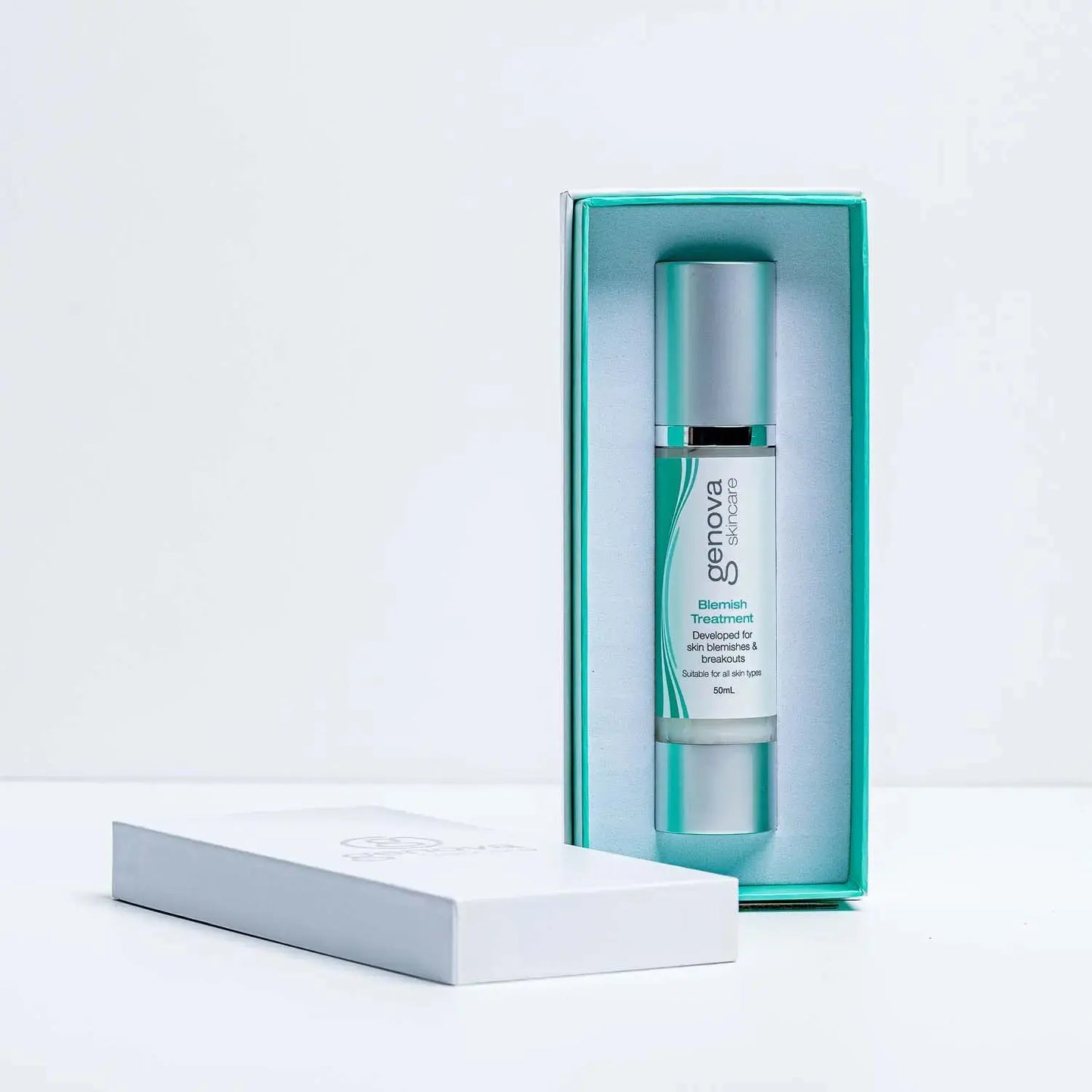
Genova Blemish Treatment is designed for adult and hormonal breakouts. It is a 50ml formula with salicylic acid and other skin-balancing ingredients, made to be used across the breakout-prone area rather than only on single spots. For individual pimples, Genova Blemish Spot Gel is a peroxide-free option you dab on directly.
Pros and cons of Genova Blemish Treatment
Pros:
- Designed with adult and hormonal skin in mind
- Contains salicylic acid, which has good evidence for mild acne
- Made in Australia, with a 30 day money back trial
Cons:
- Will not treat deep cysts, rosacea or milia
- Can cause dryness at first, so start every second day
- Needs 6–8 weeks of steady use to judge
Who it is for, and who it is not for
It may suit you if you have mild to moderate breakouts, blackheads or congestion, especially around the jaw and chin, and your skin is not broken or badly irritated.
It is not for you if you have painful cysts, a rash, rosacea, a known salicylate allergy, or are pregnant or breastfeeding without checking with your doctor. If your spots are dark marks rather than pimples, a brightening product and sunscreen are a better fit.
Realistic expectations
The American Academy of Dermatology says most acne products take 4–8 weeks to show improvement, and longer to clear skin. Expect fewer and smaller breakouts, not perfect skin, and expect the odd flare.
No cosmetic product can cure hormonal acne. Results vary from person to person.
What a blemish cream cannot do after 45
A cream cannot fix the hormonal changes behind menopausal breakouts. If your acne is painful, widespread or scarring, a GP or dermatologist can offer prescription options that work in a different way. Our guide on hormonal acne after 45 and when to see a doctor lists the signs.
It also cannot treat rosacea, remove milia or fade old scars. Rosacea tends to begin between 30 and 50 and is marked by redness and flushing without blackheads. Milia need a gentle approach or removal by a professional. For marks left behind, our guide to acne scars and pimple scar creams explains what helps each type.
Most importantly, no product should be used on a spot you are unsure about. Australia has one of the highest rates of skin cancer in the world, and some skin cancers start as a small pimple-like bump that does not heal. Have any spot that is new, changing, bleeding or not healing after a few weeks checked.
How to care for blemish-prone skin after 45: step by step
- Cleanse gently, twice a day. Use lukewarm water and a mild cleanser. Skip scrubs.
- Apply your blemish product. Start every second evening, then build up to daily if your skin is comfortable.
- Moisturise with a light formula. Look for "non-comedogenic" on the label.
- Use SPF 50+ every morning. Sun makes post-spot marks darker and slower to fade.
- Do not pick. Use a spot treatment or a pimple patch instead.
- Review at 8 weeks. If there is little change, or spots are deep and sore, book in with your GP.
Blemish questions women over 45 ask most
What are blemishes on the face?
Blemishes are any spots, bumps or marks on facial skin. They include blackheads, pimples, cysts, dark marks, rosacea bumps and milia. Most are harmless, but each type needs different care.
What does a blemish look like?
It depends on the type. A pimple is a red, raised bump; a blackhead is a small dark dot in a pore; a dark mark is flat and brown. A spot that bleeds, crusts or keeps changing should be checked.
How can I remove blemishes on my face?
For pimples and blackheads, use a gentle routine with salicylic acid or low-strength benzoyl peroxide and give it 6–8 weeks. Dark marks fade with daily SPF 50+ and time. Deep cysts need a doctor.
Do skin blemishes go away?
Most pimples clear within days to weeks, and dark marks usually fade over months. Scars and some sun spots do not go away on their own.
What is the best face cream for blemishes?
For mature skin, look for a product with salicylic acid that does not over-dry, paired with a light moisturiser and daily SPF. Our guide to spot treatments for hormonal acne after 45 compares the main options.
Blemishes after 45 are common, and they are not a sign you are doing something wrong. Work out which type you have, treat it gently, protect your skin from the sun, and get anything unusual checked. For more on adult breakouts, see our guide to clearing adult blemishes.
Blemish care made for skin after 45
Australian-made formulas for adult breakouts, with a 30 day money back trial.


Made in Australia. Results vary from person to person.
Individual results vary. Genova Blemish Treatment and Blemish Spot Gel are cosmetic products designed to support clearer-looking skin. They do not cure acne, treat rosacea or replace advice from your GP or dermatologist. Have any new, changing or non-healing spot checked by a doctor.
Sources:
- Khunger N, Mehrotra K. Menopausal acne: challenges and solutions. International Journal of Women's Health. 2019;11:555-567.
- Ye CX, et al. Journal of Cosmetic Dermatology. 2024;23(6):2125-2134. Randomised trial of 2 per cent supramolecular salicylic acid compared with adapalene for acne.
- American Academy of Dermatology. How to treat different types of acne. aad.org, accessed 25 September 2026.
- Cancer Council Australia. Skin cancer information. cancer.org.au, accessed 25 September 2026.