
Perimenopause Acne Skincare Routine: How to Treat Hormonal Breakouts Without Drying Your Skin
By Simon MitchellQuick Summary
Perimenopause acne is caused by shifting hormone levels, not poor hygiene or the same triggers as teenage breakouts. Around one in four women in their 40s experience it. The challenge is that menopausal skin is also drier and more sensitive, so aggressive acne treatments designed for younger skin can make things worse. An effective routine treats breakouts while protecting your moisture barrier. Results typically appear within 6 to 8 weeks.
Why Acne Returns During Perimenopause (and Why It Looks Different This Time)
If you have not had a breakout since your twenties and suddenly find deep, painful spots along your jawline, you are not alone and you are not doing anything wrong.
Perimenopause acne is driven by a specific hormonal shift. As estrogen declines, androgen hormones like testosterone become relatively more dominant, even though your androgen levels may not have changed. This relative imbalance stimulates your sebaceous glands to produce more oil, which can clog pores and trigger inflammation. Research published in the International Journal of Women's Dermatology indicates that roughly 26% of women in their 40s and 15% in their 50s experience regular acne.
The pattern is different from teenage acne, too. Adolescent breakouts typically appear across the forehead and cheeks. Perimenopause acne tends to concentrate along the jawline, chin, and lower cheeks, often as deep, cystic spots that sit beneath the surface and never come to a head. They can be painful, slow to resolve, and more likely to leave pigmentation marks on mature skin.
The Unique Challenge: Breakouts and Dryness at the Same Time
This is what makes perimenopause acne so frustrating, and why most off-the-shelf acne products fail women over 40.
Your skin is producing more oil in certain areas (thanks to androgen dominance), but simultaneously losing moisture everywhere (thanks to estrogen decline). The barrier is weaker, thinner, and more reactive. Aggressive acne treatments designed for teenage skin, high-strength benzoyl peroxide, alcohol-based toners, harsh foaming cleansers, strip what little moisture remains. The result is skin that is simultaneously oily, dry, inflamed, and irritated.
The goal is not to attack oil production the way a teenager's routine would. It is to reduce breakouts gently while actively protecting your moisture barrier. Both must be addressed in every step.
What to Look for in Acne-Fighting Ingredients After 45
Not all acne actives are suitable for perimenopausal skin. Here is how the main options compare for this specific context.
Salicylic acid (BHA): The standout for perimenopause acne. Oil-soluble, so it penetrates pores to dissolve sebum and dead cells, causing blockages. At 0.5% to 2%, it is effective without being overly drying, with mild anti-inflammatory properties that help with deep cystic spots.
Niacinamide (vitamin B3): A dual-purpose ingredient. It regulates sebum production while strengthening the skin barrier. Research published in the Journal of Cosmetic Dermatology shows niacinamide can reduce oil and improve barrier function simultaneously, making it ideal for the acne-plus-dryness challenge.
Benzoyl peroxide: Effective for bacterial acne but harsh on thinning menopausal skin. If used, stick to 2.5% applied to active spots only, never as an all-over treatment.
Retinoids: Excellent for cell turnover and preventing clogged pores, but they increase sensitivity. Introduce very slowly (once or twice a week) and always buffer with moisturiser.
Your Step-by-Step AM Routine for Perimenopause Acne
Morning is about gentle cleansing, targeted treatment, and protection.
Step 1: Gentle cleanser with mild actives. Choose a cleanser that removes excess oil without stripping your barrier, with low-concentration salicylic acid alongside soothing agents like allantoin. The Genova Active Foaming Cleanser combines salicylic acid with allantoin and witch hazel, designed for menopausal skin that needs to manage breakouts without feeling tight or uncomfortable. Rinse with lukewarm water.
Step 2: Niacinamide serum. Apply a niacinamide serum (3% to 5%) to your full face. This addresses both sides of the problem: calming oil production in your T-zone and jawline while supporting barrier repair everywhere else.
Step 3: Lightweight, non-comedogenic moisturiser. Even oily, breakout-prone areas need hydration during perimenopause. Choose a gel-cream or lightweight moisturiser with hyaluronic acid and ceramides. Avoid heavy, occlusive formulas on acne-prone zones.
Step 4: Broad-spectrum SPF 30+. Non-negotiable. Post-inflammatory hyperpigmentation (the dark marks breakouts leave behind) is worse with sun exposure, and menopausal skin is already more vulnerable to UV damage. Choose a non-comedogenic mineral or hybrid formula.
Your Step-by-Step PM Routine for Perimenopause Acne
Evening is for deeper treatment and barrier repair.
Step 1: Gentle double cleanse. Oil-based cleanser first to dissolve sunscreen, then your gentle foaming cleanser to clear pores. One cleanse is fine if you wore minimal product.
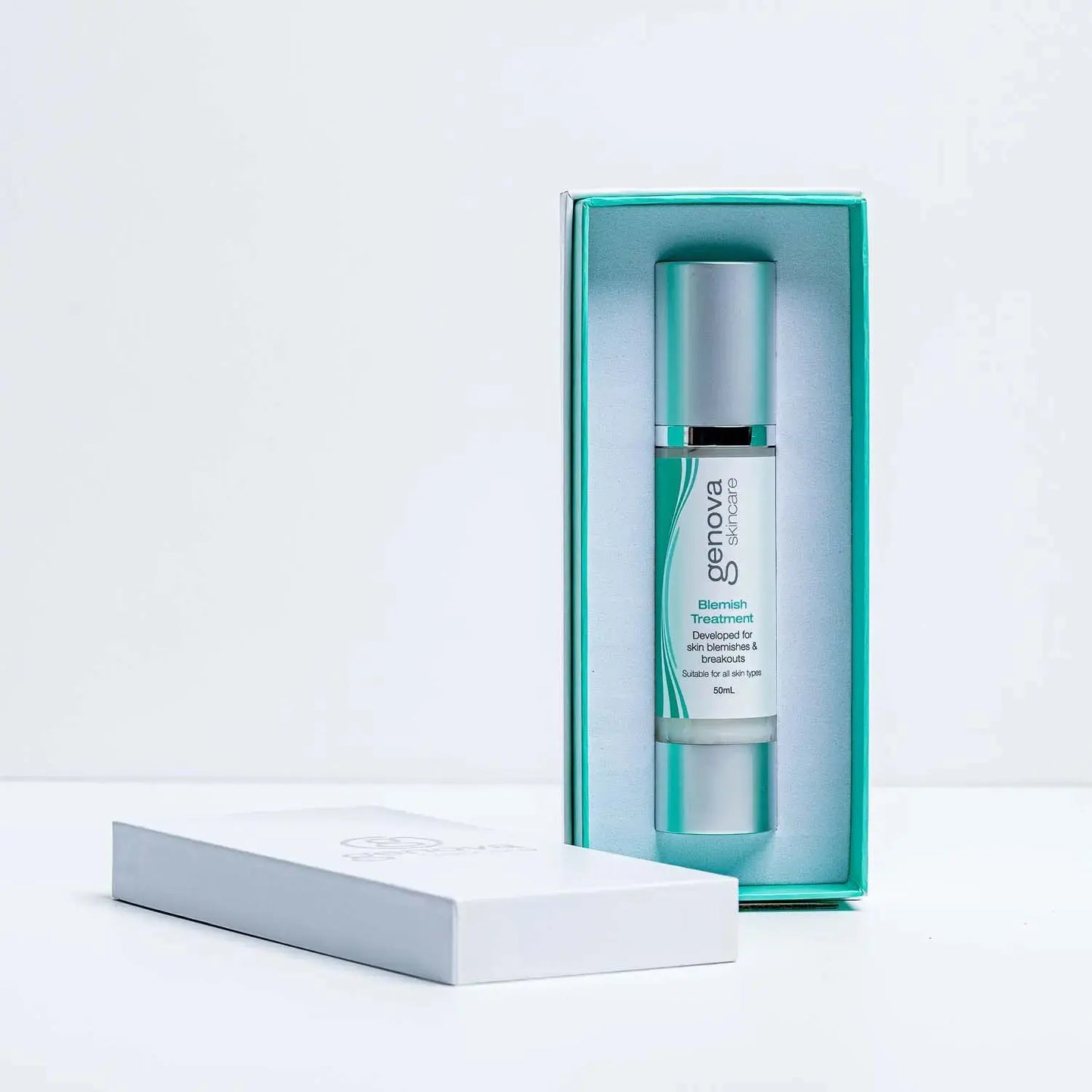
Step 2: Targeted blemish treatment. Apply a targeted treatment to active breakouts and congestion-prone areas. Ingredients like Matmarine (which targets excess sebum and reduces inflammation) paired with salicylic acid work well here. Genova's Blemish Treatment combines Matmarine with Peelmoist for hydration and salicylic acid for pore-clearing, one option that addresses breakouts without compromising barrier integrity. Apply only to affected areas, not your entire face.
Step 3: Hydrating serum. Apply hyaluronic acid or a peptide serum to your full face while skin is slightly damp. This replenishes the moisture that acne treatments can deplete.
Step 4: Barrier-repair moisturiser. Finish with a ceramide-rich moisturiser. On 2 to 3 nights per week, layer a low-concentration retinol (0.25%) under your moisturiser for cell turnover. Build frequency gradually.
Realistic Expectations: What This Routine Can and Cannot Do
What a consistent routine can do: Reduce the frequency and severity of breakouts. Calm inflammation and redness. Minimise post-inflammatory marks over time. Most women see meaningful improvement within 6 to 8 weeks.
What it cannot do: Eliminate hormonal acne entirely while hormones are still fluctuating. Treat severe cystic acne that may require prescription medication. Address underlying hormonal conditions like PCOS. If breakouts are severe, persistent, or accompanied by other signs of hormonal imbalance (unusual hair growth, significant hair thinning), consult your GP or dermatologist.
Who This Routine Is For and Who It Is Not For
This routine may help if you: Are experiencing new or returning breakouts during perimenopause. Have mild to moderate hormonal acne along the jawline and chin. Find teenage acne products that leave your skin dry and irritated. Want to manage breakouts without sacrificing hydration.
This routine is not enough if you: Have severe cystic acne not responding to topical treatment after 8 weeks. Are you experiencing acne alongside significant hormonal symptoms needing medical management? Have active skin infections requiring prescription care.
Three Mistakes That Make Perimenopause Acne Worse
Over-cleansing. Washing more than twice daily strips your barrier, triggers rebound oil production, and increases inflammation. Gentle, twice daily is enough.
Treating your whole face like a teenager. Perimenopause acne is usually localised. Apply acne actives to breakout zones only (jawline, chin) and treat the rest of your face with hydrating, barrier-repair products.
Skipping moisturiser because your skin feels oily. That oiliness is localised and does not mean your skin is hydrated. Skipping moisturiser weakens your barrier further and can worsen breakouts.
Frequently Asked Questions About Perimenopause Acne
Is perimenopause acne the same as teenage acne?
No. It is driven by a different hormonal mechanism (relative androgen excess, not puberty), appears in different locations (jawline vs forehead), and requires a gentler treatment approach.
Will my acne go away after menopause?
For many women, yes. Once hormones stabilise post-menopause, breakouts often reduce significantly. However, this varies and can take time.
Can I use retinol if I have perimenopause acne and dry skin?
Yes, but cautiously. Start with 0.25% retinol, 1 to 2 nights per week, buffered over moisturiser. Build slowly. If irritation occurs, reduce frequency.
Should I see a doctor about my perimenopause acne?
If breakouts are severe, painful, leaving scars, or not improving after 8 weeks of consistent topical care, yes. Prescription options like spironolactone or hormonal therapy may be appropriate.
Can stress make perimenopause acne worse?
Yes. Stress raises cortisol, which can increase androgen activity and oil production. Sleep disruption, common during perimenopause, compounds this effect.
Do I need to change my diet?
Emerging evidence links high-glycaemic foods and dairy to acne in some people, but the research is not conclusive. A balanced diet supports skin health, but dietary changes alone are unlikely to resolve hormonal acne.
Dealing with breakouts and dry skin at the same time can feel like your skin is working against you. It is not. It is responding to a real hormonal shift, and with the right routine, both concerns can be managed together. You do not have to choose between clear skin and comfortable skin.
This article is for informational purposes only and does not constitute medical advice. Individual results vary. If you are experiencing persistent or severe acne, please consult a dermatologist or healthcare professional.
References
- Khunger, N. and Kumar, C. (2012). A clinico-epidemiological study of adult acne: is it different from adolescent acne? Indian Journal of Dermatology, Venereology and Leprology, 78(3), 335-341.
- Dréno, B. et al. (2018). Adult female acne: a new paradigm. Journal of the European Academy of Dermatology and Venereology, 32(6), 1004-1011.
This article is part of our guide to menopausal acne and hormonal breakouts.