
Sugar and Menopausal Skin: What Glycation Does to Your Face After 45
By Simon MitchellQuick Summary:
Glycation is what happens when sugar molecules bind to collagen and elastin in the skin, stiffening them and producing yellowed, less-bouncy fibres. After 45, the menopausal drop in estrogen reduces the skin's ability to repair this damage, so the visible signs (a duller, yellower cast and a loss of bounce) appear faster. Lower-sugar eating, antioxidant support and a peptide-led barrier routine can support menopausal skin while the metabolic shift happens.
The bathroom mirror on a Sunday morning. The skin looks fine, technically. No new lines. But the colour is off. Yellower than you remember. Stiffer when you smile. The plumpness that used to bounce back after a pinch sits flat for a beat longer. You wonder if it is the wine, the sleep, or the leftover birthday cake. This is not about blaming a biscuit, a dessert or a week of imperfect eating. It is about understanding why the same sugar load may now show more visibly on the face after 45, and what can realistically help.
Menopause is not just hot flushes. It is also the mood that lifts and dips without warning, the joints that ache out of nowhere, the brain fog that loses words mid-sentence. The way your skin handles food has shifted too, and you are not imagining that the same diet now reads differently on your face.
The biology behind the change is called glycation, and it is part of the broader pattern in our overview of menopause skin changes after 45.
What glycation actually is and why menopausal skin reads it faster
Glycation is a chemical reaction where sugar molecules in the bloodstream bind to proteins like collagen and elastin in the skin, forming compounds called Advanced Glycation End-products (AGEs). The bonded proteins become stiffer, more yellow, and less able to do their structural job. Menopausal skin reads it faster because the estrogen drop has already reduced collagen turnover, so newly damaged fibres are not being replaced at the rate they once were.
A 2012 review by Gkogkolou and Böhm in Dermato-Endocrinology mapped AGEs as a key driver of skin ageing, identifying that AGE accumulation in skin collagen rises sharply from the mid-thirties and accelerates in the years either side of menopause. The yellow, stiffer look is not pigmentation in the usual sense. It is the colour of bonded collagen showing through.
"My skin looks tired no matter what I do to it" is one of the most common things readers in this stage tell us. When the issue is partly glycation, the topical routine alone cannot fix what is happening at the protein level. The shift has to start with what is hitting the bloodstream.
A lower-sugar skin week after 45
- Add protein to breakfast.
- Keep sweet foods with meals, not alone.
- Swap sweet drinks for water or unsweetened tea.
- Add fibre before dessert where possible.
- Avoid late-night sugar when sleep is already fragile.
- Keep skincare gentle: cleanse, serum, firming cream, SPF.
How sugar shows up on menopausal skin specifically
Sugar shows up on menopausal skin in four visible ways: a yellowed undertone, a duller surface, a loss of bounce, and slower fade of fine-line creasing once it sets in. Each of these is partly a glycation signature, and each one is amplified by the estrogen-driven slowdown in collagen renewal that is already underway after 45.
A 2008 study by Pageon in Pathologie Biologie showed glycation of collagen and elastin in reconstructed skin produced visible stiffening, reduced elasticity, and yellow discolouration within weeks of high-glucose exposure. The same process plays out over years in real skin.
The picture compounds with the wider inflammatory pattern menopausal skin already carries. AGEs themselves are pro-inflammatory, feeding into the low-grade chronic inflammation we cover in inflammaging in menopausal skin. They also amplify pigmentation changes already underway, covered in melasma vs age spots in menopause.
How to tell glycation is part of the picture after 45
You can usually identify a glycation pattern by three signals. The skin tone has shifted yellow or sallow, not pink or brown. The surface looks duller in a way exfoliation does not fix. The bounce has gone out of fine lines around the smile and eyes, so they linger longer than they used to.
The pattern often coincides with higher-sugar seasons (busy work weeks, holidays, the post-Christmas stretch) and partly improves when intake drops. Even a modest cut to added sugar and refined carbohydrates often shows in the skin within four to eight weeks. "I look brighter when I eat less rubbish" is the line we hear most often once readers start watching the pattern.
The harder cases are women whose blood sugar runs higher in general (insulin resistance, prediabetes, family history of type 2 diabetes). Those readers benefit from a GP conversation alongside the skin one.
What may help menopausal skin slow visible glycation
Lifestyle affects the conditions your skin is living in. Skincare supports the surface your lifestyle is showing through. Sugar shifts the conditions (collagen integrity, inflammation, antioxidant load); a peptide-led routine then works on the surface those conditions produce.
Skincare cannot undo glycation already bonded to deeper collagen, but a layered approach can slow new damage and support the skin while the metabolic side shifts. The job has three parts: reduce the sugar load reaching the skin, support antioxidant defences that limit AGE formation, and pair this with a peptide-led routine that signals fibroblasts to renew collagen at the surface.
On the food side, the evidence consistently points to lower-glycaemic eating: more protein, more fibre, fewer refined carbohydrates, and limiting the late-evening sugar the body handles worst. Reducing the load is what matters.
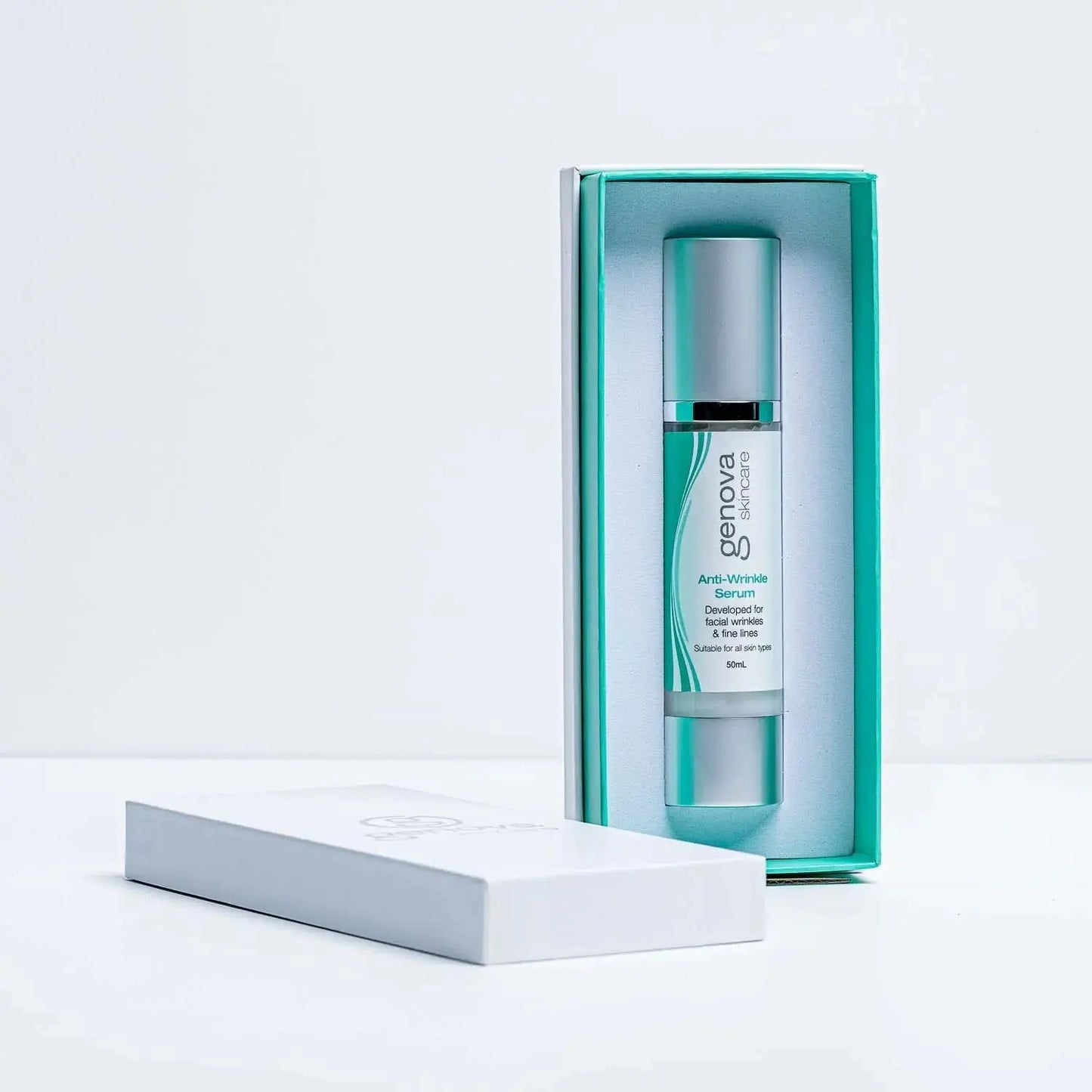
On the skin side, the Genova approach pairs three products. Active Foaming Cleanser preserves the barrier on already-stressed skin. Anti-Wrinkle Serum provides peptide-led support for skin that is already showing reduced bounce and slower visible recovery. Genova Firming Cream, made in Australia under strict quality-control standards, supports the lipid barrier and helps the surface read brighter. A 2018 review by Lephart in Maturitas set out why this peptide-and-barrier pairing matters in menopausal skin.
Realistic Expectations: A peptide-led routine with reduced sugar intake may show a brighter, less-yellow surface within six to twelve weeks. It will not erase AGE damage already bonded to deeper collagen, and it cannot replace lower-glycaemic eating. If sugar intake remains high, the visible signs persist. Results vary with consistency, individual metabolism, and the wider picture of sleep, stress and sun exposure. For women with diagnosed insulin resistance or prediabetes, a GP-led plan is the better starting point.
Who this approach suits and who it does not
It may suit you if:
- You are 45 to 65 and the yellower, less-bouncy look has crept in over the last few years.
- You eat a reasonable diet but want to understand how sugar reads on the face.
- You have noticed the skin gets duller in higher-sugar weeks (holidays, busy work seasons, the post-Christmas stretch).
- You want a routine that supports the skin while you make food-side changes.
It may not suit you if:
- You have been diagnosed with insulin resistance, prediabetes or type 2 diabetes, where a GP-led plan should lead the change.
- You are expecting a topical product to undo glycation already in deeper collagen layers.
- Your daily intake of refined sugar is consistently high and not part of a wider shift.
- The yellowed look is actually a pigmentation issue (melasma, sun damage), where the topical pathway is different.
Strengths
- Peptide signalling supports collagen renewal the metabolic slowdown has reduced.
- Barrier-first approach reduces dullness while deeper renewal builds.
- Non-stripping cleanser preserves overnight lipid recovery.
- Australian made and formulated for menopausal skin under high UV conditions.
Limitations
- No skincare guarantees an outcome when sugar intake remains high.
- Cannot reverse AGEs already bonded to deeper collagen and elastin fibres.
- Cannot replace a GP-led conversation about blood sugar if levels run consistently high.
- Visible improvement takes six to twelve weeks of consistent food and skincare shifts together.
How to use the routine alongside lower-sugar eating after 45
Morning:
- Splash with cool water.
- Active Foaming Cleanser, 30 seconds, rinse.
- Anti-Wrinkle Serum on damp skin, two or three drops, press in.
- Firming Cream over the top.
- Broad-spectrum SPF 50 plus, which matters because UV amplifies glycation damage.
Evening: the same gentle cleanse, Anti-Wrinkle Serum on damp skin, Firming Cream as the final layer. On the food side, three small shifts go furthest: protein at every meal, fibre with every sweet thing, and finishing eating two to three hours before bed. The wider 12-week pace in our menopause skin reset piece pairs naturally with a food-side reset over the same window.
Does cutting sugar actually make menopausal skin look better?
Usually, yes, within four to eight weeks of a meaningful reduction. The surface looks less yellow, the dullness lifts, and fine lines bounce back faster after smiling. The deeper structural changes are slower.
What is the worst type of sugar for menopausal skin?
Refined sugar in liquid form is hardest on the skin, because it hits the bloodstream fastest and spikes glucose highest. Soft drinks, fruit juices, sweetened coffees and dessert wines do more glycation work per gram than the same sugar eaten with protein and fibre.
Will fruit cause glycation too?
Whole fruit causes much less, because the fibre slows sugar absorption and the antioxidants partly offset the load. The picture changes for fruit juice and dried fruit, which behave closer to refined sugar.
Can collagen supplements undo glycation?
No, not directly. Collagen supplements may support overall collagen synthesis, but they cannot break the bonds that AGEs have already formed in existing skin proteins. Reducing new glycation matters more than chasing repair of old damage.
Why does my skin look yellower in winter?
Often because winter eating runs higher in refined carbohydrates and sugar (heavier meals, more comfort food, more wine), and the skin reads the cumulative load. The summer brightening many women notice is partly lighter eating, not just sun colour.
Is there a topical ingredient that addresses glycation?
A few ingredients (peptides, certain antioxidants, niacinamide) show evidence of supporting the renewal pathway and reducing the inflammatory amplification of AGEs. None of them remove existing AGE bonds, so they sit alongside the dietary shift, not instead of it.
References
- Gkogkolou P, Böhm M. Advanced glycation end products: key players in skin aging? Dermato-Endocrinology, 2012.
- Pageon H. Reaction of glycation and human skin: the effects on the skin and its components, reconstructed skin as a model. Pathologie Biologie, 2008.
- Lephart ED. A review of the role of estrogen in dermal aging and the function of phyto-estrogens in skin care. Maturitas, 2018.
If the skin has started looking yellower and stiffer, you are not imagining it, and the food side of the picture is real. The biology will respond as the load drops, and the surface usually reads brighter within a couple of months. While the shift happens, a peptide-led routine built around Anti-Wrinkle Serum and Firming Cream can support menopausal skin through the change.
This article is for general information and is not a substitute for personalised advice from a qualified health professional. Genova products are cosmetics, not therapeutics, and are designed to support the appearance of menopausal skin. Individual results vary.