
Smoking and Menopausal Skin: What Smoke Does to Your Face After 45
By Simon MitchellQuick Summary:
Smoking and menopause compound each other on the skin, because both reduce estrogen-related collagen support and both drive oxidative stress in the dermis. After 45, the visible smoking signature (deeper vertical lip lines, sallow tone, slower recovery, accelerated thinning) sits on top of changes menopause is already driving. The skin partly recovers after quitting, especially in the first 12 months, and a peptide-led barrier routine can support the surface through the change.
The bathroom mirror after a smoke-free year. The skin looks lighter, the grey cast is mostly gone, and the deep crease from the corner of your mouth no longer looks like it was etched in ink. The vertical lines on the upper lip are still there, but softer. You are starting to recognise yourself again.
Menopause is not just hot flushes. It is also the mood that lifts and dips without warning, the joints that ache out of nowhere, the brain fog that loses words mid-sentence. Smoking through this stage, or quitting in it, sits inside the wider picture, and you are not the only one watching the skin carefully. If you are trying to quit, support can make the process easier. In Australia, Quitline offers confidential advice and coaching on 13 7848.
The biology is part of the broader pattern in our overview of menopause skin changes after 45.
Why smoking and menopause compound on skin after 45
Smoking and menopause compound because they hit the same pathways. Both reduce the estrogen support that drives collagen turnover. Both increase oxidative stress in the dermis. Both reduce microcirculation. And both accelerate thinning of the lower face and lip area, where the smoking signature is most distinctive.
A 2019 facial-aging analysis by Goodman in The Journal of Cosmetic Dermatology found that women with both high lifetime smoking exposure and post-menopausal status showed visible aging scores roughly twice as high as women with neither factor.
"My face looks ten years older than my friends who never smoked" is the line we hear most often.
What smoking actually does to menopausal skin
Smoking affects menopausal skin through four pathways: oxidative stress damaging collagen and elastin, vasoconstriction reducing blood flow, accelerated breakdown of antioxidant defences, and the mechanical repetition of pursing the lips which etches the vertical lines smokers develop. Each lands harder on skin already running on less estrogen support.
A 2018 review by Lephart in Maturitas mapped how estrogen drop reduces collagen turnover and antioxidant defences, both of which smoking attacks directly. The skin has less reserve to draw on after 45.
Reduced microcirculation produces a sallow, greyer cast that does not respond to skincare alone. The surface reads tired even when the makeup is good. The pattern overlaps with the wider inflammaging picture menopausal skin already carries.
What recovery looks like after quitting smoking after 45
Recovery shows in stages. Within the first month, microcirculation improves and the grey cast starts to lift. Within three months, antioxidant defences partly rebuild. By 12 months, the worst of the colour and tone changes have shifted, though structural lines (vertical lip creases, deeper folds) recover slowly because they reflect collagen lost over decades.
The change is visible to people who do not know you have quit. Friends and family often comment on the brightness lift within months. "She looks well" is the phrase, and the skin is doing the talking.
HRT may be relevant for some women as part of a broader menopause conversation with their doctor. A peptide-led skincare routine can support the look and feel of the skin surface while the body adjusts after quitting. Neither replaces quitting, and neither should be framed as undoing smoking damage.HRT (a doctor conversation, not a skincare one) restores some estrogen support; a peptide-led routine signals fibroblasts to renew at the surface. Neither replaces the act of quitting; both support what quitting starts.
How to tell smoking is still showing on menopausal skin
You can usually identify the smoking signature on menopausal skin by four signals. Vertical lines on the upper lip that are deeper than the same-age non-smoker carries. A persistent grey or sallow cast, not pink or yellow. A pinch of skin on the back of the hand that takes longer than expected to settle. And a slower recovery from a small skin upset (a spot, a scratch, a sunburn) than the body would otherwise manage.
"I look tired in every photo, even when I'm not" is a common line from women still smoking. The face reflects what the dermis has been managing, and after 45 the dermis has less hidden capacity to manage it. The good news is that the signature is partly reversible, more than most people realise.
What may help menopausal skin during and after quitting
Lifestyle affects the conditions your skin is living in. Skincare supports the surface your lifestyle is showing through. Smoking shifts the conditions (oxidative load, blood flow, antioxidant defences); a peptide-led routine then works on the surface those conditions produce.
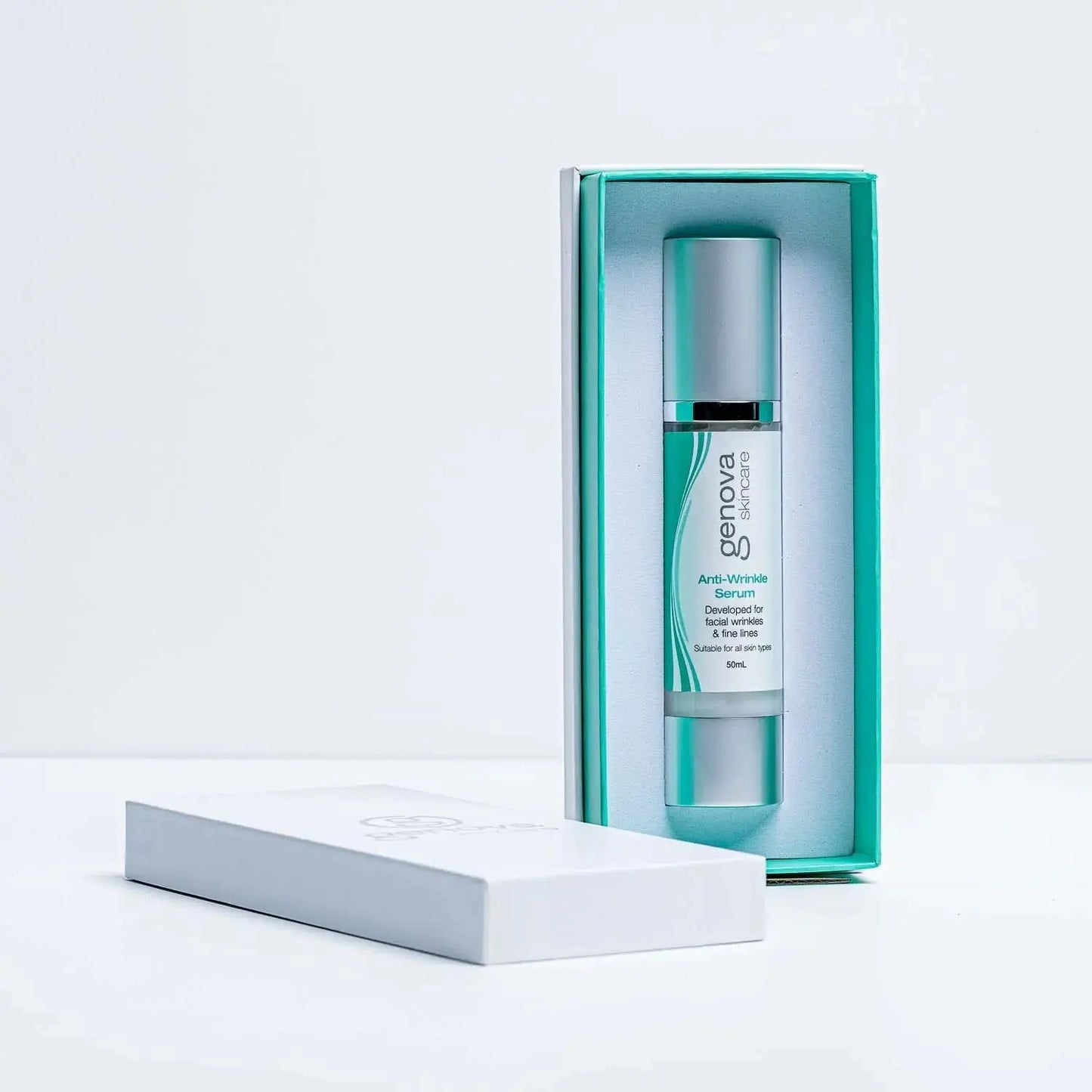
The Genova approach pairs three products that support the surface side. Active Foaming Cleanser is non-stripping, so it preserves the lipid layer the smoking-stressed barrier has less of to begin with. Anti-Wrinkle Serum uses peptide signalling that supports collagen pathways which smoking has been actively breaking down. Genova Firming Cream, made in Australia under strict quality-control standards, helps the barrier recover the lipids smoke has stripped, and supports the firmness pathway estrogen drop has weakened.
Antioxidant support also matters. Vitamin C topically (morning), and antioxidant-rich food intake (across the day), can partly offset the oxidative load smoking has been delivering. SPF 50 plus is non-negotiable, because smoking-damaged skin tolerates UV worse than skin that has never smoked.
Realistic Expectations: A peptide-led routine after quitting smoking may show visible colour and tone improvement within six to twelve weeks, with the deeper recovery building over the first year. It will not erase deep vertical lip lines or reverse structural collagen loss that decades of smoking caused. The most useful step remains the quit itself. Results vary with consistency, age at quitting, and the broader picture of sun exposure, sleep and other lifestyle factors.
Who this approach suits and who it does not
It may suit you if:
- You are 45 to 65, peri or post-menopausal, and have quit smoking in the last 12 months or are quitting now.
- You want skincare that supports the surface while the body's own recovery does the deeper work.
- You are noticing colour and texture changes you would like to soften.
- You want a routine that pairs with antioxidant-rich eating and daily SPF.
It may not suit you if:
- You are looking for a topical product that replaces the act of quitting.
- You expect deep vertical lip lines or structural changes to disappear from skincare alone.
- You are still smoking and have not yet started the quit conversation with your GP.
- Your skin condition has progressed to changes that warrant a doctor or specialist conversation first.
Strengths
- Peptide signalling supports collagen pathways smoking has been actively breaking down.
- Barrier-first approach helps the lipid layer smoke has thinned recover faster.
- Non-stripping cleanser preserves what little reserve the smoking-stressed barrier has.
- Australian made and formulated for menopausal skin under high UV conditions.
Limitations
- No skincare guarantees an outcome if smoking continues.
- Cannot remove structural vertical lines from decades of pursed-lip repetition.
- Cannot rebuild collagen lost across years of smoking on a meaningful structural scale.
- Visible improvement takes six to twelve weeks, with the deeper change over the first year.
How to use the routine through quitting after 45
Morning:
- Splash with cool water.
- Active Foaming Cleanser, 30 seconds, rinse.
- A vitamin C serum (optional, on alternate mornings to start).
- Anti-Wrinkle Serum on damp skin.
- Firming Cream over the top, with extra attention to the perioral area where the vertical lines sit.
- Broad-spectrum SPF 50 plus.
Evening: the same gentle cleanse, Anti-Wrinkle Serum on damp skin, Firming Cream as the final layer. If vertical lip lines are the primary concern, the perioral protocol in our piece on vertical lip lines after menopause pairs naturally with the routine. If you are starting from a stripped-back base, the 12-week pace in our menopause skin reset introduces these products gradually.
How quickly does menopausal skin recover after quitting smoking?
The colour and tone usually shift within the first month. The deeper structural changes (firmness, fine lines, surface texture) recover over the first year. Deep vertical lip lines and structural folds may not fully reverse, because they reflect collagen lost over decades.
Is vaping better for menopausal skin than smoking?
Vaping removes tobacco smoke combustion exposure, but it is not skin-neutral. Nicotine can still constrict blood vessels, and the long-term skin effects of vaping are still being studied. Avoiding nicotine entirely is the safer goal. Vaping avoids the smoke combustion products that drive most skin damage, but the nicotine itself still causes vasoconstriction and is not benign for the dermis. Avoiding nicotine entirely is the safer position.
Can a peptide cream reverse smoker's lines?
It can soften them over months, but not erase them. A peptide-led routine supports collagen renewal at the surface and may make the lines look less etched in. The structural depth of the lines reflects mechanical and collagen damage that builds over years.
Does the skin keep recovering after the first year smoke-free?
Yes, more slowly. The microcirculation, oxidative balance, and surface texture continue to improve over the second and third years, though most of the visible change is consolidated in the first 12 months.
Will HRT undo smoking damage in menopause?
Partly, in the same way it supports the rest of menopausal skin: by restoring some estrogen support for collagen and barrier function. HRT does not undo decades of smoking, but it can support the recovery the quit starts. This is a doctor conversation.
Is it too late to quit if I am already in my 60s?
No. The recovery curve is real at any age. Women quitting in their 60s still show measurable improvement in skin colour, tone, and microcirculation within months. The structural changes may be slower, but the overall direction of travel is the same.
References
- Goodman GD, Kaufman J, Day D, et al. Impact of smoking and alcohol use on facial aging in women: results of a large multinational, multiracial, cross-sectional survey. The Journal of Cosmetic Dermatology, 2019.
- Lephart ED. A review of the role of estrogen in dermal aging and the function of phyto-estrogens in skin care. Maturitas, 2018.
- Kendall AC, Pilkington SM, Wray JR, et al. Menopause induces changes to the stratum corneum ceramide profile. Scientific Reports, 2022.
If you have quit, are quitting, or are watching the smoking signature in the mirror and wondering what is recoverable, the answer is more than you think, especially in the first year. The skin partly resets when the inputs change. While that reset unfolds, a peptide-led routine built around Anti-Wrinkle Serum and Firming Cream can support the surface that decades of smoke have been showing through.
This article is for general information and is not a substitute for personalised advice from a qualified health professional. Genova products are cosmetics, not therapeutics, and are designed to support the appearance of menopausal skin. Individual results vary.