
Skin Boosters and Polynucleotides vs Skincare for Menopausal Skin
By Simon MitchellQuick Summary:
Skin boosters and polynucleotide injectables are doctor-administered injections that work on dermal hydration, skin quality and collagen response rather than facial volume. Profhilo is the best-known hyaluronic acid skin booster; polynucleotide injectables (sometimes called PN or salmon DNA) are a newer Korean-origin option. For menopausal skin, both pair with daily peptide skincare rather than replace it.
You read about Profhilo in a magazine article about Australian women in their fifties, then again on the Instagram of a friend who flew to Sydney for it. You read about polynucleotide injectables in a different article a month later. You stood in front of your bathroom mirror trying to work out whether your skin needed a new layer of support, or whether your peptide serum was already quietly doing the same thing.
You are working through this alongside everything else menopause is asking of you. Skin boosters and polynucleotide injectables are easier to understand than fillers because they are not trying to add shape. They are trying to support the quality of the dermis itself. The decision becomes clearer once you can see what they actually offer compared to what your daily routine is already doing.
Why More Women Over 45 Are Hearing About Skin Boosters Now
Research published in Maturitas by Lephart describes how the first five years after estrogen falls bring a measurable drop in dermal hyaluronic acid, in collagen, and in the elasticity of the upper layers. The result is skin that looks thinner, drier and less reactive to the same skincare routine. Skin boosters and polynucleotide injectables were developed for this picture, working on the dermis rather than the surface. Profhilo entered Australia in the mid-2020s; polynucleotide injectables followed and have grown alongside the Korean-aesthetic wave. Our pillar on skincare and clinic care after menopause covers the broader framework.
What Skin Boosters Like Profhilo Actually Do for Menopausal Skin
Profhilo is a stabilised hyaluronic acid injectable, delivered in 5 small points across the face or neck in a single session, with the gel diffusing across a wider area over the following days. Research in the Aesthetic Surgery Journal by Sparavigna and colleagues describes how the formulation supports dermal hydration and a mild collagen response over weeks. A typical course is 2 sessions, 4 weeks apart, with results building over 2 to 3 months and lasting 6 to 9 months. The session is performed by a qualified cosmetic doctor with minimal downtime.
What Profhilo does not do is replace lost facial volume, lift loose tissue or remove muscle-driven dynamic lines. It supports the quality of the dermis itself, not its shape.
What Polynucleotide Injectables Do That Skin Boosters Cannot for Mature Skin
Polynucleotide injectables (sometimes marketed as PN, salmon DNA or by brand names such as Plinest or Newest) deliver fragments of purified DNA into the dermis. The proposed mechanism is anti-inflammatory and regenerative at the dermal layer, with growing professional interest in their effect on skin quality, fine lines and inflammation. A series of 2 to 4 sessions, 3 to 4 weeks apart, is typical, with results building over 6 to 12 weeks. For more on the inflammatory layer that often sits underneath menopausal skin concerns, see our piece on inflammaging in menopause, and for the structured daily routine that pairs with any booster series, see The Menopause Skin Reset.
Delay or avoid treatment if you have active skin infection, recent laser/peel/microneedling, uncontrolled inflammatory skin disease, a history of severe injectable reactions, pregnancy or breastfeeding, immune suppression, poor wound healing, or if the clinic cannot clearly explain the product, approval status and complication plan.
Comparing Skin Booster Options for Women Over 45
| Option | Best for | Timeframe | Limitation |
|---|---|---|---|
| Profhilo / HA skin booster | Hydration, glow, dermal quality | 6–12 weeks | Not lift or volume |
| Polynucleotides | Skin quality, fine lines, reactivity | 6–12 weeks | Newer evidence base |
| Peptide skincare | Daily barrier, firmness, hydration | 8–12 weeks | Not injectable-depth |
| Combined approach | Daily support plus periodic boost | Ongoing | Higher cost |
Profhilo course (hyaluronic acid skin booster)
Best for: dermal hydration, mild surface laxity, skin quality across face and neck. Doctor-administered. Timeframe: results build over 6 to 12 weeks; last 6 to 9 months. Cost: $700 to $1,200 per session, typically 2 sessions. Limitation: does not address structural laxity, volume loss or muscle-driven lines.
Polynucleotide injectable course
Best for: dermal quality, inflammation, fine surface lines, particularly under-eye area. Doctor-administered as a series of 2 to 4 sessions. Timeframe: results build over 6 to 12 weeks; last 6 to 9 months. Cost: $500 to $900 per session. Limitation: newer category; long-term data and standards still building.
Daily peptide skincare with hydrating layer
Best for: surface and upper dermis support through peptide signalling, daily barrier care, ongoing hydration through topical hyaluronic acid. Timeframe: 8 to 12 weeks of consistency. Cost: low to mid, ongoing. Limitation: does not deliver dermal-layer hydration the way an injectable can.
Combined daily peptide skincare plus periodic skin booster series
Best for: women who want both daily skincare support and a periodic dermal-quality top-up. Timeframe: as per each component. Cost: skincare ongoing plus session series. Limitation: requires committing to both.
Where Genova Peptide Skincare Fits With Skin Boosters for Menopausal Skin
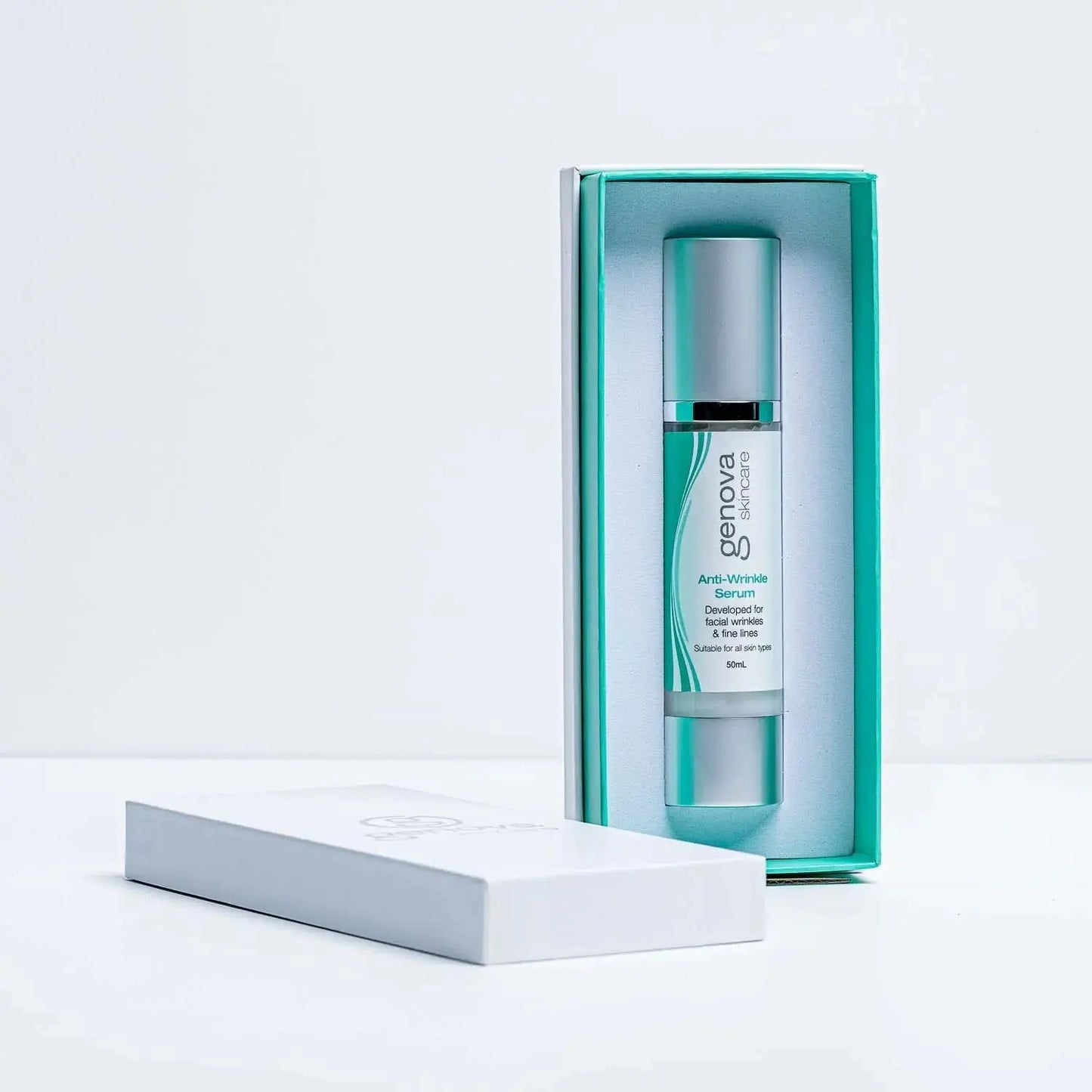
Skin boosters and polynucleotide injectables work in the dermis. Daily peptide skincare works at the surface and the upper dermis through a different mechanism. The two are complementary; most cosmetic doctors recommend continuing daily peptide care alongside any skin booster series. The Genova Red Active Serum settles the reactivity that menopausal skin often carries even between sessions. The Firming Cream uses Serilesine and Nocturshape to support collagen signalling and barrier integrity. The Anti-Wrinkle Serum uses peptide actives that complement the dermal response a skin booster supports. The Active Foaming Cleanser keeps the surface clear without stripping the barrier in between. Australian-made under strict quality-control standards. For more on the topical hyaluronic acid layer, see our piece on hyaluronic acid for menopausal skin.
Realistic Expectations: Skin boosters and polynucleotide injectables support dermal hydration and skin quality over 6 to 12 weeks of a session series, with results lasting 6 to 9 months on average. Neither will lift loose tissue, replace lost facial volume, or remove muscle-driven dynamic lines. Daily peptide skincare and SPF protect whatever a session series achieves. Results vary, and the polynucleotide category is newer than HA-based boosters so individual response varies more widely.
Strengths of skin boosters and polynucleotides for mature skin
- Address dermal quality and hydration that surface skincare cannot reach
- Pair well with daily peptide skincare and SPF
- Useful mid-step for women who want more than skincare but less than filler
- Polynucleotides may suit under-eye and reactive skin where filler is too heavy
Limitations of skin boosters and polynucleotides for menopausal skin
- Will not replace lost facial volume or lift loose tissue
- Require a series of sessions and ongoing repeating
- Polynucleotide standards still building in Australia; choose a cosmetic doctor with direct experience
- Cost adds up; an annual course can run $1,400 to $4,000 across the series
Who Skin Boosters Suit and Who Should Stick to Daily Skincare After Menopause
Skin boosters or polynucleotides may suit you if:
- Your concern is overall dermal quality, hydration or fine surface lines rather than volume loss
- You have given a peptide-led routine 12 weeks and want a dermal-layer top-up
- You can budget $1,400 to $4,000 a year for a session series and follow-up
Stick to daily peptide skincare if:
- You have not yet given a consistent twice-daily peptide routine 12 weeks of consistency
- Your concern is structural (jowls, deep dynamic lines, lost volume)
- You are wary of injectables or have had a previous reaction to one
How to Look After Skin Around a Skin Booster Series After 45
- Continue daily peptide skincare in the weeks before and after the series. A well-supported barrier handles injection sites better.
- Skip acids and retinoids for 3 to 5 days either side of each session.
- Cleanse very gently the morning after with the Genova Active Foaming Cleanser; leave injection points alone for the first 24 hours.
- Resume the Anti-Wrinkle Serum and Firming Cream on day 2 or as advised.
- Apply daily SPF 30 or higher without exception. UV undermines both skincare and skin booster gains.
Common Questions About Skin Boosters for Mature Skin
How long does a Profhilo course last on menopausal skin?
A typical Profhilo course of two sessions four weeks apart produces results that build over 8 to 12 weeks and last 6 to 9 months. Most women repeat the course every 6 to 12 months for ongoing benefit.
Are polynucleotide injectables safe in Australia?
Polynucleotide injectables are increasingly offered by cosmetic doctors in Australia, though they are a newer category than HA-based skin boosters. Choose a cosmetic doctor with direct experience and ask which brand they use and why.
Will skin boosters replace the need for peptide skincare?
No. Skin boosters work in the dermis, peptide skincare works at the surface and upper dermis, and they pair cleanly. Most cosmetic doctors recommend continuing daily peptide care alongside any booster series.
Are skin boosters the same as filler?
No. Fillers add volume to a precise area; skin boosters disperse across the dermis to support hydration and quality. Some women have both, in different zones, for different reasons.
Can I have skin boosters under the eyes after menopause?
Polynucleotide injectables in particular are increasingly used in the under-eye area for skin quality and fine lines, where filler is often too heavy. A cosmetic doctor with eye-area experience is the right choice.
What if I have only had skincare so far and want to try skin boosters?
Give your peptide routine 12 weeks of consistency first to establish a baseline. Photograph the change. Then book a consultation with a cosmetic doctor and ask which layer of your face would benefit most from a booster. The honest answer is sometimes "nothing yet."
References
Lephart, ED. 2018. A review of menopause-related skin changes and supporting skin biology after estrogen decline. Maturitas.
Sparavigna, A. et al. 2019. Hybrid hyaluronic acid for skin bioremodelling: a 24-week observational study. Aesthetic Surgery Journal.
If you have been hearing about Profhilo or polynucleotide injectables and wondering whether you have missed something, please know there is no rush. Build the daily peptide layer first, give it 12 weeks of consistency, then have an honest cosmetic doctor consultation about whether your dermis would benefit from a top-up. The decision is much calmer to make from a settled baseline. The Genova Firming Cream is built for the daily peptide step either choice rests on.
This article is for general information only. Results from cosmetic skincare, skin boosters and polynucleotide injectables vary with individual skin, age and consistency. Genova Skincare is not a substitute for advice from your GP, cosmetic doctor or skin specialist. If you have a confirmed skin condition or are considering in-clinic care, please consult a qualified specialist.