
Neck Skin Barrier Breakdown: Why It Stings, Itches, and Flushes (Inflammation vs Sensitivity)
By Simon MitchellYour face feels fine. But your neck skin barrier? It stings when you put on perfume, itches after a hot shower, and flushes red for no obvious reason.
You haven't changed anything. And yet your neck has suddenly become the most reactive part of your body. This is more common than you'd think, especially for women over 40 - and there's a straightforward plan to help settle things down.
Quick Summary
- Neck skin is thinner with fewer oil glands than face skin, making it far more vulnerable to barrier breakdown.
- Falling estrogen levels during peri- and post-menopause weaken the skin's protective barrier, increasing dryness and reactivity.
- Stinging and itching can be caused by either inflammation or sensitivity, and the two can overlap.
- A 14-day barrier reset (gentle cleansing, barrier moisturiser, mineral SPF, no actives) is the best first step.
- If symptoms worsen or don't improve after two to three weeks, see a GP or dermatologist.
Why the Neck Skin Barrier Breaks Down Faster Than Your Face
Thinner skin. Neck skin is thinner and more reactive than much of the face, with less natural "buffer" against irritants. The dermis is notably thin, which means there is less collagen for structural support and fewer layers to absorb daily wear and tear.
Fewer oil glands. The neck has significantly fewer sebaceous (oil-producing) glands than the face, resulting in less natural lubrication. As estrogen declines during menopause, sebum production drops further - but the neck, already oil-poor, feels this most sharply.
Friction and movement. The neck moves constantly - turning, nodding, looking down at screens. Necklaces, scarves, collars, and towel-drying add steady, low-grade friction that thin neck skin struggles to handle.
Unprotected sun exposure. The neck receives UV exposure almost as much as the face, but most people apply sunscreen only up to the jawline. Over time, this damages collagen and the barrier.
Perfume and product overlap. Spraying perfume directly on the neck or sweeping face products down without adjusting concentration are common triggers that catch people off guard.
Inflammation vs Sensitivity: What's the Difference?
These two terms describe different things happening in your skin. Understanding which applies helps you choose the right approach.
Sensitivity
Sensitivity is a barrier problem. Your skin's outer protective layer has become thin or compromised, so irritants get through more easily than they should.
Sensitivity signs:
- Stinging or tingling when you apply moisturiser, SPF, or perfume
- Burning with sunscreen or after wind exposure
- Tightness after washing, even with a gentle cleanser
- Reactions to products you’ve previously used without issue
- Dryness that doesn't fully resolve with moisturising
Inflammation
Inflammation is an immune response. Your skin is actively reacting to something - an allergen, an irritant, or a hormonal shift.
Inflammation signs:
- Visible redness, especially patchy or localised
- A rash pattern that follows where products or necklaces sit
- Warmth or flushing that comes and goes
- Itching that feels persistent or worsens at night
- Skin that looks puffy or slightly swollen
They can overlap
A compromised barrier makes inflammation more likely, and ongoing inflammation further damages the barrier. If your neck is both stinging and flushing, you're likely dealing with both.
The 10 Most Common Triggers
- Over-exfoliation - AHAs, BHAs, or scrubs on skin that can't handle them
- Fragrance - one of the most common irritants in skincare and perfume
- Heat and hot showers - strips natural oils and increase inflammation
- UV exposure - particularly on unprotected neck skin
- Retinoids introduced too quickly - can trigger stinging and redness on thin neck skin
- Stress - both hormonal and psychological stress affect barrier function
- Friction - necklaces, scarves, collars, towel-drying
- Over-cleansing - washing twice daily or using stripping foaming cleansers
- Taking face actives down the neck too fast - same concentration on thinner, more reactive skin
- Hormonal shifts - falling estrogen levels weaken the barrier and increase reactivity. A 2022 study published in Scientific Reports (Kendall et al.) found that post-menopausal stratum corneum contained lower levels of ceramides, supporting a role for estrogen in barrier lipids, with menopause-associated changes linked to reduced barrier robustness and increased transepidermal water loss.
The 14-Day Barrier Reset Plan
This isn't about fixing everything at once. It's about giving your neck two calm weeks to start rebuilding its barrier.
Morning
- Cleanse gently - use cleanser once per day max (either AM or PM). The other time: lukewarm water only. Choose a fragrance-free, pH-balanced cleanser. Pat dry - do not rub.
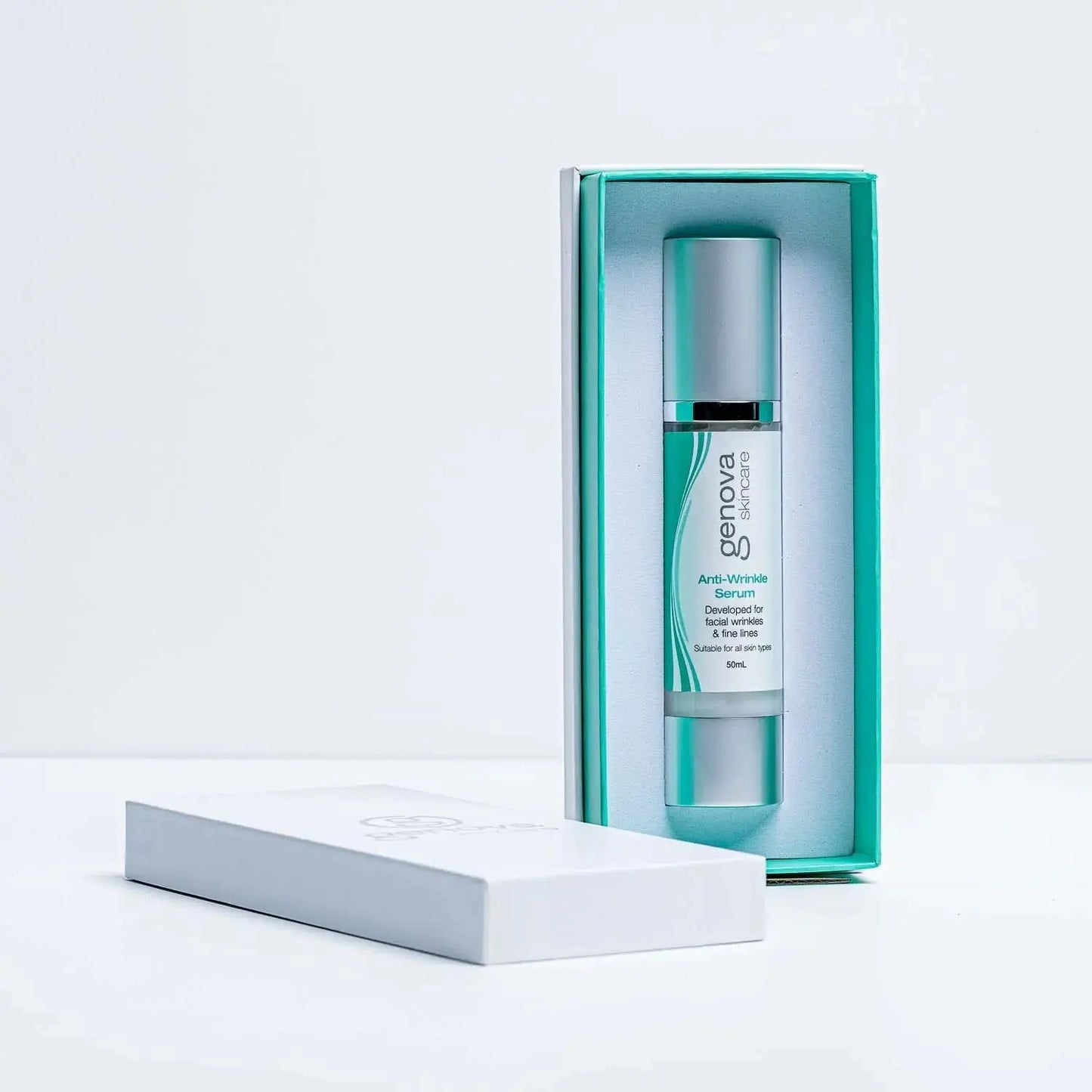
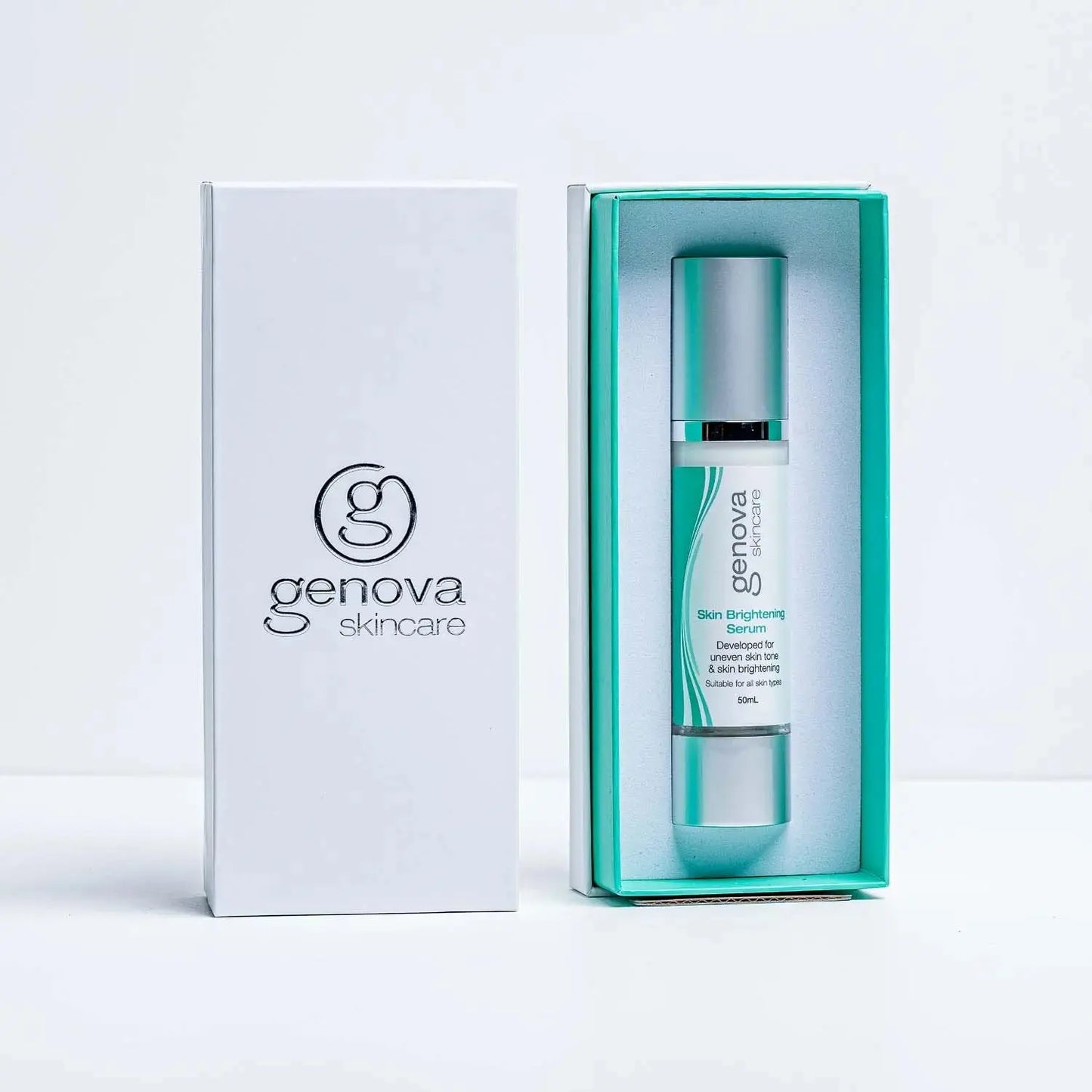
- Apply barrier moisturiser - fragrance-free, containing ceramides, fatty acids, and/or hyaluronic acid. A ceramide-rich moisturiser from the Genova range is one option to consider. Apply while skin is slightly damp.
- Apply mineral SPF - broad-spectrum zinc oxide sunscreen on your neck every morning, including cloudy days. Follow the SunSmart steps when the UV Index is 3 or above.
Evening
- Cleanse once only - skip if you already cleansed in the morning.
- Apply barrier moisturiser again - same product as the morning.
Avoid for 14 days
- All retinoids and exfoliating acids
- Fragrance in skincare, perfume, and deodorant near the neck
- Scrubs or physical exfoliants
- Very hot water on the neck
- Any new, untested products
Patch test note: Apply any new product to the inside of your forearm for 24-48 hours before using it on your neck.
When to Reintroduce Actives (and How to Avoid a Flare)
Once your neck feels consistently calm for at least 14 days, you can begin reintroducing actives. Slowly.
- Start with one active only. Don't layer retinol and an acid together.
- Use it two nights per week maximum to begin.
- Use the buffer method. Apply moisturiser first, wait a minute, then apply the active on top.
- Don't combine retinoids and acids early on. Introduce them weeks apart.
- If stinging persists past 10 minutes, stop. Brief, mild tingling can be normal. Lasting discomfort is a signal to pause.
What Actually Helps Itching and Flushing
- Cool the skin - a clean, cool cloth against the neck for a few minutes can reduce flushing.
- Switch to lukewarm water - hot showers are one of the most underestimated triggers.
- Reduce friction - breathable fabrics, soft necklines. Avoid synthetic collars against irritated skin.
- Go fragrance-free - across all products, at least until your barrier settles.
- Don't push through the sting - if a product stings, it's not working harder. It's telling you to stop.
FAQ
Why is my neck itchy, but my face is fine? The neck has thinner skin and fewer oil glands, so its barrier breaks down more easily. The neck simply has less built-in protection than the face.
Is this menopause-related? Very likely. Falling estrogen levels weaken the barrier and reduce natural oil production. The neck tends to show these changes earlier and more noticeably than other areas.
Should I use retinol on my neck? Not until your barrier is stable. Then start low - twice a week maximum, buffered with moisturiser. If it stings, stop and try again later.
Do I need a steroid cream? Only if recommended by a GP or dermatologist. Mild sensitivity usually responds to barrier repair first. If symptoms aren't improving after two to three weeks, seek professional advice.
How long does barrier repair take? Mild irritation often improves within 7 to 14 days. More persistent damage can take four to six weeks or longer. Consistency matters more than speed.
Is sunscreen making my neck sting? Possibly. Chemical sunscreens can irritate compromised skin. Switch to mineral (zinc oxide). If even that stings, your barrier may need more healing time before tolerating anything beyond a basic moisturiser.
Red Flags: When to See a GP or Dermatologist
Most neck sensitivity responds to a barrier-first approach. But see a professional if you notice:
- Redness or a rash worsening despite simplifying your routine
- Any oozing, crusting, or weeping
- Swelling that doesn't settle within a day or two
- Persistent burning that doesn't improve with cooling
- New or changing lesions - moles or patches that look different
- A possible allergic reaction - sudden onset or rapid spread
These can indicate contact dermatitis, eczema, rosacea, or conditions that need medical investigation.
Start Here
If your neck is stinging, itching, or flushing, simplify first. Strip back to gentle cleansing, a fragrance-free barrier moisturiser, and mineral SPF. Give it 14 days. Then reintroduce actives slowly - one at a time, a couple of nights per week.
Your neck skin isn't broken. It just needs a quieter environment to do its job again.
References
-
Kamp, E. et al. "Menopause, skin and common dermatoses. Part 2: skin disorders." Clinical and Experimental Dermatology 47(12) (2022). PMC / PubMed Central.
-
American Academy of Dermatology. "Caring for your skin in menopause." AAD website (aad.org). (Dryness, itching, sensitivity, and barrier changes during menopause - guidance from board-certified dermatologists.)
-
Kendall, A.C. et al. "Menopause induces changes to the stratum corneum ceramide profile, which are prevented by hormone replacement therapy." Scientific Reports 12, 21715 (2022). PMC / PubMed Central. (Estrogen's role in ceramide production, post-menopausal barrier changes, and transepidermal water loss.)
-
Cancer Council Australia. "Sun Protection." Cancer Council Australia website.
-
DermNet. "Menopause and skin." DermNet website. (Menopause-associated dryness, itch, and xerosis - clinical overview without over-medicalisation.)