
Menopausal Acne vs Teenage Acne: What Changes After 45
By Simon MitchellQuick Summary:
Around 26 percent of women in their 40s and 15 percent of women over 50 still break out, and it is rarely the same acne they had at 16. Menopausal acne is driven by relative androgen dominance as estrogen falls, and it sits along the jawline, chin, and neck rather than the T-zone. The skin itself is drier, thinner, and more reactive, which is why teenage acne products often make things worse. This guide explains the difference and what works now.
Why You Are Breaking Out Again After 45
If you had clear skin for decades and are now watching deep, painful spots appear along your jaw at 49, you are not imagining it. Adult acne is one of the most common skin frustrations women report through perimenopause and menopause.
The reason is hormonal, but different to your teens. At puberty, sex hormones surged and pushed sebum into overdrive. In menopause, estrogen drops while androgens (including testosterone) decline more slowly. This relative androgen dominance signals oil glands to behave like teenage glands again, even as the rest of your skin moves in the opposite direction.
That mismatch is what makes menopausal acne so confusing. The skin around the breakout is dry, fine, and fragile. The breakout itself behaves like something from a much oilier face.
The Real Differences Between Menopausal and Teenage Acne
The two look similar from a distance, but almost everything underneath is different.
Cause. Teenage acne is driven by surging puberty hormones. Menopausal acne is driven by falling estrogen, which leaves androgens relatively dominant.
Location. Teenage acne lives in the T-zone. Menopausal acne sits on the lower face, jawline, chin, and sometimes neck.
Type of spot. Teenage acne is characterised by blackheads, whiteheads, and inflammatory papules. Menopausal acne is more often deep, tender, cystic spots that come up slowly and last weeks.
Skin context. Teenage skin is oily and resilient. Menopausal skin is drier, thinner, and slower to recover.
How long do spots last? A teenage spot fades in a few days. A menopausal cyst can persist for 2 to 4 weeks and often leaves post-inflammatory pigmentation that can take months to fade.
Scarring risk. Older skin scars and pigments more easily, which is why "just leave it alone" matters more now than at 16.
Why Teenage Acne Products Often Fail Menopausal Skin
The instinct is to reach for whatever cleared things up at 16: harsh foaming washes, benzoyl peroxide, alcohol-based toners, drying spot creams. On menopausal skin, this approach usually makes the breakout worse.
Teenage skin can absorb that stripping because it is producing enough oil to recover quickly. Menopausal skin cannot. Stripped, dehydrated skin produces inflammation, and inflammation produces more spots. It also damages the barrier, which makes post-acne dark marks more visible.
The shift needed after 45 is to dry out the spots, calm the surrounding skin, and gently address the breakout. That sounds counter-intuitive, but it is what evidence-based menopausal skincare now recommends.
What Actually Helps Menopausal Acne
A few approaches have research support for hormonally driven adult acne.
Salicylic acid (BHA) at 0.5 to 2 per cent penetrates oil and clears pores without stripping surrounding skin.
Niacinamide at 4 to 5 percent reduces inflammation, supports the barrier, and fades the dark marks acne leaves behind.
Targeted peptides like Bodyfensine and Matmarine are being researched to support clearer skin without the irritation of older spot products.
Gentle cleansing. A pH-balanced, low-foam cleanser twice daily clears the day off skin without disrupting the barrier.
Hydration. A lightweight moisturiser with ceramides or hyaluronic acid keeps the surrounding skin calm. Dehydration drives more breakouts, not fewer.
SPF every morning. Post-acne dark marks darken and last longer with UV exposure.
How Genova Skincare Approaches Menopausal Breakouts
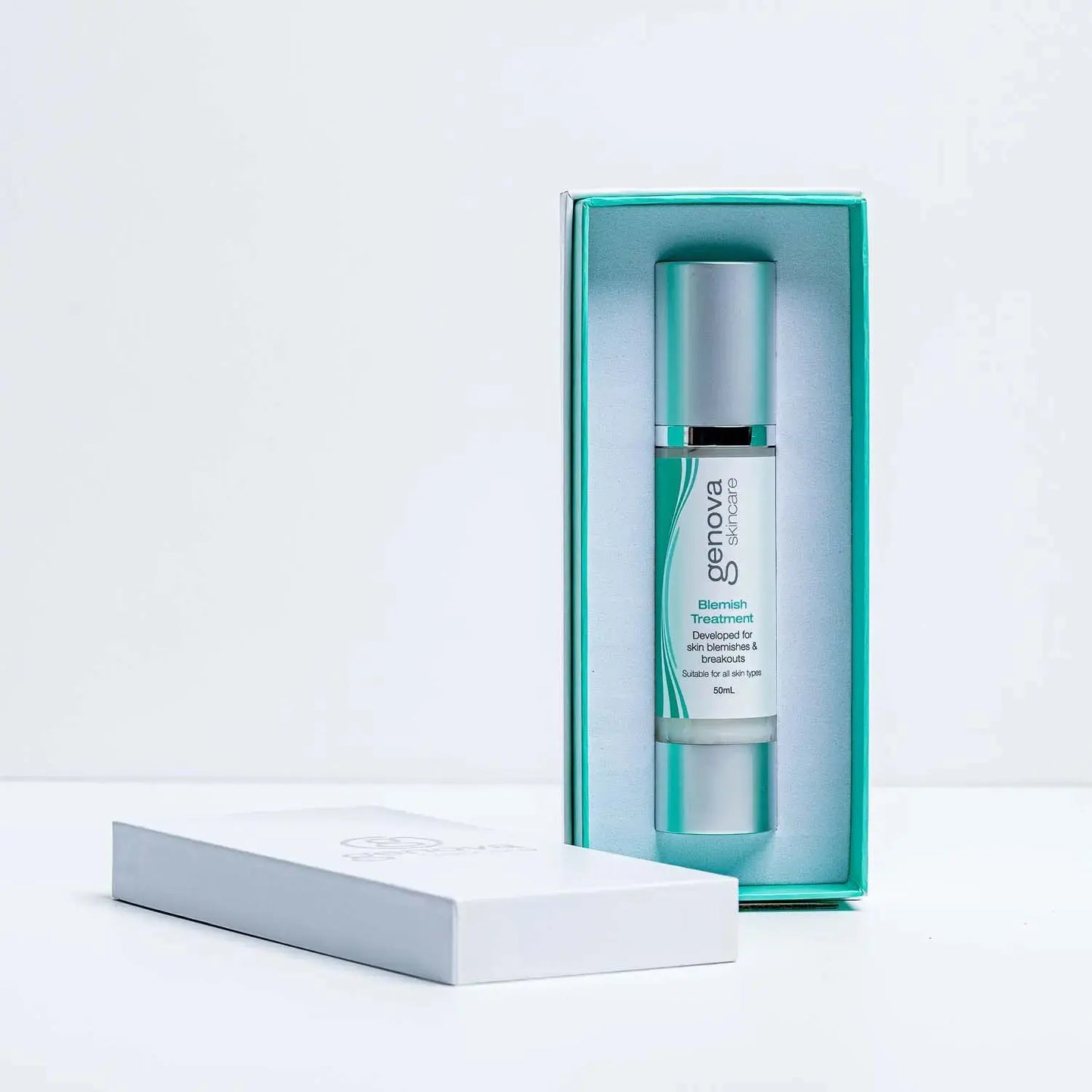
Genova Skincare is an Australian-made brand formulated for hormonally changing skin. The Blemish Treatment is designed for adult, hormonal breakouts rather than teenage acne, using Bodyfensine, Matmarine, and Peelmoist, peptides researched for calming inflammation and supporting clearer skin without stripping.
Paired with the Active Foaming Cleanser, which uses low-percentage salicylic acid alongside allantoin and cucumber extract, the routine targets the breakout while supporting the rest of the face. This matters more after 45 than it did at 16, because the skin around the spot is doing different work now.
Genova is manufactured in Australia to TGA-compliant standards and formulated for local heat and UV conditions. The Acne and Blemish Bundle is one option for women who want a paired routine.
Who This Approach Suits and Who It Does Not
It may suit you if:
- You break out along the jawline, chin, or neck after 40
- The spots are deeper, tender, and slower to fade than they used to be
- Teenage acne products now make your skin feel raw
- You want a routine that calms the whole face, not just the spot
It may not suit you if:
- Your acne is widespread, cystic, and painful (see a qualified skin professional)
- You have PCOS or another endocrine condition driving breakouts
- Topical care alone has not helped after 12 weeks
- You are pregnant or breastfeeding (check ingredients with your GP)
Realistic Expectations for Menopausal Acne Care
Used consistently, a calmer, hydration-led routine may reduce breakouts within 6 to 12 weeks, soften post-acne dark marks over 8 to 16 weeks, and improve comfort of the surrounding skin. Results vary with hormonal context, stress, sleep, and consistency.
What topical care cannot do is correct the hormonal driver behind menopausal acne. If your breakouts are severe, painful, or persistent, the underlying hormonal pattern deserves a conversation with your GP. Topical care supports the skin, it does not replace hormonal assessment.
Pros and Cons of a Calming Approach for Menopausal Acne
Pros: suits drier menopausal skin, supports the barrier instead of damaging it, reduces post-acne pigmentation, gentler on the rest of the face, sustainable long term.
Cons: slower than benzoyl peroxide for individual spots, requires consistency for 6 to 12 weeks, will not address severe cystic acne, and does not correct the hormonal driver.
How to Build a Menopausal Acne Routine
- Cleanse twice daily with a gentle, pH-balanced cleanser containing salicylic acid at 0.5 to 2 percent.
- Apply a targeted blemish formula to the breakout area, morning and night.
- Layer a niacinamide serum across the lower face to calm inflammation and fade dark marks.
- Moisturise with a lightweight, ceramide-rich cream. Do not skip this on the breakout.
- Apply SPF 30 or higher every morning, even when working from home.
- Avoid picking and harsh scrubs. Older skin scars and pigments far more easily.
- Give it 8 to 12 weeks before judging the routine. Hormonal acne responds slowly.
Myths About Menopausal Acne
Myth: Acne is for teenagers.
Around 15 per cent of women over 50 still break out. The pattern is hormonal, not behavioural.
Myth: Drying out the spot fast is best.
Drying menopausal skin worsens inflammation and damages the barrier. A calmer approach works better long term.
Myth: Menopausal acne means your skin is oily.
Most menopausal women have drier skin overall. Sebum can be concentrated in oil glands while surrounding skin is dehydrated.
Myth: Diet causes menopausal acne.
Diet plays a small role for some women, but the main driver is the estrogen-to-androgen ratio. Eating perfectly will not stop hormonal breakouts.
Frequently Asked Questions About Menopausal Acne
Why did my acne come back at 48 when I had clear skin for 30 years?
Falling estrogen leaves androgens relatively dominant, signalling oil glands to behave like they did at puberty. The hormonal shift is the change, not your skincare.
Why is the acne always on my jawline now?
Hormonally driven breakouts cluster along the lower face because oil glands there are most responsive to androgen signals.
Can I still use retinol with menopausal acne?
Yes, often very well. Retinol supports cell turnover and may fade post-acne marks, but introduce it slowly and pair with hydration.
Do I need to see a GP about menopausal acne?
If your acne is widespread, painful, or persistent beyond 12 weeks of good topical care, a GP visit makes sense.
Will HRT clear menopausal acne?
For some women, yes, for others, certain forms of HRT can worsen breakouts. This is a conversation for your GP.
How long does menopausal acne usually last?
It often peaks in perimenopause and can settle once hormones stabilise, though some women experience it for years. Consistent skincare reduces severity in the meantime.
References
- Khunger, N. and Mehrotra, K. (2019). Menopausal acne: Challenges and solutions. International Journal of Women's Health, 11, 555-567.
- Holzmann, R. and Shakery, K. (2014). Postadolescent acne in females. Skin Pharmacology and Physiology, 27 Suppl 1, 3-8.
If you are 50 and breaking out like you are 16, with skin that bears no resemblance to the skin you had then, you are dealing with something different. You have not failed at skincare. Your skin is responding to a hormonal shift, and a kinder, more targeted approach can make real progress over a few months. You are allowed to have one less thing on your mind in the morning.
Individual results vary. Skincare products are cosmetic and not intended to address underlying skin conditions. If your acne is severe, painful, or persistent, please consult your GP or a qualified skin professional. The information in this article is general in nature and does not replace professional advice.
This article is part of our guide to menopausal acne and hormonal breakouts.