
Hydration and Menopausal Skin: Does Drinking Water Help Dry Skin After 45?
By Simon MitchellQuick Summary:
Drinking water helps menopausal skin look better, but mostly indirectly. After 45, total body water drops, the skin barrier holds onto moisture less well, and water loss across the surface rises. Adequate intake supports the system that delivers hydration to the dermis, but topical barrier support is what holds that water in place on the face. A peptide-led routine plus realistic daily water intake is the pairing that shows.
The 4pm slump at the desk. You look in the bathroom mirror on a refill of the kettle and the face is duller than it was at lunch. Lips drier. Creases around the eyes more visible. Two coffees, not much water since breakfast, and the skin is telling you about it.
Menopause is not just hot flushes. It is also the mood that lifts and dips without warning, the joints that ache out of nowhere, the brain fog that loses words mid-sentence. The way the skin holds water has shifted too, and the same morning routine reads drier than it did at 35.
Three signs water is not the main issue
- Your cheeks flake even when you drink regularly.
- Moisturiser disappears within an hour.
- Makeup settles into lines by midday.
These signs usually point to surface barrier weakness, not simply low water intake.
The biology is part of the broader pattern in our overview of menopause skin changes after 45.
Why hydration reads on menopausal skin differently after 45
Hydration reads differently because three things shift at once. Total body water decreases with the estrogen drop, leaving less internal reservoir. The barrier loses lipids and ceramides, so water escapes more easily across the surface. And dermal hyaluronic acid (the part of skin that physically holds water) declines, so held volume is lower at every layer.
A 2018 review by Lephart in Maturitas mapped how falling estrogen reduces ceramide content and barrier integrity in menopausal skin, with measurable increases in trans-epidermal water loss. The same eight glasses that kept skin plump at 30 now hold less of that water in place on the face.
"My skin feels thirsty within an hour of moisturiser" is the line we hear most often. The thirst is not imagined; it reflects a real shift in how much water the surface can retain.
What drinking more water actually does for menopausal skin
Drinking more water works through three pathways: maintaining the blood volume that delivers nutrients to the skin, supporting overall body water balance the dermis draws from, and reducing the dehydration fatigue that reads on the face as a tired complexion. It does not directly hydrate the upper layer where most visible dryness sits.
The practical pattern: hydration matters as a baseline, but doubling intake above adequate does not double skin hydration. Women whose baseline intake was low usually see a meaningful surface lift within a few weeks of correcting it; for women already drinking adequately, the additional benefit from drinking more is modest. The surface side of the equation matters more once intake is met.
Alcohol can also make skin look drier the next day because it affects sleep, fluid balance and inflammation - we cover this in our guide to alcohol and menopausal skin.
Why surface hydration after 45 needs more than water
Surface hydration after 45 needs more than water because the upper skin layer is leaky in a way it was not at 30. Water can be delivered from the inside and lost from the outside faster than the surface can use it. The barrier function (lipids, ceramides, the protective skin pH) is what holds water in place where the eye can see it.
This is why a woman drinking three litres a day can still have flaky cheeks. The water is in the body; it is just not staying in the upper skin. A 2022 study by Kendall and colleagues in Scientific Reports found that menopausal women had measurably altered ceramide profiles in the upper skin layer compared to premenopausal controls, and the change tracked closely with the rise in water loss they recorded. Topical barrier support is the missing half. The role ceramides play is covered in our piece on ceramides for menopausal skin.
If you have noticed familiar products absorbing differently or sitting on top of the skin, the broader pattern is in our piece on hyaluronic acid for menopausal skin. Without barrier support, even hydrating ingredients evaporate off too fast.
How to tell internal versus surface hydration is the issue
You can usually tell which side is letting you down by the pattern. If the skin looks duller in the afternoon, the lips feel papery, and a pinched fold on the back of your hand takes a beat to settle, you are under-hydrated internally. Increase fluids and the surface follows in a few days.
If you are drinking adequately but the cheeks still flake, makeup still settles, and moisturiser vanishes within the hour, the surface barrier is the issue. Water alone will not close that gap. Most menopausal women have a mix of both, and both sides need attention.
What may help menopausal skin alongside adequate water
Lifestyle affects the conditions your skin is living in. Skincare supports the surface your lifestyle is showing through. Water intake sets the inside conditions (blood volume, dermal hydration potential); a peptide-led routine then works on the surface that retains it.
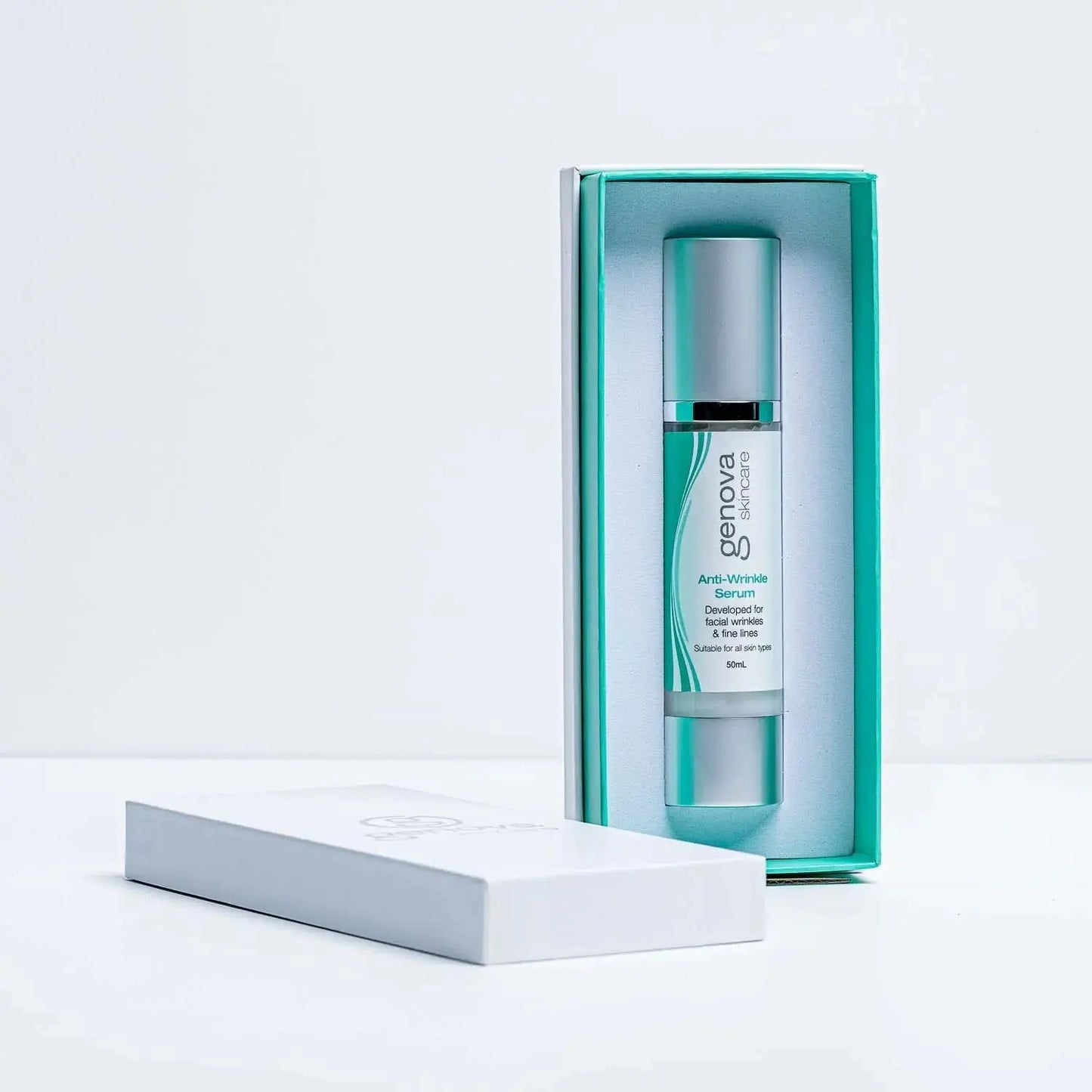
The Genova approach pairs three products that hold water in place on the surface. Active Foaming Cleanser is non-stripping, so the cleansing step itself does not pull lipids out faster than the skin can replace them. Anti-Wrinkle Serum uses peptide signalling that supports the surface structure water sits in. Genova Firming Cream, made in Australia under strict quality-control standards, replaces the lipid and ceramide layer that holds the water in.
The order matters. Serum on damp skin, cream over the top within 60 seconds. The damp surface is what gives hydrating actives the moisture to lock into, and the cream layer is what stops it evaporating back out.
Realistic Expectations: A peptide-led barrier routine alongside adequate water intake may show visibly plumper, less-flaky menopausal skin within four to six weeks. It will not change the rate at which water moves through your body, and it cannot make the upper skin hold water if the barrier remains broken by stripping cleansers or strong actives. Results vary with consistency, individual skin condition, and the wider picture of sleep, alcohol and indoor heating.
Who this approach suits and who it does not
It may suit you if:
- You are 45 to 65 and the skin feels thirsty within an hour of moisturiser.
- You drink reasonable amounts of water but the surface still flakes or reads dehydrated.
- You have noticed makeup settling differently and serums vanishing faster than they used to.
- You want a routine that holds what hydration you have, rather than chasing more.
It may not suit you if:
- Your daily intake is consistently very low, in which case fixing the intake matters first.
- You have a health condition affecting fluid balance and need a doctor-led approach.
- You are using stripping cleansers, strong daily acids, or hot showers that compound surface water loss.
- Your dryness has progressed to persistent eczema or barrier breakdown needing professional care.
Strengths
- Peptide signalling supports the surface structure water sits in.
- Barrier-first approach reduces overnight water loss the menopausal skin runs higher on.
- Non-stripping cleanser preserves the lipid layer that holds delivered water.
- Australian made and formulated for menopausal skin under high UV conditions.
Limitations
- No skincare guarantees an outcome without adequate water intake underneath.
- Cannot change the rate water moves through the body or how fast the kidneys clear it.
- Cannot fix a barrier that strong actives or hot showers are still stripping nightly.
- Visible improvement takes four to six weeks of consistent intake and routine together.
How to use the routine alongside daily hydration after 45
Morning:
- Splash with cool water.
- Active Foaming Cleanser, 30 seconds, rinse.
- Anti-Wrinkle Serum on damp skin within 30 seconds, two or three drops.
- Firming Cream over the top within 60 seconds while the skin is still slightly damp.
- Broad-spectrum SPF 50 plus.
Evening: the same gentle cleanse, Anti-Wrinkle Serum, Firming Cream as the final layer. On the water side, aim for steady sips through the day rather than three large glasses with meals, and watch the late-afternoon dip when most women drop intake. If you are starting from a stripped-back routine, the slower pace in our menopause skin reset introduces the same products gradually.
Does drinking eight glasses of water a day fix menopausal skin?
Not directly. Adequate water supports overall body hydration and helps the skin look less tired, but the visible plumpness comes from the surface holding water in place. Eight glasses without barrier support still produces dry, flaky cheeks in menopausal skin.
How much water actually helps after 45?
Most evidence-based guidance lands around 1.6 to 2 litres a day for women, including water from food. Steady sips through the day matter more than total volume, and watching for the late-afternoon dip when most women drop intake.
Why do my lips feel drier in menopause even when I drink water?
Because the lip surface has very few oil glands and very little ceramide reserve, and both decline further with estrogen drop. The water arriving at the lips evaporates faster than the surface can use it. A lip product that adds barrier matters more than water alone.
Will electrolytes help menopausal skin?
Sometimes. If sweat output is high, sodium and potassium loss can drive headaches and tired-skin appearance. For women who exercise regularly or live in hot Australian summers, modest electrolyte intake alongside water can help. For sedentary indoor work, the benefit is usually small.
Does coffee dehydrate menopausal skin?
Less than commonly believed. Moderate coffee intake (two to three cups) does not cause net dehydration in adults, though the diuretic effect is real at higher amounts. Replacing some afternoon coffee with water or herbal tea often improves both surface hydration and sleep.
Will a humidifier help my menopausal skin?
Often, yes, especially in air-conditioned offices or heated homes in winter. Indoor humidity below 30% pulls water from the skin barrier. A small bedroom humidifier overnight reduces the morning tightness many women describe.
References
- Lephart ED. A review of the role of estrogen in dermal aging and the function of phyto-estrogens in skin care. Maturitas, 2018.
- Kendall AC, Pilkington SM, Wray JR, et al. Menopause induces changes to the stratum corneum ceramide profile. Scientific Reports, 2022.
- Polo-Kantola P. Sleep problems in midlife and beyond. Maturitas, 2011.
If your skin feels thirsty within an hour of moisturising, water alone will not close the gap. The combination is what works. While the habit and the routine settle together, a peptide-led routine built around Anti-Wrinkle Serum and Firming Cream can support menopausal skin so what you drink shows on the outside.
This article is for general information and is not a substitute for personalised advice from a qualified health professional. Genova products are cosmetics, not therapeutics, and are designed to support the appearance of menopausal skin. Individual results vary.