
How To Switch From Retinol To Peptides After 45 Without Irritation
By Simon Mitchell
Quick Summary:
Retinol that worked at 40 often stops working at 50. The barrier becomes thinner, the surface more reactive, and the same dose now stings, peels and reddens. Switching to peptides is the most common next step, but the transition matters: stop retinol cleanly, rebuild the barrier for a week, then introduce peptides slowly over the following three weeks. The whole switch takes about four weeks and avoids the rebound flare that catches most women out.
It is night three of trying to "push through" again. The retinol you have used for six years is doing something it did not used to do. Your cheeks are tight and red, there is a fine peel near the corner of your nose. You stand in the bathroom wondering whether the problem is the product, your skin, or the fact that the bottle is half full and you do not want to admit it has stopped working.
That moment is small but it lands inside a much bigger one. The broken sleep, the joint stiffness, the body that does not feel like yours. Skincare should not be another thing that has quietly turned against you.
The shift is normal, the switch is short, and there is a way to do it without going backwards.
Why Retinol Suddenly Stings Menopausal Skin After 45
Retinol works by speeding up cell turnover, which is useful when skin is making plenty of lipids and supporting its own barrier. Research in Maturitas by Lephart describes how estrogen receptors in skin cells help drive collagen production and barrier maintenance, and how each slows when estrogen declines. The skin is now turning over more slowly while losing the lipids that used to keep it comfortable.
A study in Scientific Reports by Kendall and colleagues found measurable shifts in barrier lipids after menopause. The same retinol dose now hits a thinner, drier surface, so stinging, redness and fine peel follow.
Peptides work differently. Research in Frontiers in Pharmacology by Errante describes how peptide signalling tells the skin cell what to do without irritating the surface. The retinol vs peptides post covers the why behind the switch.
Three Signs It Is Time To Switch From Retinol To Peptides After 45
Switching is worth considering when one or more of these has been true for a few weeks.
1. Your skin stings on application. A short tingle when first starting is normal. A sting that persists, or that has appeared after years without it, is the barrier asking for a change.
2. The redness or peel does not settle. Adjusting concentration or frequency and still seeing reactivity 2 to 4 weeks later means the active is outpacing what the skin can recover from.
3. Products you tolerated for years now also react. When the cleanser, moisturiser and SPF all suddenly sting, the issue is the barrier, not any one product. Retinol is usually the loudest contributor.
Comparing Transition Strategies For Menopausal Skin Over 45
| Strategy | Best for | Watch-out |
|---|---|---|
| Stop retinol and start peptides same day | Mild irritation | May skip barrier recovery |
| One-week barrier rebuild | Red, dry, reactive skin | Requires patience |
| Taper retinol while adding peptides | Skin still tolerates retinol | Takes longer |
| Bakuchiol bridge | Wants a gentler turnover option | Still may irritate some skin |
Cold turkey switch
Stop retinol and start peptides the same day. Fast and decisive, but skips the rebuild week and can prolong reactivity. Works for skin that is only mildly irritated.
One-week barrier rebuild, then peptides
Stop retinol, simplify to cleanser and barrier cream for seven days, then introduce peptides slowly. The most common recommendation for menopausal skin because it lets the surface settle first.
Taper retinol down while phasing peptides in
Drop retinol from nightly to twice weekly, add peptide serum on the off nights, phase retinol out over a month. Slower, suits women who tolerate retinol at lower frequency.
Bakuchiol bridge
Replace retinol with bakuchiol for a few weeks while the barrier rebuilds, then move to peptides. The bakuchiol vs retinol post covers the trade-offs.
How To Switch From Retinol To Peptides After 45: A 4-Week Plan
Week 1: barrier rebuild. Stop retinol completely. Cleanser, barrier cream morning and night, SPF 50+. Nothing else. The skin needs a full seven days of low input.
Week 2: introduce peptide serum. Add a peptide serum at night only. Apply to slightly damp skin, press in, follow with the barrier cream. If the skin is calm by night five, add a morning application.
Week 3: full peptide routine. Continue twice-daily peptide serum, switch the moisturiser to a peptide-supporting firming cream, and add an eye serum if you use one. No acids or actives stacked yet.
Week 4: stabilise and decide. Most women feel the new routine has bedded in by now. Decide whether to stay on pure peptides or add a low-strength bakuchiol two nights a week for an extra turnover signal. If skin is still reactive, give it another two weeks.
How Genova Skincare Supports The Switch For Women Over 45
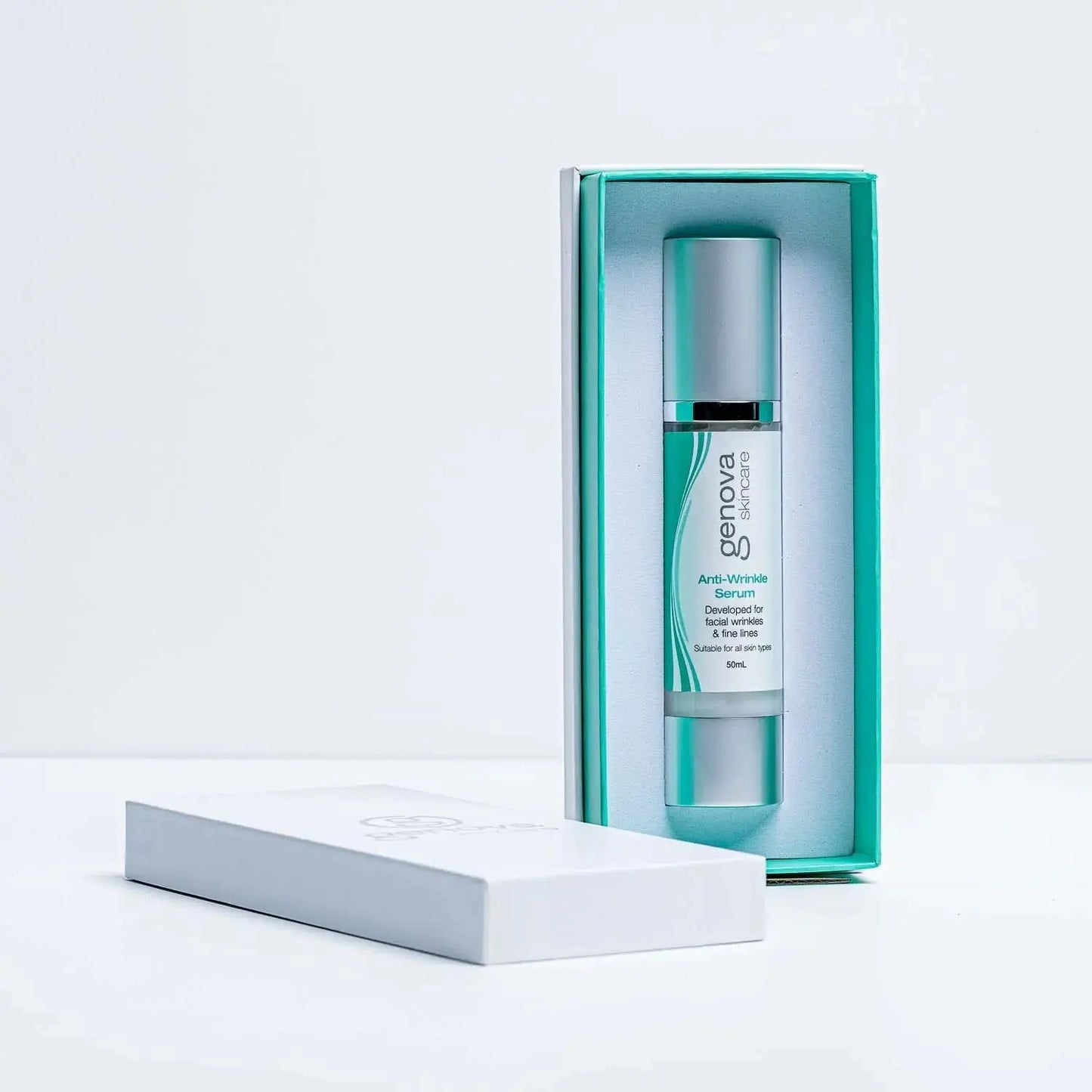
Genova products are formulated for Australian menopausal skin and made locally to strict quality-control standards. The Active Foaming Cleanser is non-stripping, which matters during the rebuild week. The Anti-Wrinkle Serum uses Matrixyl-family peptides as the signal layer. The Firming Cream pairs Serilesine and Nocturshape peptides with a ceramide-supporting base. If the skin still runs reactive in week 2 or 3, the Red Active Serum can sit underneath the firming cream. The how to choose menopause skincare hub covers the wider buying framework.
Realistic Expectations: The switch settles most women within four weeks. Expect a quieter complexion, less reactivity, and a return to comfort by week 3. Visible firmness from the new peptide layer builds over the following 6 to 12 weeks. The switch cannot replace lost facial fat, lift loose hanging skin, or undo years of UV damage. Individual results vary.
Strengths And Limitations Of Switching From Retinol To Peptides After Menopause
Strengths of switching from retinol to peptides on menopausal skin
- Reduces stinging, redness and peel within a week of stopping retinol
- Rebuilds the barrier the previous routine was working against
- Suits the slower cell-turnover and lipid-loss profile of mature skin
- Can be done at home without a doctor's input
- Builds firmness on a calmer base over 6 to 12 weeks
Limitations of a retinol-to-peptide switch for menopausal skin
- Cannot replace the cell-turnover speed that strong retinol provides at 35
- Cannot restore years of barrier wear in a single week
- Cannot lift hanging skin or replace lost facial fat
- May feel "less active" for women used to the retinol tingle
- Individual recovery times vary, especially if retinol use was nightly for years
How To Run The Retinol-To-Peptide Switch Step By Step After 45
- Day 1: Stop retinol. Put the bottle out of reach for four weeks.
- Days 1 to 7: Cleanser, barrier cream, SPF. Nothing else. Watch the redness settle. The barrier repair guide covers this week in more depth.
- Day 8: Introduce peptide serum at night on slightly damp skin. Press in, follow with cream.
- Days 8 to 14: Watch for any return of stinging. If skin stays calm, add a morning application.
- Day 15: Full peptide routine. Twice-daily serum, peptide-supporting cream, SPF in the morning.
- Days 15 to 28: Keep it simple. No acids, no exfoliants, no retinol.
- Day 28: Decide whether to stay on pure peptides or add a low-strength bakuchiol twice weekly.
- Week 6 onwards: Watch for the firmness shift. Most women see it between week 8 and 12.
Who Should Switch From Retinol To Peptides After 45
It may suit you if:
- You have used retinol for two or more years and it is now stinging or peeling
- Your skin has become reactive to products you tolerated for years
- You want a daily-use active rather than a few nights a week of irritation
- You are in perimenopause or post-menopause and noticing the old routine no longer fits
- You want to keep peptide-led results going for the long term
It may not suit you if:
- You tolerate retinol well and see no reactivity
- If you are using prescription tretinoin, adapalene or a dermatologist-prescribed retinoid plan, do not stop or change it without professional guidance
- You expect retinol-strength turnover speed from peptides immediately
- You want a single hero product rather than a small considered routine
Frequently Asked Questions About Switching From Retinol To Peptides After 45
Will my skin look worse before it looks better?
Often briefly. Days 3 to 7 after stopping retinol can show mild dullness because the surface is no longer being pushed. The barrier rebuild settles this by the end of the first week, and the peptide routine then takes over.
Can I keep using retinol once a week?
Yes, after the barrier has settled. Many women find that one or two nights a week of a lower-strength retinoid alongside daily peptides works well after the 4-week switch is complete.
How long until I see firmness change from the peptides?
Hydration and surface comfort shift in the first 2 weeks. Texture changes between weeks 6 and 8. Firmness lands closer to week 12. The menopausal skincare timeline maps what to expect.
Should I patch test the new peptide serum?
Yes, especially if your skin has been reactive. A small amount on the inner forearm for two nights before applying to the face is enough for most women.
What if my skin is still red at the end of week 1?
Extend the rebuild by another week before adding peptides. If redness has not improved after two weeks of barrier care alone, see a skin specialist to rule out rosacea.
Can I switch back to retinol later if the peptides don't suit?
Yes. The order matters less than the surface condition when you start. Most women who try the switch stay with peptides, but going back is a normal option.
References
Lephart, E. D. (2018). Journal of Cosmetic Dermatology, 2018, 17(3), 282–288.
Errante, F., Ledwoń, P., Latajka, R., Rovero, P., & Papini, A. M. (2020). Cosmeceutical peptides in the framework of sustainable wellness economy. Frontiers in Chemistry, 2020, 8:572923.
Kendall, A. C., Pilkington, S. M., Sassano, G., Rhodes, L. E., & Nicolaou, A. (2022). Menopause induces changes to the stratum corneum ceramide profile. Scientific Reports, 12, 21715.
The retinol bottle on the shelf is not a failure, just a stage that has run its course. Mature skin needs a different signal, and four quiet weeks is enough to make the shift. By the end of the month the stinging is gone, the redness has lifted, and the peptide routine is building underneath. If you are starting fresh, the Firming Cream twice daily with the Anti-Wrinkle Serum underneath is the standard pairing.
Disclaimer: This article is for general information only and is not a substitute for personal professional advice. Results vary between individuals and depend on age, skin condition and consistency of use. If you have specific skin concerns or conditions, please consult a qualified skin specialist or your doctor.