
Exercise and Menopausal Skin: How Walking, Strength Training and Movement Affect Your Face After 45
By Simon MitchellQuick Summary:
Regular movement is one of the most consistent ways to support menopausal skin from the inside, improving microcirculation, lowering cortisol, reducing inflammation, and sending signals that help preserve facial structure. After 45, the same workout reads differently on the skin than it did at 30. Sweat and sun exposure also bring trade-offs. A peptide-led barrier routine can support the skin while a steady exercise habit does its work underneath.
The bathroom mirror after a Saturday morning walk. Your cheeks are pink, your skin looks lit from the inside, yesterday afternoon's dullness has lifted. By Tuesday, after three sedentary days at a desk, the same face looks flat again. The pattern is too consistent to be coincidence.
Menopause is not just hot flushes. It is also the mood that lifts and dips without warning, the joints that ache out of nowhere, the brain fog that loses words mid-sentence. The way the skin responds to movement has shifted too, and you are not imagining that a regular walk now reads on your face more than it used to.
The biology is part of the broader pattern in our overview of menopause skin changes after 45.
Why exercise reads on menopausal skin more after 45
Exercise reads on menopausal skin more after 45 because the deficits it helps offset (poor microcirculation, low collagen turnover, elevated cortisol, low-grade inflammation) sit at higher baselines than a decade earlier. The same 30-minute walk closes a bigger gap now, which is why the visible effect is more obvious.
A 2015 study by Crane and colleagues in Aging Cell reported that endurance-trained adults over 65 had skin composition and gene-expression profiles closer to people in their thirties than to their sedentary age-matched peers. The finding was striking enough that the McMaster team called the effect "remarkable" in the discussion. Movement is doing measurable work in the dermis, not just the surface.
"I look ten years younger when I've been walking again" is the line we hear most often from readers returning to a habit after a sedentary stretch. The change is real, and the biology backs it.
What movement actually does for menopausal skin
Movement supports menopausal skin through four pathways at once: improved microcirculation that brightens the surface, mechanical signalling that supports collagen renewal in the dermis, lower resting cortisol that reduces inflammation, and better sleep on most exercise nights. None of these is unique to menopause, but each one closes a deficit menopause has widened.
Resistance training in particular has a documented role in supporting facial structure indirectly. By preserving muscle mass and bone density, it slows the underlying changes in face shape that drive the perception of ageing more than wrinkles do. A 2018 review by Lephart in Maturitas mapped how estrogen decline affects collagen and bone together, and resistance training partly offsets both pathways.
The cortisol angle matters specifically for menopausal skin. Lower resting cortisol from regular movement reduces the puffy, inflamed look many women describe in their cheeks and around the jaw, covered more fully in our piece on cortisol face in menopause. The inflammation reduction also feeds into the wider picture in inflammaging in menopausal skin.
Will exercise reduce my hot flushes?
Not reliably for everyone. Regular movement may help with sleep, stress, weight management, mood and overall menopause wellbeing, which can make hot flushes feel easier to manage. But exercise is not a guaranteed hot flush treatment. If flushes are frequent, severe or disrupting sleep, speak with a GP.
Where exercise can work against menopausal skin
Exercise can work against menopausal skin in three places: sun exposure during outdoor sessions, sweat that irritates already-reactive skin, and over-training that elevates cortisol instead of lowering it. None of these is a reason to skip movement; they are reasons to think about the form it takes.
Outdoor running, walking and cycling between 10am and 3pm in Australia accumulates UV exposure that menopausal skin tolerates less well than it did at 30. The collagen damage compounds with the collagen loss already underway. Mineral or hybrid SPF 50 plus, reapplied every two hours, is the single most useful step here, covered more fully in our piece on mineral vs chemical sunscreen for menopausal skin.
Sweat sitting on the skin can also irritate the more reactive menopausal surface, especially in women whose barrier has thinned. Rinsing the face soon after a workout (cool water, no harsh cleanser) reduces the reactivity. If your familiar products are already stinging, the broader pattern is in our piece on why familiar products suddenly sting in perimenopause.
How to tell exercise is doing real work for menopausal skin
You can identify the exercise effect by the timing and pattern. The lit, brighter look appears within an hour of a session and lasts the day. Across a few weeks of consistent movement, the lift becomes more persistent, under-eye puffiness reduces, and the resting tone reads less grey.
The clearest test is detraining. If you stop moving for two weeks, the difference in the mirror tells the story. Most women describe the skin reading flatter and more reactive within a fortnight. The reverse is true: returning to a daily 30-minute walk usually shows in the skin within three to four weeks.
What may help menopausal skin alongside a regular exercise habit
Lifestyle affects the conditions your skin is living in. Skincare supports the surface your lifestyle is showing through. Exercise sets the inside conditions (circulation, inflammation, cortisol, collagen signalling); a peptide-led routine then works on the surface those conditions produce.
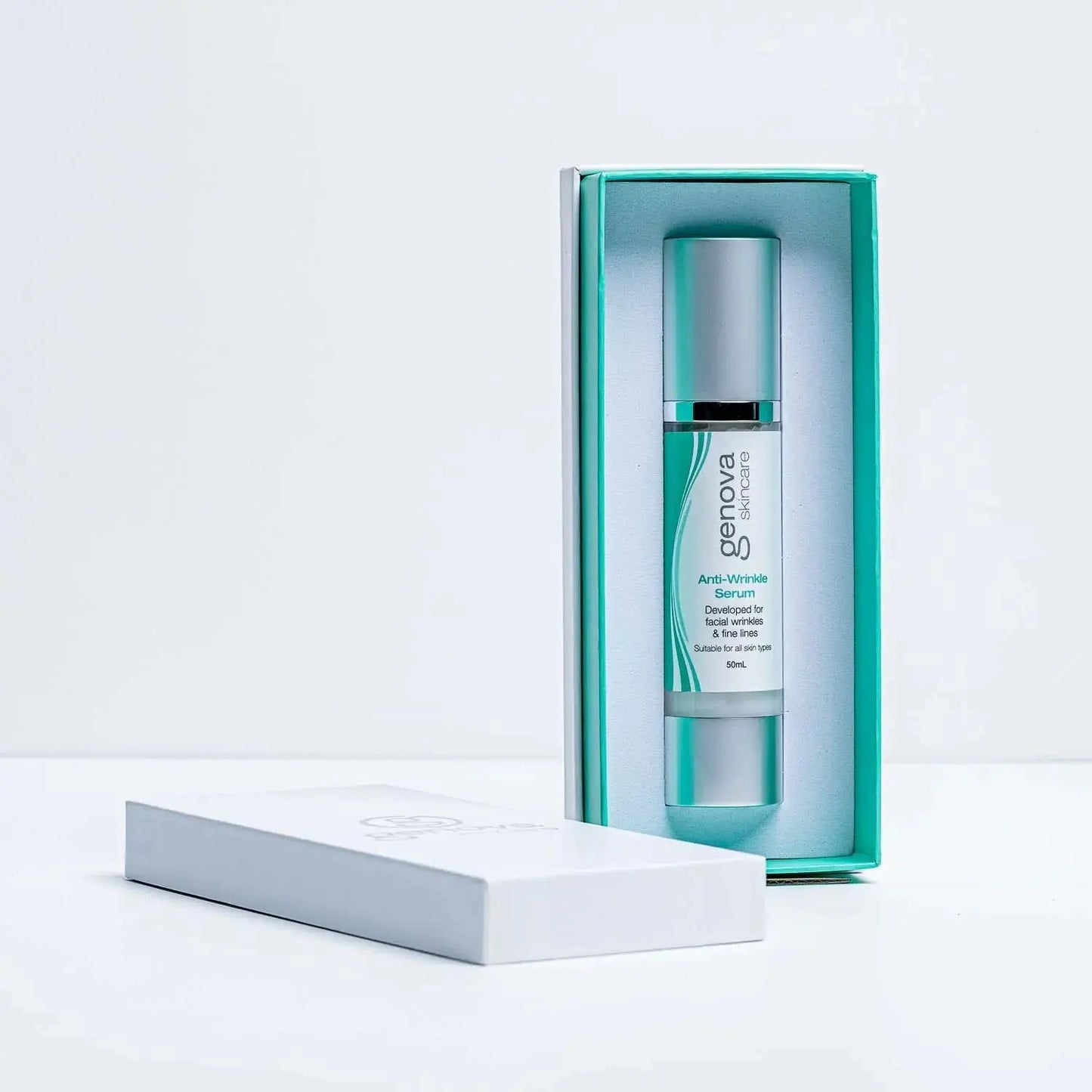
The Genova approach pairs three products that support the surface side. Active Foaming Cleanser is non-stripping, which matters when you are rinsing post-workout. Anti-Wrinkle Serum uses peptide signalling that complements the mechanical signalling exercise drives in the dermis. Genova Firming Cream, made in Australia under strict quality-control standards, protects the lipid barrier the post-workout shower can strip if water runs too hot.
SPF is the other half of the picture for outdoor sessions. Reapplied every two hours during outdoor exercise, broad-spectrum SPF 50 plus protects against the UV load that would otherwise undo the collagen work the exercise is helping to support.
Realistic Expectations: A regular movement habit may show in menopausal skin within three to four weeks: brighter surface, less morning puffiness, more bounce returning to the cheeks. Skincare supports the surface during this shift. Movement will not erase lines that are structural, and it cannot offset hours of midday outdoor exposure without SPF. Results vary with consistency, type of exercise, age at starting, and the broader picture of sleep, sugar, alcohol and stress.
The simple 7-day skin-supportive movement plan
- Walk 20–30 minutes on 4 days.
- Add 2 short strength sessions.
- Avoid peak UV where possible.
- Rinse skin after sweating.
- Use SPF 50+ for outdoor sessions.
- Keep the evening routine barrier-focused.
Who this approach suits and who it does not
It may suit you if:
- You are 45 to 65 and noticing the skin lifts when you move and dulls when you do not.
- You are returning to regular exercise after a sedentary stretch and want to understand what is changing.
- You walk, swim, do Pilates, lift weights, or any combination, and want skincare that supports the picture.
- You exercise outdoors and want a routine that includes SPF protection alongside the post-workout rinse.
It may not suit you if:
- A joint, heart or other health concern needs a GP-led plan before any exercise advice.
- You are over-training to the point where cortisol is elevated rather than reduced.
- You are looking for a topical product that replaces movement on the skin's behalf.
- Your post-workout reactivity has progressed to persistent rosacea-pattern redness needing proper care first.
Strengths
- Peptide signalling complements the mechanical signalling exercise drives in the dermis.
- Barrier-first approach reduces post-workout reactivity many women notice.
- Non-stripping cleanser preserves lipids that hot post-workout showers strip.
- Australian made and formulated for menopausal skin under high UV conditions.
Limitations
- No skincare guarantees an outcome without a consistent exercise habit underneath.
- Cannot replace the muscle, bone and circulation work that movement does.
- Cannot protect against UV without SPF reapplication during outdoor sessions.
- Visible improvement takes three to four weeks of consistent movement and routine.
How to use the routine around exercise after 45
Before outdoor exercise:
- Splash with cool water.
- Active Foaming Cleanser, 30 seconds, rinse.
- Anti-Wrinkle Serum on damp skin.
- Firming Cream over the top.
- Broad-spectrum SPF 50 plus, reapplied every two hours.
After exercise: cool-water rinse first, no harsh cleanser, then Anti-Wrinkle Serum and Firming Cream once the skin has cooled. On non-exercise days, the same gentle morning and evening routine. If you are starting from a stripped-back routine, the 12-week pace in our menopause skin reset introduces the same products gradually.
Is cardio or strength training better for menopausal skin?
Both, for different reasons. Cardio drives the microcirculation lift and the immediate brightening effect. Strength training supports the underlying muscle, bone and collagen signalling that holds the face shape over years. Most evidence-based menopause-fitness plans pair them across the week.
Will exercise reduce my hot flushes?
For many women, yes. Regular moderate exercise reduces hot flush frequency and intensity for a meaningful share of women, though responses vary. Intense workouts in the late afternoon can temporarily worsen flushes, so most women find morning or daytime sessions read better.
Does the post-workout glow last?
The immediate flush fades within an hour or two, but the deeper changes (better tone, less puffiness, more bounce) build over weeks of consistency. The glow is one signal; the structural support is the longer-term return.
Will sweating in menopause irritate my skin more?
It can, because the menopausal barrier is more reactive and sweat sitting on the skin can trigger flushing or stinging. Rinsing soon after the session with cool water and a non-stripping cleanser usually settles the reactivity.
Can over-exercising age menopausal skin?
Yes, in two ways. Sustained over-training keeps cortisol high and drives the same inflammation pathway sedentary stress does. And long outdoor sessions without SPF accumulate UV damage faster than the skin can repair it.
Is yoga or Pilates enough to count?
Yes, especially in combination. Both support flexibility, balance, breath and lymphatic flow, and the gentler resistance work in Pilates partly substitutes for weight training. Many women in menopause find this combination more sustainable than high-impact training.
References
- Crane JD, MacNeil LG, Lally JS, et al. Exercise-stimulated interleukin-15 is controlled by AMPK and regulates skin metabolism and aging. Aging Cell, 2015.
- Lephart ED. A review of the role of estrogen in dermal aging and the function of phyto-estrogens in skin care. Maturitas, 2018.
- Polo-Kantola P. Sleep problems in midlife and beyond. Maturitas, 2011.
If a regular walk now reads on your face more than it used to, you are not imagining it. Movement is doing real work in the dermis, not just on the surface. While the habit settles in, a peptide-led routine built around Anti-Wrinkle Serum and Firming Cream can support menopausal skin so the lift from movement shows clearly on the outside.
This article is for general information and is not a substitute for personalised advice from a qualified health professional. Genova products are cosmetics, not therapeutics, and are designed to support the appearance of menopausal skin. Individual results vary.