
Alcohol and Menopausal Skin: Why Wine Triggers Flushing, Puffiness and Poor Sleep After 45
By Simon MitchellQuick Summary:
A single glass of wine hits menopausal skin harder than it did in your thirties because falling estrogen changes how your body handles alcohol. The result is more dehydration, more facial flushing, more night-time hot flushes, and a duller, puffier face the next morning. Cutting back, especially in the three hours before bed, often improves how the skin reads within two to three weeks. A peptide-led barrier routine can support menopausal skin through the shift.
It is Friday night. You have had one glass of wine, the same glass you would have had at 35, and by 10pm your cheeks are pink, your skin feels warm, and the first hot flush is on its way. By Saturday morning your face is puffy and dull, and you look like you had three.
Menopause is not just hot flushes. It is also the mood that lifts and dips for no clear reason, the joints that ache out of nowhere, the brain fog that loses words mid-sentence. The shift in how alcohol lands sits inside this wider picture, and you are not the only one who has noticed.
The biology is real, and it sits inside the broader pattern in our overview of menopause skin changes after 45.
Why alcohol hits menopausal skin harder after 45
Alcohol hits menopausal skin harder because three things shift at once. Total body water decreases, concentrating alcohol in the blood for the same amount poured. Estrogen drop alters alcohol-metabolising enzymes, so each glass lingers longer. And menopausal vasculature is more reactive, so flushing lands on an already-warmer baseline.
The result is a higher blood-alcohol curve for the same drink, longer time at peak, and longer recovery. "I can't drink the way I used to" is one of the most common things readers in this stage tell us.
A 2018 review by Lephart in Maturitas mapped how estrogen decline reshapes the skin and vascular system, and the vascular changes are part of why modest alcohol intake produces flushing patterns that did not exist a decade earlier.
What alcohol actually does to menopausal skin
Alcohol affects menopausal skin through four pathways at once: dehydration, vascular dilation, inflammation via acetaldehyde, and disrupted sleep. None is unique to menopause, but each lands harder on skin already running with less estrogen support.
Alcohol is a diuretic. It pulls water out, and a barrier already losing water more easily in menopause has less reserve. Vascular dilation drives the flushing you feel in cheeks and ears, and in menopausal skin where vessels are already more reactive, the pattern can set in more permanently over time. If background redness is now a daily issue, the broader picture is in our piece on skincare for menopausal rosacea-prone skin.
Acetaldehyde, the by-product the liver creates while processing alcohol, is inflammatory and feeds into the same low-grade pattern that drives faster-looking ageing, covered in inflammaging in menopausal skin. Alcohol also disrupts the deep sleep stage where the skin does most of its overnight repair, covered in sleep and menopausal skin.
Why evening wine wrecks menopausal sleep specifically
Evening wine wrecks menopausal sleep because alcohol shortens REM, increases night wakings, and worsens hot flushes in the second half of the night. A 2001 review in Alcohol Research and Health by Roehrs and Roth detailed how alcohol within three hours of bed suppresses REM and rebounds into fragmented sleep once metabolised. In menopausal women, the rebound coincides with the hours hot flushes are most active.
The next morning, the face shows the combination: water loss, fluid pooling under the eyes from a flatter sleep, dullness from poor overnight microcirculation, and reactivity from inflammatory load. "I look like I had three when I had one" is the line we hear most often.
If you are having a drink tonight
- Avoid drinking within three hours of bed where possible.
- Have food with alcohol.
- Alternate each drink with water.
- Use cool water, not hot water, when cleansing.
- Keep the evening routine simple: cleanse, serum, firming cream.
- Use SPF 50+ the next morning.
How to tell alcohol is the issue after 45
You can usually identify an alcohol-driven shift by the timing. Visible flushing within 20 to 40 minutes of the first sip. A warm, dry feeling the next morning. Puffiness around the eyes and jawline. A duller cast that catches the bathroom light unflatteringly. Often, a sting from a serum that did not sting yesterday.
The pattern is reliable. If two glasses of wine on a Friday produce the same Saturday-morning face every time, alcohol is part of the story. The same reliability works the other way: cutting back modestly tends to show in the skin within two to three weeks.
What may help menopausal skin during and after drinking
Lifestyle affects the conditions your skin is living in. Skincare supports the surface your lifestyle is showing through. Alcohol shifts the conditions (hydration, inflammation, sleep); a peptide-led routine then works on the surface those conditions produce.
Skincare cannot undo the effect of alcohol, but a peptide-led barrier routine can support the skin through a season of cutting back and can soften the morning-after appearance when a glass does happen. The job is barrier support, inflammation calming, and steady hydration the alcohol pulls out.
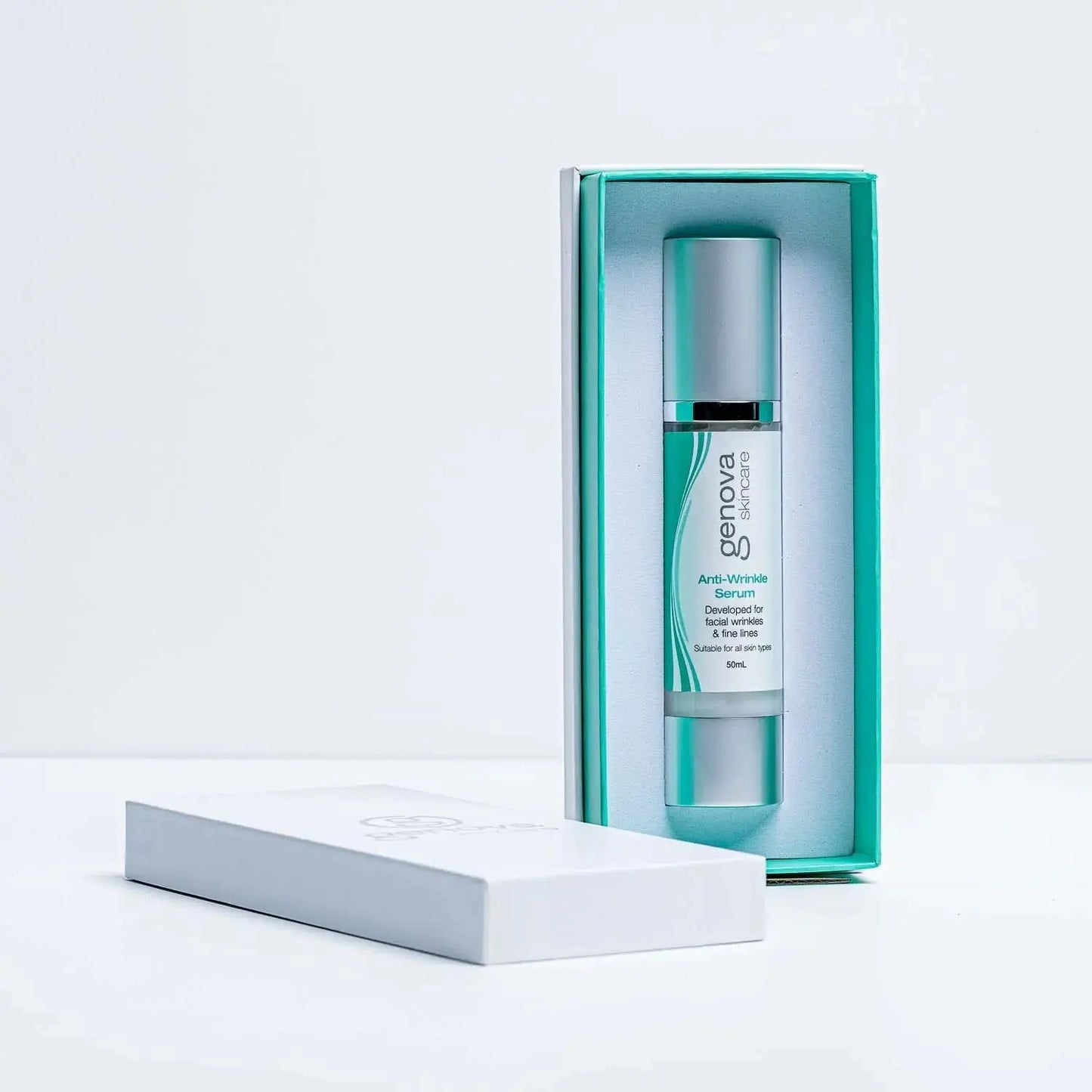
The Genova approach pairs three products. Active Foaming Cleanser is non-stripping for skin running drier the morning after. Anti-Wrinkle Serum uses peptide signalling for collagen pathways under inflammatory strain. Genova Firming Cream, made in Australia under strict quality-control standards, replaces lipids alcohol pulled out.
Hydration before bed matters separately. A glass of water for every glass of wine, plus one on the bedside table, blunts the dehydration curve. This is support during the shift, not a workaround for cutting back.
Realistic Expectations: A peptide-led routine may help calm the visible effects of alcohol on menopausal skin within four to six weeks of consistent use. It will not undo the underlying biology, and it cannot replace cutting back when alcohol has become a clear driver of skin issues. If flushing has become persistent, a GP conversation is the more useful step. Results vary with consistency, individual skin condition, and how much alcohol stays in the picture.
Who this approach suits and who it does not
It may suit you if:
- You are 45 to 65 and one glass of wine now reads on your face the way three used to.
- You are cutting back gradually and want a routine that supports the skin through the shift.
- You notice morning puffiness, dullness, or stinging after drinking that did not happen at 35.
- You want daily skincare that does not depend on giving up alcohol entirely.
It may not suit you if:
- Alcohol intake is high and consistent, in which case skincare is downstream of a bigger conversation worth having with your GP.
- You are looking for products that promise to undo daily drinking on the face.
- Flushing has progressed to persistent rosacea-pattern redness that needs proper care first.
- You are still using stripping cleansers or strong actives every night that compound the dryness alcohol drives.
Strengths
- Peptide signalling supports collagen pathways stressed by alcohol-driven inflammation.
- Barrier-first approach reduces the morning-after reactivity many women notice.
- Non-stripping cleanser preserves lipids the alcohol-disrupted barrier already lost.
- Australian-made, formulated for menopausal skin and Australian conditions including high UV exposure.
Limitations
- No skincare guarantees an outcome when alcohol intake remains high.
- Cannot reverse vascular changes once persistent flushing patterns have set in.
- Cannot replace a GP conversation about alcohol intake if it is consistently high.
- Visible improvement takes four to six weeks of consistency and noticeably reduced drinking.
How to use the routine through a cutting-back season after 45
Morning:
- Splash with cool water (not hot), which settles overnight flushing and puffiness faster.
- Active Foaming Cleanser, 30 seconds, rinse.
- Anti-Wrinkle Serum on damp skin, two or three drops, press in.
- Firming Cream over the top, including the under-eye area if puffiness is the main concern.
- Broad-spectrum SPF 50 plus, which matters more on alcohol-stressed skin.
Evening: the same gentle cleanse, Anti-Wrinkle Serum on damp skin, Firming Cream as the final layer. On nights when you have had a drink, add a full glass of water before bed and one on the bedside table for the night waking. If you are starting a wider reset, the slower pace in our menopause skin reset introduces the same products over 12 weeks.
Does cutting out alcohol actually improve menopausal skin?
Usually, yes, and within two to three weeks. Less dehydration, less vascular flushing, less inflammation, and better sleep all show on the skin. Even a meaningful reduction (rather than complete abstinence) is often visible.
Why does wine give me a hot flush now when it did not before?
Because the menopausal vascular system is more reactive, and alcohol is a vasodilator. The flush you used to feel only after several drinks now appears after one. Cutting back the volume or switching to spirits with soda often reduces it.
Is red wine worse for menopausal skin than white?
It can be, for two reasons. Red wine contains histamine and tyramine, which dilate blood vessels further and worsen flushing. It also tends to be consumed in larger glass sizes, which compounds the dehydration effect.
Will drinking more water make up for the wine?
Partly. A full glass of water for every glass of wine, plus one before bed, blunts the dehydration curve. It does not address the inflammation or the sleep disruption alcohol drives, which need the reduced intake itself.
Can my skin recover from years of regular drinking after menopause?
Yes, in many ways. Hydration, dullness and morning puffiness usually improve within weeks of cutting back. Persistent flushing patterns and structural vascular changes are slower and may need a GP or skin specialist conversation if they have set in.
What about the occasional special-occasion drink?
Occasional is the operative word. A glass at a birthday dinner is a different conversation from a glass every evening. Pair it with water, eat with it, and avoid drinking in the three hours before bed if you want the next morning to read better.
References
- Lephart ED. A review of the role of estrogen in dermal aging and the function of phyto-estrogens in skin care. Maturitas, 2018.
- Roehrs T, Roth T. Sleep, sleepiness, and alcohol use. Alcohol Research and Health, 2001.
- Polo-Kantola P. Sleep problems in midlife and beyond. Maturitas, 2011.
If wine has started reading on your face the next morning, you are not imagining it, and you are not alone. The biology behind the shift is part of the wider menopause picture, and the skin will quietly respond as the habit moves. While the shift settles, a calm peptide-led routine built around Anti-Wrinkle Serum and Firming Cream can support menopausal skin through the change.
This article is for general information and is not a substitute for personalised advice from a qualified health professional. Genova products are cosmetics, not therapeutics, and are designed to support the appearance of menopausal skin. Individual results vary.