
Microbiome Skincare for Menopausal Skin: What It Means After 45
By Simon MitchellQuick Summary:
Microbiome skincare for menopausal skin is the idea that you protect the natural community of microbes living on your skin rather than strip it. Menopause measurably shifts that community: research shows reduced diversity and a more alkaline surface after 45, which is part of why familiar products start to sting. A gentle non-stripping cleanser, a calming serum, a barrier-rich moisturiser and daily SPF do more than any product labelled "probiotic." Results build over 4 to 12 weeks. Skincare cannot restore the microbiome of your thirties.
You picked up a moisturiser at the chemist and saw the front of the box say "supports your skin microbiome." So did the cleanser two shelves up. So did a toner you would never have looked at twice. You had no idea this was something you were supposed to be looking after, and now you are standing in the aisle wondering whether your current routine is helping it or quietly making it worse.
If you are also navigating broken sleep, the foggy days and a body that feels different from the one you knew, please know your skepticism about another buzzword is reasonable. Menopause already brings enough new vocabulary, and the last thing you need is another thing to manage. The good news is that microbiome care is more grounded than the marketing makes it sound, and most of it costs nothing extra.
The skin microbiome is real, it does change in menopause, and there are sensible things you can do without buying anything labelled "probiotic." Here is what the trend actually means.
What Is the Skin Microbiome and Why Does It Matter for Mature Skin?
Your skin is home to billions of bacteria, fungi and other microbes that live across the surface and inside the pores. Research published in Microbiome by Boxberger describes the skin microbiome as a stable community that helps keep the surface slightly acidic, supports the barrier and competes with less helpful microbes for space.
When that community is in balance, skin tends to look calmer, less reactive and slower to flare. When it tips out of balance, women often see new sensitivity, more visible redness, and slower recovery from any small irritation that used to settle within a day.
The microbiome is not an extra step to add to your routine. It is the backdrop your routine either supports or disrupts. Almost everything you put on your face influences it, often without you knowing.
Why Menopause Changes the Skin Microbiome After 45
Studies in Maturitas by Lephart describe how menopausal skin loses estrogen-driven moisture, sebum and barrier lipids. The surface becomes more alkaline, drier and less hospitable to the helpful bacteria that prefer slightly acidic conditions.
Research in Frontiers in Microbiology by Wilkinson found measurable shifts in the skin microbiome between pre- and post-menopausal women, with reduced diversity and changes to the dominant bacterial groups. In plain language, the population thins out and less helpful microbes take more space.
This is one reason familiar products start to sting after menopause, why a small redness flare now takes a week to settle, and why sensitivity can appear for the first time in your fifties. The skin surface is a different environment than it was at 35.
Comparing Approaches to Microbiome Care for Menopausal Skin Over 45
Four ways women approach this in 2026, with very different results for mature skin.
| Step | Product | Purpose |
|---|---|---|
| 1 | Active Foaming Cleanser | Cleanse without stripping |
| 2 | Anti-Wrinkle Serum | Peptide support |
| 3 | Firming Cream | Lipid-rich barrier comfort |
| 4 | SPF 30+ | Protect barrier lipids from UV |
Stripping cleansers and active overload (the old way)
Suits no one over 45. High-pH foaming cleansers, frequent acid or retinoid use and over-cleansing all reduce microbial diversity and weaken the barrier. A common pattern in women who treated their forties skin like their thirties skin and noticed sensitivity start.
Probiotic-labelled skincare
Products with live or fermented bacteria, prebiotic ingredients or postbiotic extracts. Evidence for topical probiotics is early and mixed. They may help some women, but they will not solve the underlying menopausal barrier problem on their own. Read the label and do not pay extra for marketing language alone.
Gentle non-stripping cleanser plus barrier support
A pH-balanced gentle cleanser, calming serums and a barrier-rich moisturiser. Suits most menopausal skin. The point is not to add probiotics, but to stop disrupting the microbes that are already there. The most useful default for women after 45.
In-clinic options for severe imbalance
Recurrent flares, persistent rosacea or eczema may need professional input. A qualified skin specialist can guide you on options beyond skincare. This is a separate pathway, not a replacement for a sensible daily routine.
What May Help Build a Microbiome-Friendly Routine for Menopausal Skin
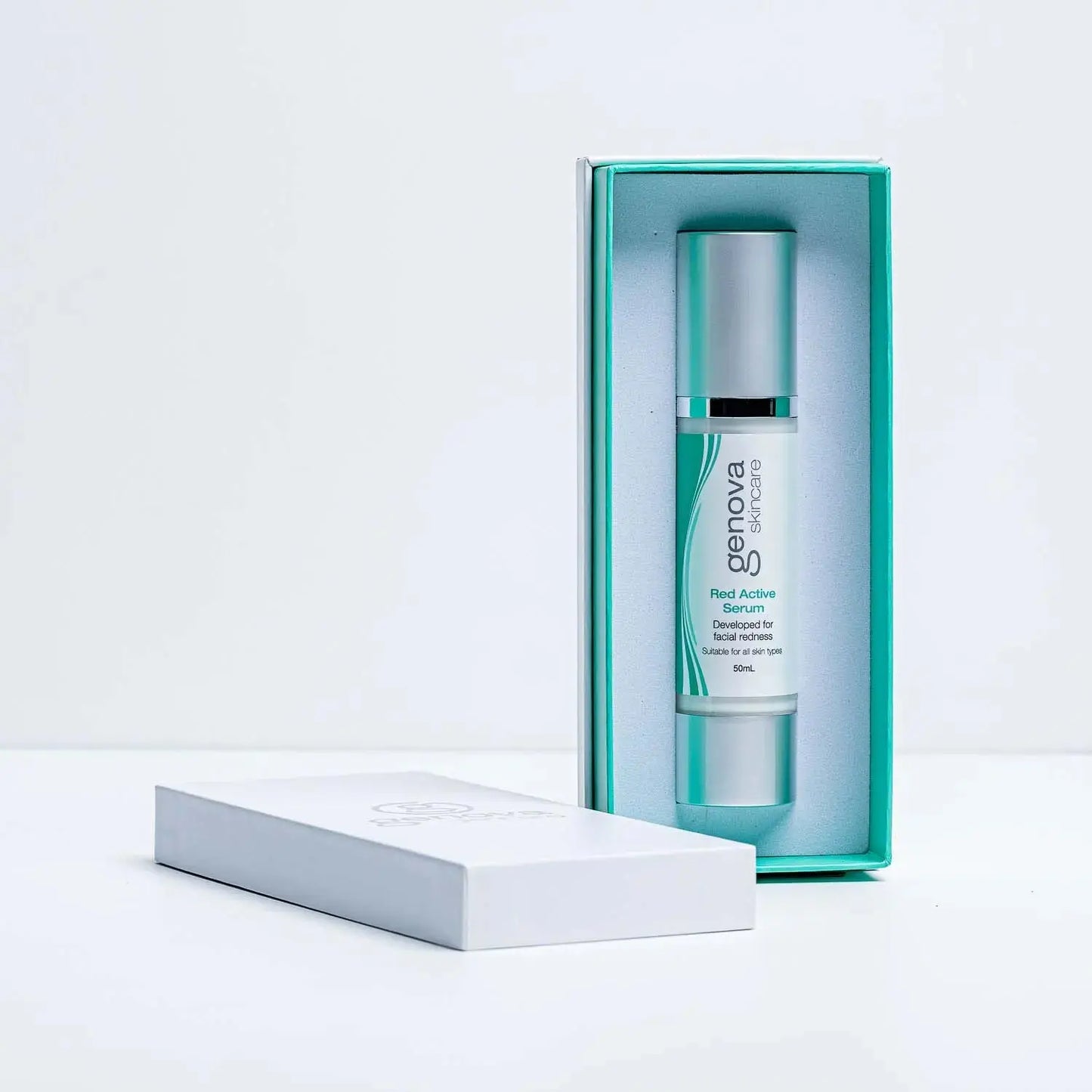
The most useful Genova starting point is the Genova Active Foaming Cleanser, a pH-balanced gentle cleanser designed to keep the surface clear without stripping the lipids and microbes that hold it in balance. Pair it with the Genova Red Active Serum, formulated for sensitive menopausal skin and visible redness, which supports the surface rather than feeding reactivity.
Layer the Genova Firming Cream on top as your barrier-supporting moisturiser, and finish with daily SPF 30 or higher. Australian-made and formulated for our climate, the routine respects the surface community rather than disrupting it.
The thinking is simple. A gentle cleanser stops removing what should stay. A calming serum settles reactivity rather than triggering it. A lipid-rich cream gives the surface community a stable environment. SPF protects all of it from UV, which is one of the strongest microbiome disruptors we know about.
Realistic Expectations: A microbiome-friendly routine may help reduce reactivity, calm visible redness and improve barrier feel over 4 to 12 weeks. It will not restore the microbial diversity of your thirties or replace estrogen. There is no miracle probiotic that resets the surface. Individual response varies, and consistency outperforms novelty. Daily SPF protects whatever surface gain you achieve.
Strengths of a microbiome-friendly approach for mature skin
- Reduces surface reactivity over weeks rather than triggering it
- Supports the natural microbial community already living on your skin
- Suits sensitive, dry, reactive menopausal skin
- Compatible with peptides, niacinamide and most other gentle actives
- Lower flare risk than active-heavy routines built for younger skin
Limitations of microbiome skincare for menopausal skin
- Will not replace estrogen or reverse menopausal skin changes
- Will not restore the microbial diversity of younger skin
- Works on weeks not days, so visible change is gradual
- Topical probiotic claims are early-stage and mixed in the evidence
- Will not resolve confirmed rosacea or eczema on its own
How to Apply a Microbiome-Friendly Routine Step by Step
- Cleanse once at night, water rinse in the morning. Active Foaming Cleanser, lukewarm water, no scrubbing. Pat dry and leave skin slightly damp.
- Apply Red Active Serum to damp skin. A few drops pressed gently across face and neck.
- Layer Firming Cream while skin is still slightly damp. Pea-sized amount, light upward strokes over face and neck.
- SPF 30 or higher every morning. UV is one of the strongest microbiome disruptors. Daily, not just summer.
- Hold acids and retinoids to 1 to 2 nights per week maximum. Anything more often disrupts the community you are trying to support.
- Skip strongly fragranced products if your skin has become reactive. Fragrance is one of the more common triggers in menopausal sensitivity.
Who Microbiome Skincare May Suit in Menopause
It may suit you if:
- You have noticed new sensitivity, redness or reactivity in your forties or fifties
- Your previous routine was active-heavy and now feels too much
- You want a calmer, more sustainable skincare approach
- You prefer evidence-based gentleness over trend ingredients
- You are willing to give a routine 4 to 12 weeks before judging it
It may not suit you if:
- You expect dramatic visible change in days
- You prefer the immediate tightness of strong foaming cleansers
- You have a confirmed rosacea, eczema or skin condition needing professional input first
- You are unwilling to reduce the number of actives in your routine
- You expect a probiotic-labelled product to do all the work
Common Questions About Microbiome Skincare for Mature Skin
Do I need to buy probiotic skincare?
Not necessarily. The strongest evidence is for protecting the microbes you already have, which a gentle cleanser and barrier-rich moisturiser do without a probiotic label. Probiotic-labelled products may add benefit for some women but they are not the foundation.
Why has my skin become so reactive after menopause?
Estrogen loss raises the pH of your skin and reduces barrier lipids, which shifts the microbial community. Less helpful microbes take more space and the barrier becomes leakier. Familiar products start to sting because the surface is a different environment.
Can I still use my favourite acid serum?
Yes, but less often. Most menopausal skin tolerates acid 1 to 2 nights per week without disrupting the microbiome. Daily acid use is one of the most common reasons women develop sudden sensitivity in their fifties.
Does over-cleansing really matter that much?
Yes. Twice-daily foaming cleansing strips the lipids and microbes that hold the surface in balance. A water rinse in the morning and a gentle cleanser at night is enough for most menopausal skin.
How long before I see a difference?
Soft change at 4 weeks, more visible calm at 8 to 12 weeks. The microbiome rebuilds slowly. If your routine is causing flares, the calming may show within a week of stopping the trigger.
Is fragrance really that disruptive?
For reactive menopausal skin, often yes. Fragrance is one of the most common triggers in women whose skin became sensitive after 45. If you are not sure, try fragrance-free for 4 weeks and see how your skin settles.
References
Lephart ED. Skin aging and oxidative stress: equol's anti-aging effects via biochemical and molecular mechanisms. Maturitas. 2018;117:68-75.
Boxberger M, Cenizo V, Cassir N, La Scola B. Challenges in exploring and manipulating the human skin microbiome. Microbiome. 2021;9(1):125.
Wilkinson HN, Williams BM, Gardner BL, et al. Skin microbiome changes across the menopause transition. Frontiers in Microbiology. 2023;14:1124389.
If your skin has started reacting to products you have used for years, please know you are not doing anything wrong. The surface really has changed, and a calmer routine respecting your microbiome is one of the most useful things you can do for it. A small daily set with the Genova Active Foaming Cleanser and a barrier-rich moisturiser is often enough to settle the picture, and you do not need a probiotic label to look after the microbes you already have.
A simple place to start:
Cleanse gently at night, calm visible reactivity with Red Active Serum, seal with Firming Cream, and protect every morning with SPF. If your skin has become more reactive after 45, this barrier-first routine is the most sensible foundation before adding stronger actives.
This article is for general information only and does not constitute personal advice. Genova products are cosmetics, not medicines. Results vary between individuals. If you have persistent skin changes, severe sensitivity or any concern about a skin condition, please seek personal advice from a qualified skin specialist.