
Menopause Skin Changes After 45: Why Your Skin Feels Different and What Actually Helps
By Simon MitchellQuick Summary:
Menopausal skin changes after 45 are driven mostly by the drop in estrogen, which thins the dermis, reduces ceramides in the barrier, slows cell turnover, and raises baseline inflammation. Visible signs include dryness, sensitivity, dullness, redness, pigmentation, fine lines, jowl softening, and crepiness. A consistent routine built around a gentle cleanser, a peptide serum, a barrier-supporting moisturiser, and daily SPF can support skin appearance over weeks. Skincare cannot restore estrogen or remove deep static lines, and professional support is appropriate for significant concerns.
You catch your reflection in the car visor on the school pickup, and the woman looking back does not look like the one you remember. The makeup you have worn for years sits differently. By 9pm you can feel the texture of your own face under your fingertips.
If you are in perimenopause or menopause, you may be managing a lot at once: mood shifts, broken sleep, hot flushes in meetings, an energy level that does not match what you remember of yourself. Skin is one more thing on the list. You have not done anything wrong, and your skin is not failing. Estrogen is dropping, and the skin you knew is rewriting its own rulebook in real time. What is happening is well understood, and there is a calm way through it.
Why Menopausal Skin After 45 Behaves Differently
Menopausal skin behaves differently after 45 because estrogen, the hormone that has quietly run your skin's repair systems for decades, falls sharply during perimenopause and stays low afterwards. A 2018 review in Maturitas by Lephart described the cascade: less collagen, less elastin, fewer ceramides in the barrier, slower recovery, and a thinner dermis. Skin that used to bounce back overnight now takes a week to settle from the same trigger.
Three mechanisms drive what you are noticing. The barrier loses its waterproofing: research published in 2022 in Scientific Reports by Kendall and colleagues found that ceramide composition in postmenopausal skin shifts measurably, which is why familiar products now sit on the surface. Cell turnover slows, so dead cells accumulate, and skin looks duller even when hydrated. And a 2021 review in the Journal of Investigative Dermatology by Pilkington and colleagues describes "inflammaging," low-grade chronic inflammation that becomes more pronounced after menopause and accelerates visible change. The three layers stack, so a routine that addresses all of them is what gives skincare a real chance to help.
What Menopausal Skin Changes Look Like After 45
The visible signs cluster into about a dozen patterns, and most women experience three or four at once: dryness no moisturiser fixes, sudden sensitivity to familiar products, dullness, redness with heat or stress, new pigmentation, deeper fine lines, jowl softening, and crepiness on neck, hands, and upper arms.
Two patterns are common and often missed. "Nothing absorbs anymore" is the leaky-barrier story: serums pill, oils sit, the moisturiser feels heavy by mid-morning. A barrier-supporting routine usually shifts it within weeks. "I look tired even when I'm not" is dullness, mild puffiness, and softer eye contours combined, which responds to a calm routine more than a hero product.
If your concern is more specific, the right next read is a post in the cluster: menopause and dry skin, sudden sensitivity, barrier repair, melasma versus age spots, crepey neck and décolletage, or jowls and marionette lines. This page is the map; those are the routes.
| What you’re noticing | Best next read |
|---|---|
| Skin feels dry and tight | Menopause and Dry Skin |
| Products suddenly sting | Sudden Sensitivity |
| Products pill or sit on top | Barrier Repair |
| Dark spots or patches | Melasma vs Age Spots |
| Neck looks crepey | Crepey Neck and Décolletage |
| Jawline is softening | Jowls and Marionette Lines |
| Skin feels rough | Sandpaper Skin |
| Considering treatments | When Skincare Isn’t Enough |
How to Compare the Main Approaches for Menopausal Skin After 45
There are four broad approaches women in Australia use. Most combine two or three over time rather than picking one.
1. Barrier-First Skincare (gentle cleanser, ceramides, peptides, daily SPF)
The most common starting point. Visible difference in 4 to 12 weeks. Suits almost everyone in perimenopause or menopause. Lower cost. Does not address structural fat loss or deep static lines.
2. Active-Led Skincare (retinol, vitamin C, exfoliating acids)
Adds resurfacing and collagen-signalling actives on a stable barrier base. Often too much during sensitive perimenopause. A 2019 study in the British Journal of Dermatology by Dhaliwal and colleagues found bakuchiol may suit those who cannot tolerate retinol. See retinol versus peptides.
3. In-Clinic Procedures (laser, radiofrequency, anti-wrinkle injectables, fillers)
The right answer for structural change skincare cannot address: deep muscle-driven lines, significant volume loss, or skin laxity. Higher cost. Works best alongside a daily routine.
4. Hormone-Based Pathways (systemic HRT, topical estriol creams)
A conversation for your doctor. Systemic HRT may indirectly improve skin alongside its primary purpose. Topical estrogen face creams are not approved in Australia for cosmetic use. See topical estrogen and non-hormonal options.
How a Daily Routine Can Support Menopausal Skin After 45
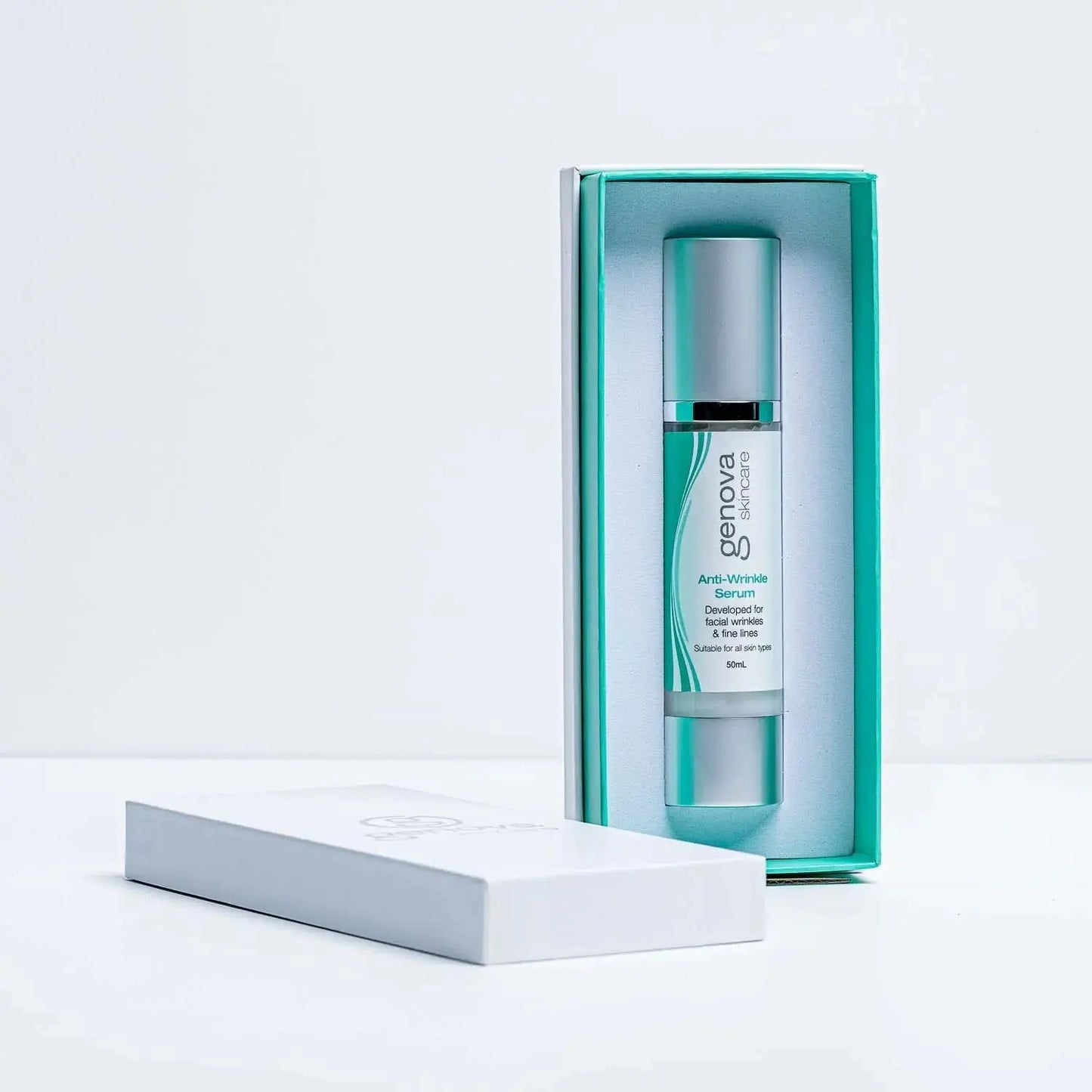
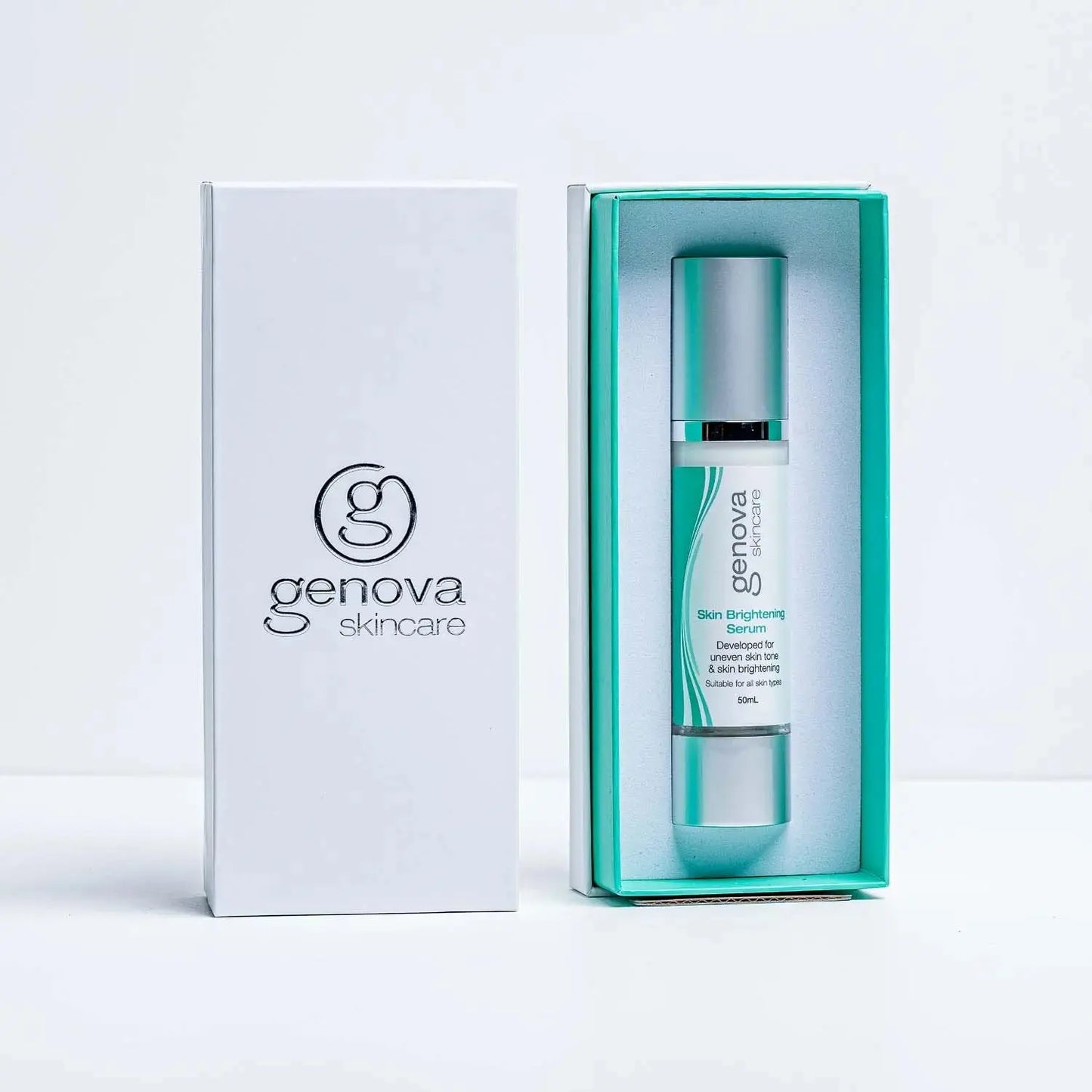
A daily routine can support menopausal skin after 45 by addressing the three mechanisms at once, calmly and consistently, rather than chasing each symptom with a separate hero product. The Genova range follows the three-mechanism logic: a gentle cleanser, a peptide serum, and a barrier-supporting moisturiser. Daily SPF is the fourth non-negotiable. Most women start with the Genova Firming Cream as a twice-daily barrier moisturiser paired with a peptide serum. Both are made in Australia under strict quality-control standards, formulated for Australian conditions including higher year-round UV.
Realistic Expectations: Barrier improvement (less tightness, better product absorption) may appear within 2 to 4 weeks. Smoother surface and improved tone often take 6 to 12 weeks. Firmness and crepe changes take 12 weeks or longer. Skincare cannot restore estrogen, restructure lost fat, or remove deep static lines. Results vary with consistency and individual skin condition.
For a structured pathway through the early weeks, the 12-week Menopause Skin Reset walks through calm-down, rebuild, and reintroduction in order. This hub is the why; the reset is the how.
Who Should Build a Menopausal Skincare Routine and Who Should See a Specialist
It may suit you if:
- You are in perimenopause or menopause and your skin behaves differently than at 40
- You want a calm, evidence-based starting point rather than trending actives
- You are managing dryness, sensitivity, dullness, mild redness, crepiness, or early fine lines
- You are willing to give a routine 6 to 12 weeks before judging it
It may not suit you if:
- You want overnight or certain results
- Your primary concern is structural (significant jowl heaviness, deep static lines, substantial volume loss). A qualified cosmetic specialist is the right next step.
- You have suspected rosacea, eczema, or active pigmentation not yet seen by a doctor
- You are looking for a hormonal pathway. Your GP is the starting point.
Strengths of a barrier-first menopausal skincare routine
- Addresses barrier, turnover, and inflammation at once
- Built on peer-reviewed evidence for menopausal skin
- Australian-made, formulated for Australian conditions and UV
- Lower risk than active-heavy routines in sensitive perimenopause
- Layers with in-clinic options later without conflict
Limitations of a barrier-first menopausal skincare routine
- Cannot restore estrogen or undo the hormonal driver of skin change
- Cannot remove deep muscle-driven lines (forehead, frown, around the mouth)
- Cannot restructure lost facial fat or lift loose skin
- Will not produce overnight results; changes build over 6 to 12 weeks
- Sleep, hydration, sun protection, and stress matter as much as products
How to Start a Menopausal Skincare Routine Step by Step
- Strip back first. Stop every active for two weeks. No retinol, no acids, no vitamin C.
- Cleanse gently morning and night. Non-stripping cleanser, no foaming sulfates if skin feels tight.
- Peptide serum on damp skin, twice a day, while the barrier rebuilds.
- Seal with a barrier-supporting moisturiser. Twice daily, neck included.
- SPF 30 or higher every morning, every day, including winter and indoors near windows.
- After 4 to 6 weeks, consider one active. Azelaic acid or bakuchiol are gentler than retinol.
- Reassess at 12 weeks, not earlier. Take photos at week one and week 12 in the same light.
FAQ on Menopausal Skin Changes After 45
How quickly do menopausal skin changes appear after 45?
Most women notice the first changes during perimenopause, often a few years before periods stop. Dryness, sensitivity, and a duller surface appear first. Crepiness and firmness loss usually build over the next two to five years.
Can skincare alone undo menopausal skin changes?
No. Skincare cannot restore the estrogen that has dropped, replace lost facial fat, or remove deep static lines. A consistent routine can support skin appearance, slow the visible impact of barrier breakdown and inflammation, and help skin feel calmer day to day. That is meaningful, but not a reset of the underlying biology.
Is peptide skincare or retinol better for menopausal skin?
It depends on where you are in the transition. Early perimenopausal skin, often sensitive, usually tolerates peptides better than retinol. Stable postmenopausal skin may tolerate low-strength retinol added carefully. Peptides can be used twice a day; retinol is night-only with caution.
Does HRT improve menopausal skin?
HRT is for the broader symptoms of menopause, not for skin. Some women report skin feels less dry and more elastic on systemic HRT, and there is research support for that secondary effect. The decision to start HRT is a GP conversation based on overall health, not a skincare decision.
When should I see a specialist instead of trying skincare?
See your GP or a qualified cosmetic specialist if redness is persistent and may be rosacea, pigmentation is suddenly changing, a mark is growing or has irregular borders, jowl heaviness affects how you feel daily, or you want to discuss hormonal options.
References
- Lephart, E. D. (2018). A review of the role of estrogen in dermal aging and facial attractiveness in women. Maturitas, 110, 6–14.
- Kendall, A. C., et al. (2022). Lipidomics for translational skin research and ceramide profile shifts in postmenopausal skin. Scientific Reports, 12, 16242.
- Pilkington, S. M., et al. (2021). Inflammaging and the skin. Journal of Investigative Dermatology, 141(4), 1087–1095.
- Dhaliwal, S., et al. (2019). Prospective, randomized, double-blind assessment of topical bakuchiol and retinol for facial photoageing. British Journal of Dermatology, 180(2), 289–296.
If you are reading this on a hard week, that is part of why it exists. Menopausal skin change is one of the more visible and least talked-about parts of a transition that asks a lot from women at once. You have done nothing wrong, and your skin is not broken. A calm routine and a little time can shift more than you expect. The Genova Firming Cream and the rest of the Genova range are designed to support that work. Choose something gentle enough to keep doing.
Disclaimer: This article is for educational purposes only and is not a substitute for personalised advice from your GP or qualified skin specialist. Genova products are cosmetics. Results vary. If you have a persistent skin concern, please consult a qualified professional.