
Inflammaging in Menopause: Why Skin Becomes Red, Reactive and Older-Looking After 45
By Simon MitchellQuick Summary:
Inflammaging is the slow, low-grade inflammation that builds quietly inside ageing skin and speeds up visible ageing from the inside out. Research suggests it ramps up sharply around menopause as estrogen drops, weakening the barrier and shifting immune cells into a reactive state. The result for many women after 45 is skin that flushes more, stings more and looks duller despite a familiar routine. Calming this background inflammation is one of the most useful things skincare can do for mature skin.
You know the moment. You apply the serum you have used for years, and within seconds, your cheeks are blotchy, and your jaw feels prickly. The mirror shows skin that looks tired and faintly flushed before you have even left the house. Your routine has not changed. Your skin has.
If you are also navigating night sweats, broken sleep, mood waves and a body that feels less predictable, this kind of skin shift is part of the same picture. Estrogen does not just affect mood and bones. It quietly steadies the skin too, and when it drops, many women describe feeling like their skin has become reactive to things it never used to mind.
Researchers have a name for what is happening underneath. It is called inflammaging, and it is one of the most useful concepts to understand if you are over 45 and watching your skin change.
Why Menopausal Skin Becomes More Reactive After 45
Up to 80% of women experience visible skin changes around menopause, with sensitivity, redness and dullness ranking high. Studies in Maturitas indicate that the first five years after menopause bring some of the largest changes in barrier function, hydration, and elasticity that a woman experiences.
Estrogen receptors sit throughout your skin and help regulate ceramide production, collagen synthesis, water-binding and immune response. When estrogen falls, all of these adjust at once, and skin that used to bounce back quickly now lingers in a reactive state for longer.
Many women describe their skin feeling "angry on the surface," or noticing that "everything sets it off now." That description is closer to the science than it sounds.
What Inflammaging Actually Means for Skin After 45
Inflammaging blends "inflammation" and "ageing." It describes the slow, low-grade inflammation that builds inside tissues as we age, even when nothing obvious is wrong. Research in Journal of Investigative Dermatology by Pilkington and colleagues describes skin inflammaging as a state where immune cells, fibroblasts and keratinocytes shift toward an inflammatory baseline, releasing higher levels of signalling molecules like IL-6 and TNF-alpha.
Chronic low-grade inflammation is now understood as one of the main drivers of visible skin ageing. It speeds collagen breakdown, slows cell renewal, weakens the barrier and makes pigmentation slower to settle. You do not feel inflammaging the way you feel a sunburn. You see it gradually as duller tone, slacker texture and skin that reacts to small things.
How Estrogen Decline Drives Inflammaging in Menopausal Skin
Estrogen behaves like a quiet anti-inflammatory. In skin, it suppresses inflammatory signalling, supports barrier lipid production and keeps mast cells calm. Studies in Maturitas describe estrogen as a major factor in why women's skin barrier holds up well through their 30s and early 40s.
When estrogen drops in perimenopause and menopause, that calming influence lifts. The barrier thins, mast cells become twitchier, and small triggers (a familiar acid serum, a hot shower, a glass of red wine) now provoke a visible response. Over time that raised reactivity shows up as redder, duller, more lined skin.
Menopausal ageing is not only collagen loss. It is also losing the anti-inflammatory effect estrogen used to provide.
Comparing Approaches to Calming Inflammaging in Menopausal Skin
There is no single fix for inflammaging. Researchers describe it as a multi-input problem, so a layered, gentle approach works better than one heroic active.
Click to expand
Barrier-supporting moisturisers (ceramides, niacinamide, panthenol)
Reinforces the lipid barrier so fewer triggers reach deeper skin. Suits sensitive or dry menopausal skin. Visible comfort within 2 to 4 weeks. The everyday foundation other actives sit on.
Anti-inflammatory actives (centella, panthenol, oat extracts, azelaic acid)
Calms visible flushing and reduces reactive episodes. Suits women with persistent redness or sensitive cheeks after 45. Improvements at 4 to 8 weeks. Layers with peptides and barrier creams.
Antioxidant serums (vitamin C, vitamin E, niacinamide, polyphenols)
Helps neutralise the oxidative stress fuelling inflammaging from UV and pollution. Apply to a calm barrier first; very reactive skin may prefer niacinamide as a softer entry point.
In-office options (LED, gentle laser, peels under specialist care)
For women whose reactivity does not settle with daily skincare. Costs and outcomes vary. Best considered after a calming home routine has been in place for 8 to 12 weeks.
What May Help Soothe Inflammaging in Menopausal Skin
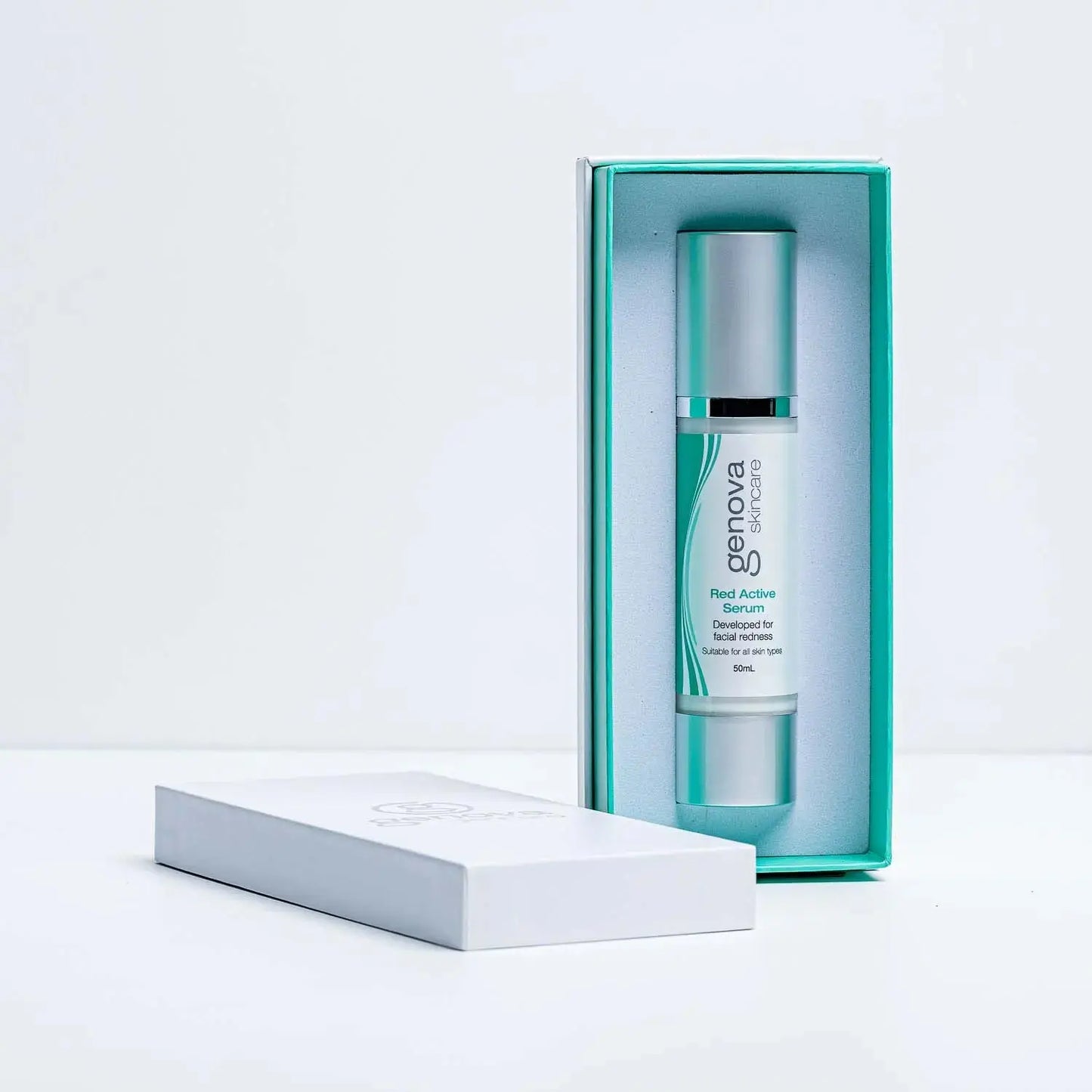
Genova was formulated for skin in this stage of life. The piece of the range most directly relevant to inflammaging is the Genova Red Active Serum, designed to support visibly calmer, less reactive menopausal skin. It pairs with the Genova Active Foaming Cleanser, a non-stripping cleanser for morning and night that won't disturb a sensitive barrier.
The logic is simple. If inflammaging is driven by a fragile barrier and an over-reactive immune layer, the most useful thing a daily routine can do is stop adding fuel and start adding calm. A gentle cleanser plus a calming serum suits this stage better than a stack of strong actives.
Peptide-led products like Genova Firming Cream sit alongside, supporting firmness without the irritation profile of stronger acids or retinoids. Australian-made and formulated for higher UV and dry-air conditions.
Realistic Expectations: A calming routine for inflammaging works gradually, not overnight. Most women notice skin feels less reactive within 2 to 4 weeks, with visible redness softening over 6 to 12 weeks. Skincare will not reverse the structural changes of menopause and cannot replace estrogen. It can help calm the inflammatory layer sitting on top of those changes. Results vary.
Strengths of a calming, anti-inflammaging approach
- Targets a deeper driver of visible menopausal skin ageing, not only the surface
- Suits sensitive skin that no longer tolerates strong acids or high-strength retinol
- Builds a foundation other actives can sit on without irritation
- Supports comfort, not just appearance, after months of stinging
- Compatible with most hormone therapy and rosacea routines, alongside specialist guidance
Limitations of skincare for inflammaging
- Will not reverse deep collagen loss or replace the structural role of estrogen
- Will not stop hot flushes, night sweats or other systemic menopause symptoms
- Confirmed rosacea or eczema should be reviewed by a qualified skin specialist
- Lifestyle factors (sleep, alcohol, sun, stress) shape inflammaging strongly
- Results are gradual; women wanting an overnight fix will be disappointed
How to Layer Calming Actives in a Menopausal Routine
- Cleanse gently, twice a day. Use a non-stripping cleanser. Pat dry, do not rub.
- Apply calming serum to damp skin. A few drops pressed gently onto cheeks, jaw and around the nose.
- Layer a barrier moisturiser. Ceramides, niacinamide or peptides. Firming Cream suits women who also want firming support.
- SPF 30 or higher every morning. UV is one of the largest drivers of inflammaging, and Australian sun is unforgiving even on overcast days.
- Reintroduce strong actives slowly. Restart retinol or AHAs at lower strength. If they no longer suit, peptides are a gentler route.
Who This Approach Suits in Menopause (And Who It May Not)
It may suit you if:
- Your skin has become more reactive, flushed or tight in your mid-40s or 50s
- Products that used to work now sting or look patchy
- You have noticed dullness, redness or fine lines settling in faster
- You want a layered, gentle approach rather than one heroic active
- You are rebuilding your routine in perimenopause or post-menopause
It may not suit you if:
- You have confirmed rosacea or eczema needing specialist review
- You are looking for an overnight visible change
- You expect skincare to replace hormone therapy (a separate doctor conversation)
- You are not willing to wear daily SPF, the single most useful inflammaging input
- Your skin reactivity is severe or sudden; please see a qualified skin specialist first
What to pause if your skin feels inflamed
- Strong exfoliating acids
- Daily retinol if it now stings
- Hot water cleansing
- Scrubs or cleansing brushes
- Fragranced products
- Layering too many actives at once
Common Questions About Inflammaging and Menopausal Skin
Is inflammaging the same as rosacea?
No. Inflammaging is a low-grade whole-body process affecting ageing skin. Rosacea is a recognised skin condition with its own pattern. The two can overlap, so persistent redness after 45 is best reviewed by a qualified skin specialist.
Can skincare really slow inflammaging?
Skincare cannot stop ageing, but research suggests barrier-supporting and anti-inflammatory ingredients may reduce the daily load of inflammation reaching deeper skin. Combined with sun protection, sleep and diet, the cumulative effect over months can be visible.
Does HRT help with inflammaging in skin?
Hormone therapy can support estrogen-dependent skin processes for some women, and this is a conversation for your doctor. Skincare complements either way, because daily inflammatory inputs continue regardless of hormone status.
Are strong actives like retinol bad for menopausal skin?
Not bad, but often less suitable at the strength they used to be. Lower concentrations or peptide alternatives are better tolerated by reactive menopausal skin. If retinol now stings where it never used to, that is a sign to step down.
How long before I see less redness from a calming routine?
Most women notice skin feels less tight or stingy within 2 to 4 weeks. Visible redness usually softens over 6 to 12 weeks of consistent use. Results vary with sun exposure, alcohol and sleep.
Is inflammaging only a face concern?
No. Inflammaging is body-wide and affects décolletage, hands and arms too. The same calming logic applies: gentle cleansing, barrier moisturiser, daily SPF and avoiding harsh exfoliation in those areas.
References
Pilkington SM, Bulfone-Paus S, Griffiths CEM, Watson REB. Inflammaging and the Skin. Journal of Investigative Dermatology. 2021;141(4S):1087-1095.
Lephart ED. Skin aging and oxidative stress: equol's anti-aging effects via biochemical and molecular mechanisms. Maturitas. 2018;117:68-75.
Franceschi C, Garagnani P, Parini P, Giuliani C, Santoro A. Inflammaging: a new immune-metabolic viewpoint for age-related diseases. Nature Reviews Endocrinology. 2018;14(10):576-590.
If your skin has been on a low simmer for months and you are tired of guessing what set it off, you are not imagining it. The shift is real, it has a name, and it can be calmed gently over time. A simple layered routine built around a calming serum like the Genova Red Active Serum is a useful starting point. Skincare will not solve menopause, but it can take one piece of it off your plate.
This article is for general information only and does not constitute personal advice. Genova products are cosmetics, not medicines. Results vary between individuals. If you have persistent redness, severe sensitivity, or any concern about a skin condition, please seek personal advice from a qualified skin specialist.