
Age Spots on Face and Hands After 45: Causes, What Fades Them and How to Prevent Them
Quick summary
Age spots (also called sun spots, liver spots or solar lentigines) are flat brown patches caused by years of sun exposure. They are most common on the face, hands, shoulders and chest after 40, and they are harmless.
Clinic treatments such as IPL, laser and freezing fade them fastest. Serums with brightening ingredients can soften them over 8–12 weeks, but rarely remove them. Daily SPF 50+, including on the backs of your hands, stops them darkening and new ones forming.
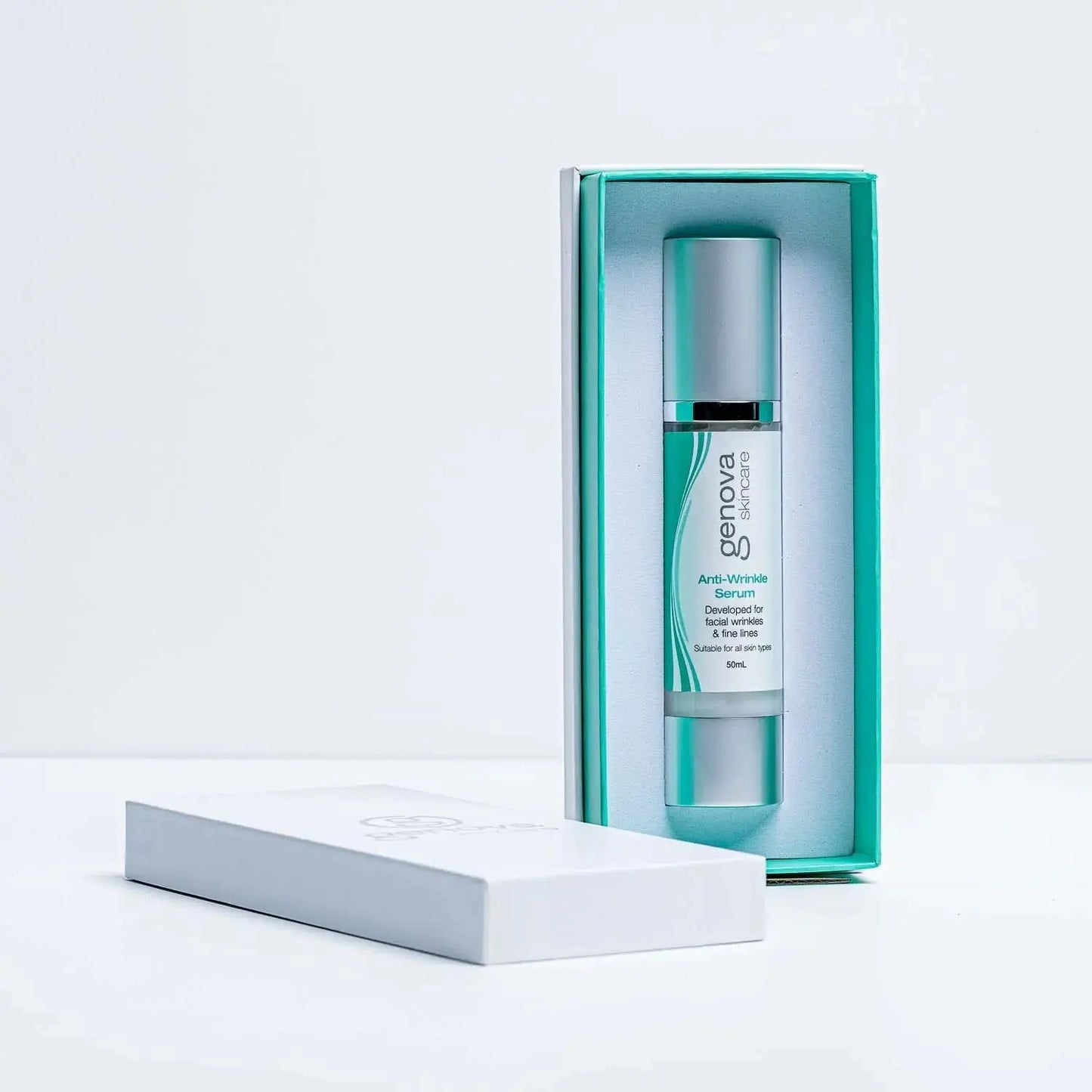
At Genova Skincare we make an age spot serum, so our own product is in this guide. Any new or changing spot should be checked by a doctor. Results vary from person to person.
You are washing your hands and notice a cluster of brown spots that were not there a few years ago. Or new patches near your temples no longer hide under concealer. You have not changed anything, yet they seem to have appeared all at once.
At Genova Skincare, age spots on the face and hands are one of the concerns we hear about most from women over 45. This guide explains what they are, why they show up now, what fades them, and how to stop new ones forming.
What are age spots on the face and hands after 45?
At Genova Skincare, we describe age spots as sun damage made visible. Despite the name, they are not caused by age itself. They build up over decades of sun exposure and simply become visible later in life.
Age spots are flat, well-defined brown, tan or grey patches, from freckle-sized to about a centimetre across. They do not rise above the skin or change texture. They are most common on the backs of the hands, cheeks, forehead, temples, shoulders, forearms and chest.
DermNet, the New Zealand skin reference, describes them as harmless. But in Australia, some skin cancers can look like a brown spot at first. See a doctor promptly about any spot that is new, changing, raised, rough, bleeding, itchy, or has uneven edges or colours.
Why age spots appear after 40, and why so many at once
Every time UV light reaches the skin, pigment cells make extra melanin to protect it. After years of exposure, some of these cells stay switched on in small patches, producing pigment even without fresh sun. Those patches become age spots.
They often seem to appear suddenly in your 40s and 50s because skin renews itself more slowly with age, so pigment builds up rather than shedding. Hormonal changes in perimenopause may also make skin more reactive to sun, although the research is still limited.
Hands are often worst hit. They get sun every day while driving and walking, yet many of us never put sunscreen on them, and frequent washing removes whatever we do apply.
Age spots vs other brown marks: why it matters
Not every brown mark is an age spot, and the wrong approach can make some worse. Melasma forms larger, blotchy patches on both cheeks, the forehead or upper lip, and is driven by hormones and heat as well as sun. Dark marks after pimples fade on their own over months. Seborrhoeic keratoses are raised, waxy, stuck-on spots that no cream will shift.
Our guide to age spots vs melasma vs post-acne marks explains how to tell them apart. If you are unsure, a GP or skin check clinic can confirm what you have.
Age spot treatments compared: what works best after 45
A 2025 review in the Journal of Cosmetic Dermatology by Mardani and colleagues looked at 41 trials of age spot treatments. Lasers and IPL were the most effective options. Topical products helped too, but more slowly and less completely.
| Option | How it works | Time to see a change | Downtime | Best for |
|---|---|---|---|---|
| Daily SPF 50+ | Stops spots darkening and new ones forming | Ongoing | None | Everyone, always |
| Brightening serum or cream | Slows pigment and helps shed darker cells | 8–12 weeks | None | Mild or scattered spots, overall evenness |
| Prescription creams | Stronger pigment and turnover actives, from a doctor | 8–12 weeks | Possible irritation | Spots that do not respond to cosmetic products |
| Chemical peel | Removes pigmented surface layers | After a series of sessions | Days of peeling | Many light spots over a larger area |
| Freezing (cryotherapy) | Freezes individual spots so they peel away | 2–4 weeks | Small scabs | A few distinct spots |
| IPL or laser | Light breaks up pigment clusters | 2–4 weeks per session | Spots darken, then flake off | Fastest, most complete fading |
Clinic treatments work best on lighter skin and can cause dark or light patches in some skin tones, so choose an experienced practitioner. Our guide to peels, lasers and IPL for age spots covers risks and downtime.
Brightening ingredients for age spots: what to look for
If you prefer to start at home, look for ingredients with some evidence behind them. Niacinamide is one of the better studied. Research in the British Journal of Dermatology by Hakozaki and colleagues found it reduced the transfer of pigment into skin cells and lightened spots in small trials. Vitamin C, retinol, azelaic acid and tranexamic acid are other common choices.
Be careful with strong creams bought online. In Australia, products with more than 2 per cent hydroquinone are prescription only, and the TGA has warned about imported creams with undeclared hydroquinone. Our guide to the best ingredients for age spots compares each one.
Genova Age Spot Serum: one option for age spots on face and hands
Genova Age Spot Serum is an Australian-made serum designed for mature skin. It combines brightening and exfoliating ingredients (Brighlette and Peelmoist) with glycerin for hydration, and can be used on the face and the backs of the hands twice a day. A 50ml bottle is $69.95.
Pros and cons of a brightening serum for age spots
Pros:
- No downtime, used at home
- Much cheaper than a course of IPL or laser
- Can even out overall tone, not just single spots
Cons:
- Slow: 8–12 weeks before you can judge it
- Softens spots rather than removing them
- Only works while you keep using it and wear SPF daily
Who it is for, and who it is not for
It may suit you if you have flat, even-coloured age spots on your face or hands, want to start with a home option, and are happy to wear SPF 50+ every day.
It is not for you if a spot is raised, rough, changing or bleeding (see a doctor first), you have melasma, or your skin is very reactive. If you want spots gone quickly, IPL or laser is the better choice. Do not use on broken or irritated skin.
Wondering whether any serum is worth it? Our honest look at whether dark spot correctors work after 45 sets out what to expect, and our guide to choosing a safe pigmentation cream covers what to avoid.
Realistic expectations
With a brightening serum, overall tone often looks brighter within 4–8 weeks. Spot edges soften and contrast fades over 8–16 weeks. Hands usually respond more slowly than the face.
Complete removal is uncommon, even after clinic treatments, and spots return without daily sun protection. Results vary from person to person.
How to prevent age spots: a simple daily routine
- Morning: cleanse gently. Skip harsh scrubs, which can inflame skin and darken marks.
- Apply your brightening serum. Face, neck and the backs of your hands.
- Moisturise. A healthy barrier tolerates actives better.
- Finish with SPF 50+. A tinted formula with iron oxides also blocks visible light. Reapply to hands after washing.
- Evening: serum and moisturiser again. Add retinol a few nights a week if your skin tolerates it.
- Cover up outdoors. A broad-brimmed hat and driving gloves reduce daily exposure.
For more detail, see our guide to how to prevent age spots.
Age spot questions women over 45 ask most
Do age spots ever go away?
Not on their own. They can fade with brightening products and sun protection, and IPL, laser or freezing can clear many. New ones may form without daily SPF.
What is the number one age spot remover?
There is no single best product. For fast, near-complete removal, IPL or laser in a clinic works best. At home, a serum with proven brightening ingredients and daily SPF 50+ is the realistic option.
Why am I getting so many age spots all of a sudden?
Decades of sun damage tend to surface in your 40s and 50s as skin renews more slowly. If many new spots appear quickly, or any look unusual, have a skin check.
What is the difference between dark spots and age spots?
"Dark spots" is a broad term for any brown mark, including age spots, melasma and marks after pimples. Age spots are the specific flat patches caused by long-term sun exposure.
What household item removes brown age spots?
None reliably. Lemon juice, vinegar and DIY acids can irritate skin and cause more dark marks, especially on deeper skin tones. Stick to tested products and sunscreen.
Age spots are a record of years in the sun, not a sign you have done something wrong. If they bother you, there are real options, from a daily serum to a few clinic sessions, and sunscreen makes every one of them work better. For more on what causes brown spots in midlife, read about dark spots after 40.
A serum made for age spots after 45
Australian-made, for face and hands, with a 30 day money back trial.


Made in Australia. Results vary from person to person.
Individual results vary. Genova Age Spot Serum is a cosmetic product designed to help the appearance of age spots and uneven tone. It does not remove spots, it is not a treatment for melasma or any skin condition, and it is not a substitute for advice from your GP or dermatologist. Have any new or changing spot checked by a doctor.
Sources:
- Mardani M, et al. Journal of Cosmetic Dermatology. 2025. doi:10.1111/jocd.70133. Review of 41 trials of treatments for solar lentigines.
- Hakozaki T, Minwalla L, Zhuang J, et al. The effect of niacinamide on reducing cutaneous pigmentation and suppression of melanosome transfer. British Journal of Dermatology. 2002;147(1):20-31.
- DermNet. Solar lentigo. dermnetnz.org, reviewed November 2025.
- Therapeutic Goods Administration. Safety advisory: CAROTONE products containing undeclared hydroquinone, 25 August 2026.
- American Academy of Dermatology. What can get rid of age spots? aad.org, accessed 25 September 2026.